Experts Explain Why SEC’s Interlocutory Appeal In Ripple Case Was A Mistake
The United States Securities and Exchange Commission (SEC) recently filed an interlocutory appeal following Judge Analisa Torres’ ruling in favor of Ripple. However, an attorney and crypto enthusiast Greg Beuke believes...
Archive context
Older archive item. Useful for background and entity history, but not a fresh market-moving signal.

The United States Securities and Exchange Commission (SEC) recently filed an interlocutory appeal following Judge Analisa Torres’ ruling in favor of Ripple. However, an attorney and crypto enthusiast Greg Beuke believes the SEC made a mistake in appealing the decision.
SEC Misunderstood Judge Torres’ RulingReacting to the news that the SEC had filed a motion to certify an interlocutory appeal, Beuke stated that the regulator “fundamentally misunderstands” the ruling. According to him, the Judge didn’t rule programmatic sales cannot constitute investment contracts.
He explained that Judge Torres only ruled that programmatic sales didn’t constitute investment contracts in this particular case because the SEC failed to establish that XRP investors who bought over exchanges did so, hoping they would profit from Ripple’s efforts.
The SEC also failed to adduce any significant evidence to bolster its case. Beuke highlighted that the agency didn’t provide any “single XRP holder” who said he expected to profit from Ripple’s venture despite that being the basis of the SEC’s argument. Instead, it relied on “cherry picked statements from Ripple & select employees,” which the attorney believes was inadequate to discharge the burden of proof placed on the SEC.
Beuke further called the SEC’s move of an interlocutory appeal a “huge strategic mistake.” Usually, a party appealing a final ruling can interpret it in a way that bolsters its argument without the Judge who gave the ruling being able to clarify why it made such a judgment.
However, in this case, the SEC filed an interlocutory appeal (an appeal before a final order is made) which allows Judge Torres to clarify her ruling and probably put a dent in the SEC’s case, as Beuke argues. He believes that the Judge will make it clear that the SEC failed to discharge its burden of proof.
SEC To Lose Its Appeal In Ripple Case?Beuke pointed out that no new evidence can be adduced upon appeal, and neither can the SEC make new arguments. As such, the 2nd circuit will only have the records to work with, and going by it, the regulator provided little or no evidence to prove its case.
While the appeal court might be inclined to accept the SEC’s underlying argument that XRP’s programmatic sales did indeed constitute an investment contract, Beuke has stated the court will avert its mind to Judge Torres’ ruling, which was based “on the undisputed factual record,” which shows that the SEC failed to prove its case.
The SEC is likely to lose as it was expected to prove that a “reasonable retail XRP purchaser was aware of Ripple and relied on Ripple’s efforts for profits.” Furthermore, Ripple seems to have a more solid case as the SEC had no reply to affidavits of XRP holders, which prominent XRP lawyer John Deaton brought forward.
Why this matters
This altcoin story adds another data point to the current market tape and is useful when read alongside nearby source coverage.
Original source
Read on NewsBTCRelated market context
Ripple CEO Sees $11B Dutch Gold Move as an Ideal Crypto Use Case
Ripple CEO Brad Garlinghouse said the Dutch central bank’s $11 billion gold relocation illustrates how slowly traditional finance...

XRP Price Prediction: Analyst Makes Crazy $60 Ripple Prediction
XRP trades at $1.39, down -1.5% over the past 24 hours, well below the psychological $1.40 pivot that’s dictated short-term sentim...

Ripple News Brad Garlinghouse Slams $11B Gold Transfer as XRP Price Eyes $2
Ripple CEO Brad Garlinghouse turns an obscure central-bank logistics story into a full-throated news for crypto rails. The timing...
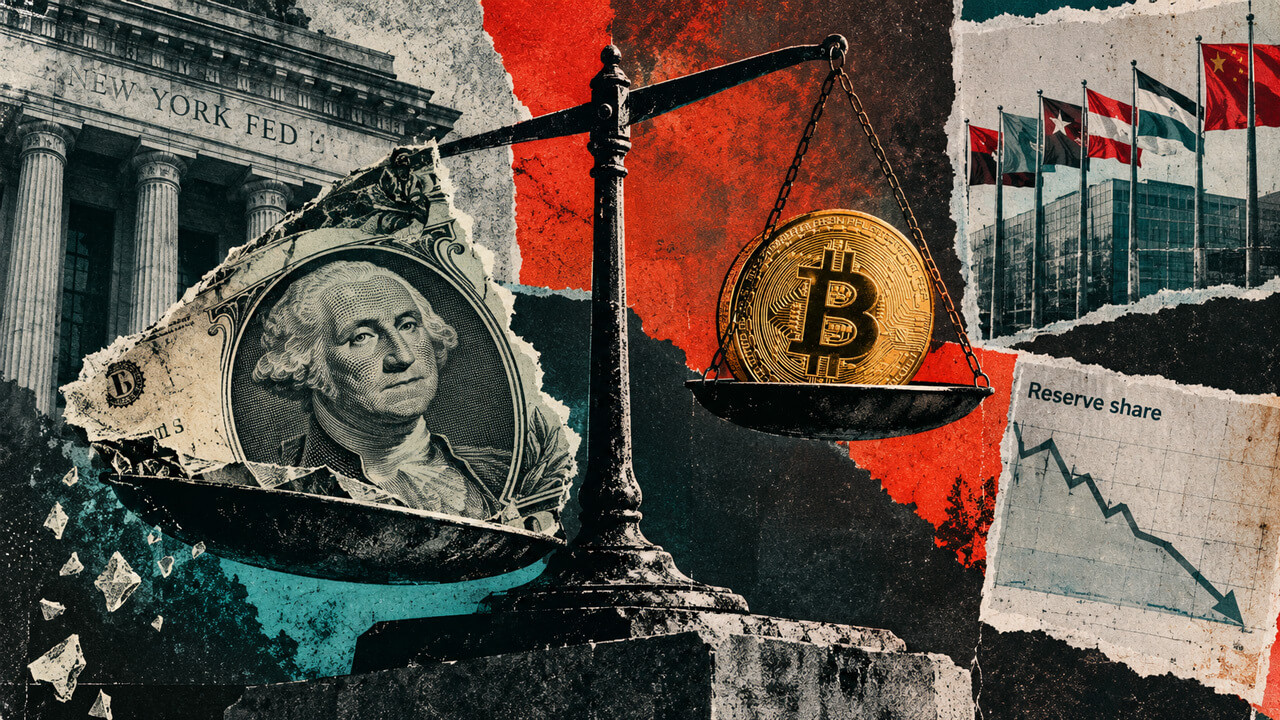
Why Bitcoin bulls shouldn’t mistake a shrinking dollar reserve share for central bank buying
A Sept. 2, 2026 analysis by New York Fed researchers shows how a few large reserve portfolios can lower the global dollar share wi...

Zondacrypto Probe Deepens: Polish Prosecutors Seek Detention Over $2.1M Crypto Case
Key Takeaways: Prosecutors in Poland charged Roman Ż. with alleged crimes involving 7.8 million zlotys ($2.1 million) in Zondacryp...
Ripple’s Legal Chief Chases Democratic Votes to Save the CLARITY Act
Ripple chief legal officer Stuart Alderoty says he has gone to the offices of senators who are undecided on or opposed to the CLAR...