Hyperliquid delists JELLY perps, citing ‘suspicious’ activity
Hyperliquid is delisting perpetual futures tied to the JELLY token after identifying “evidence of suspicious market activity” involving the trading instruments, the blockchain network said. The Hyper Foundation, Hyperliq...
Archive context
Older archive item. Useful for background and entity history, but not a fresh market-moving signal.

Hyperliquid is delisting perpetual futures tied to the JELLY token after identifying “evidence of suspicious market activity” involving the trading instruments, the blockchain network said.
The Hyper Foundation, Hyperliquid’s ecosystem nonprofit, will reimburse most affected users for any losses related to the incident, Hyperliquid said in a March 26 post on the X platform.
“All users apart from flagged addresses will be made whole from the Hyper Foundation,” Hyperliquid said. “This will be done automatically in the coming days based on onchain data.”
Hyerliquid added that the perpetuals exchange’s primary liquidity pool, HLP, has clocked a positive net income of around $700,000 in the past 24 hours.
This incident is the latest to highlight Hyperliquid’s growing pains as it becomes Web3’s most popular platform for leveraged perpetual trading.
Perpetual futures, or “perps,” are leveraged futures contracts with no expiry date. Traders deposit margin collateral, such as USDC (USDC), to secure open positions.
Source: Hyperliquid
Related: Hyperliquid’s mystery 50x ETH whale is now betting on LINK
Jelly’s volatile performanceIn January, Venmo co-founder Iqram Magdon-Ismail launched the JELLY token as part of a Web3 social media project dubbed JellyJelly.
The JELLY token initially soared to a market capitalization of approximately $250 million before retreating to lows in the single-digit millions, according to data from DexScreener.
It trades at a market cap of roughly $25 million as of March 26, the data shows.
The incident began when a trader “opened a massive $6M short position on JellyJelly” and then “deliberately self-liquidated by pumping JellyJelly’s price on-chain,” Abhi, founder of Web3 company AP Collective, said in an X post.
Had Hyperliquid not closed the position, the perpetuals exchange could have faced “full liquidation if JellyJelly reaches $150M mcap,” Abhi added.
On March 14, Hyperliquid increased margin requirements for traders after its liquidity pool lost millions of dollars during a massive Ether (ETH) liquidation.
Two days prior, a whale trader intentionally liquidated a roughly $200 million ETH long position, causing HLP to lose $4 million while unwinding the trade.
Since March 15, Hyperliquid has required traders to maintain a collateral margin of at least 20% on certain open positions to “reduce the systemic impact of large positions with hypothetical market impact upon closing.”
Magazine: Trump’s crypto ventures raise conflict of interest, insider trading questions
Why this matters
This altcoin story adds another data point to the current market tape and is useful when read alongside nearby source coverage.
Original source
Read on CointelegraphRelated market context
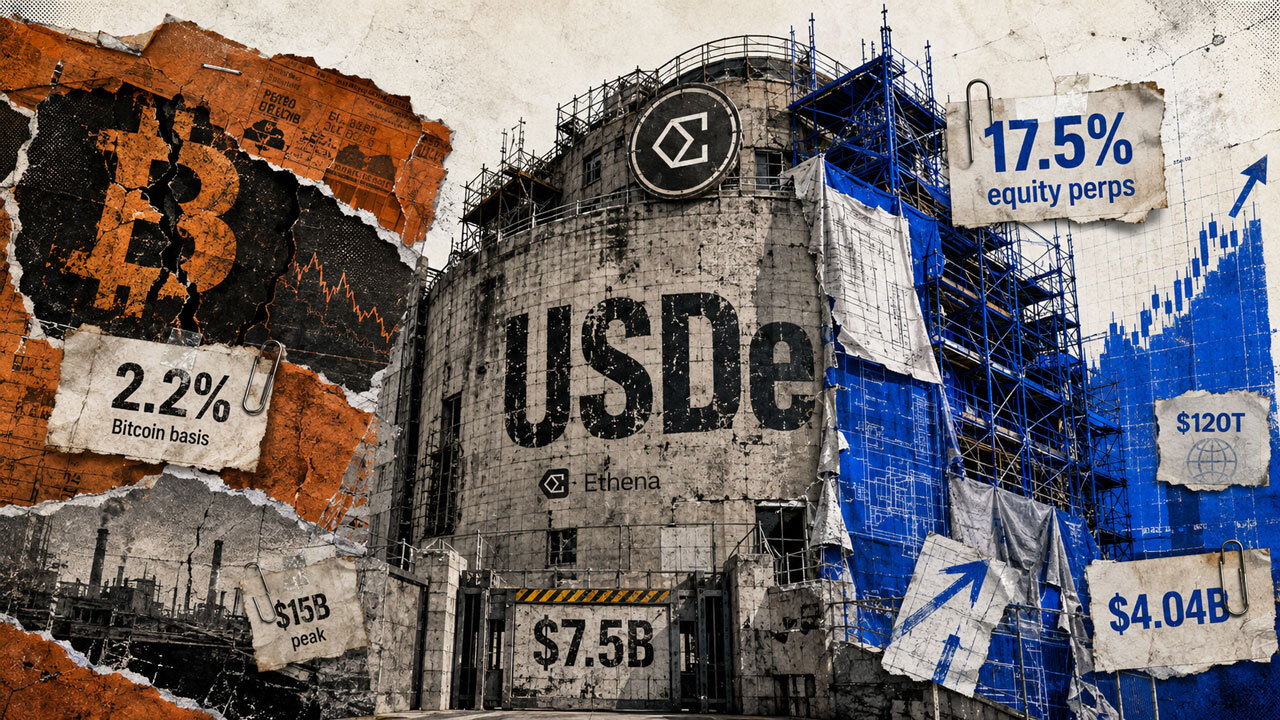
Ethena is targeting the $120 trillion Wall Street stock market to hunt yields 5x higher than Bitcoin
Ethena is expanding USDe into equity perpetual-basis trades, targeting funding yields more than five times higher than Bitcoin’s a...

Anthropic’s implied valuation hits $2 trillion as tokenized trading takes off
The speculative trading of synthetic futures highlights the volatility and regulatory challenges at the intersection of crypto and...

Charles Schwab to Add Solana, Avalanche, and Chainlink to Its Crypto Trading Platform
Charles Schwab announced plans on Thursday to add Solana, Avalanche, and Chainlink to Schwab Crypto, the first expansion of the pl...

Uniswap weekly DEX trading volume for tokenized stocks rises $325M
The rise in tokenized stock trading on DEXs like Uniswap signals a shift towards decentralized finance, challenging traditional st...

Coinbase tokenized stocks generate $124M in DEX trading volume within four days
Coinbase's tokenized stocks highlight the potential for decentralized finance to reshape global equity markets, despite regulatory...

Tokenized Nvidia Priced Its Earnings While the Nasdaq Was Closed, Aerodrome’s CEO Says
The tokenized version of Nvidia stock did something the real one could not on Wednesday night: it kept trading after the Nasdaq cl...