Hyperliquid DEX trading volumes cut into CEX market share: Data
Hyperliquid is one of the current bull market’s standout DeFi success stories. With daily trading volumes having reached $4 billion, the exchange has become the largest decentralized (DEX) derivatives platform, commandin...
Archive context
Older archive item. Useful for background and entity history, but not a fresh market-moving signal.

Hyperliquid is one of the current bull market’s standout DeFi success stories. With daily trading volumes having reached $4 billion, the exchange has become the largest decentralized (DEX) derivatives platform, commanding nearly 60% of the market.
Hyperliquid still lags far behind Binance Futures’ $50 billion daily average volume, but the trend suggests that it has started to encroach on centralized exchange (CEX) territory.
What’s behind Hyperliquid’s parabolic rise?Launched in 2023, Hyperliquid gained popularity in April 2024 after launching spot trading. This, combined with its aggressive listing strategy and easy-to-use onchain user interface, helped to lure in a wave of new users.
The platform’s real explosion, however, came in November 2024, following the launch of its HYPE (HYPE) token. Hyperliquid’s trading volume skyrocketed, and it now boasts over 400,000 users and more than 50 billion trades processed, according to data from Dune.
Hyperliquid cumulative trades and users. Source: Dune
While Hyperliquid started as a high-performance perpetual futures and spot DEX, its ambitions have since expanded. With the launch of HyperEVM on Feb. 18, the project has become a general-purpose layer-1 chain capable of supporting third-party DeFi apps built on top of its infrastructure.
As one of Hyperliquid’s founders, Jeff Yan, put it,
“Most L1s build infrastructure and hope that others will come build the killer apps. Hyperliquid takes the opposite approach: polish a native application and then grow into general-purpose infrastructure.”If this approach works, the liquidity driven by Hyperliquid’s core DEX could naturally feed into the broader ecosystem and vice versa, creating a flywheel effect.
Related: Hyperliquid flips Solana in fees, but is the ‘HYPE’ justified?
Will Hyperliquid become a sustainable CEX alternative?According to CoinGecko, Hyperliquid now ranks 14th among derivatives exchanges by open interest, sitting at $3.1 billion. That’s still behind Binance’s $22 billion but ahead of older names like Deribit or derivatives divisions of Crypto.com, BitMEX, or KuCoin. It’s the first time a DEX is competing so closely with established CEXs.
Furthermore, as Hyperliquid deepens its focus on specialized trading pairs, it continues to chip away at the market share of major exchanges. The DEX accepts not only Arbitrum USDC as collateral but also native BTC. This makes it one of the few decentralized platforms that handle BTC wrapping and unwrapping natively, giving users the option to use BTC for Web3-wallet-based trading.
X user Skewga.hl noted that Hyperliquid’s BTC perpetual futures volume share recently hit an all-time high, reaching almost 50% of Bybit’s and 21% of Binance’s. Skewga.hl wrote,
“No DEX has ever come this close to matching Tier 1 CEX volume.”Daily volume ratios, Hyperliquid vs Other exchanges (BTC perp). Source: Skewga.hl
Since 2024, perpetual swaps have seen a revival as a trading tool. During the 2021–2022 bull market, daily perps volume averaged around $5 billion. In early 2025, that number often exceeded $15 billion, with Hyperliquid accounting for nearly two-thirds of it.
Data from DefiLlama illustrates the shift: while dYdX (green) dominated in 2023–2024, the landscape diversified significantly in 2024—and by 2025, Hyperliquid (pink) had taken the lead.
Perps volume breakdown. Source: DefiLlama
Despite the recent JELLY token scandal, which involved the exchange halting trading and delisting a low-market-cap token that a whale had exploited, Hyperliquid remains a popular exchange among DeFi and DEX traders. It has yet to capture institutional investor flows or scale to the level of top-tier CEXs. However, if its layer 1 ecosystem gains traction with developers, Hyperliquid could evolve into more than just a leading DEX.
This article does not contain investment advice or recommendations. Every investment and trading move involves risk, and readers should conduct their own research when making a decision.
Why this matters
This altcoin story adds another data point to the current market tape and is useful when read alongside nearby source coverage.
Original source
Read on CointelegraphRelated market context

Ethena is targeting the $120 trillion Wall Street stock market to hunt yields 5x higher than Bitcoin
Ethena is expanding USDe into equity perpetual-basis trades, targeting funding yields more than five times higher than Bitcoin’s a...
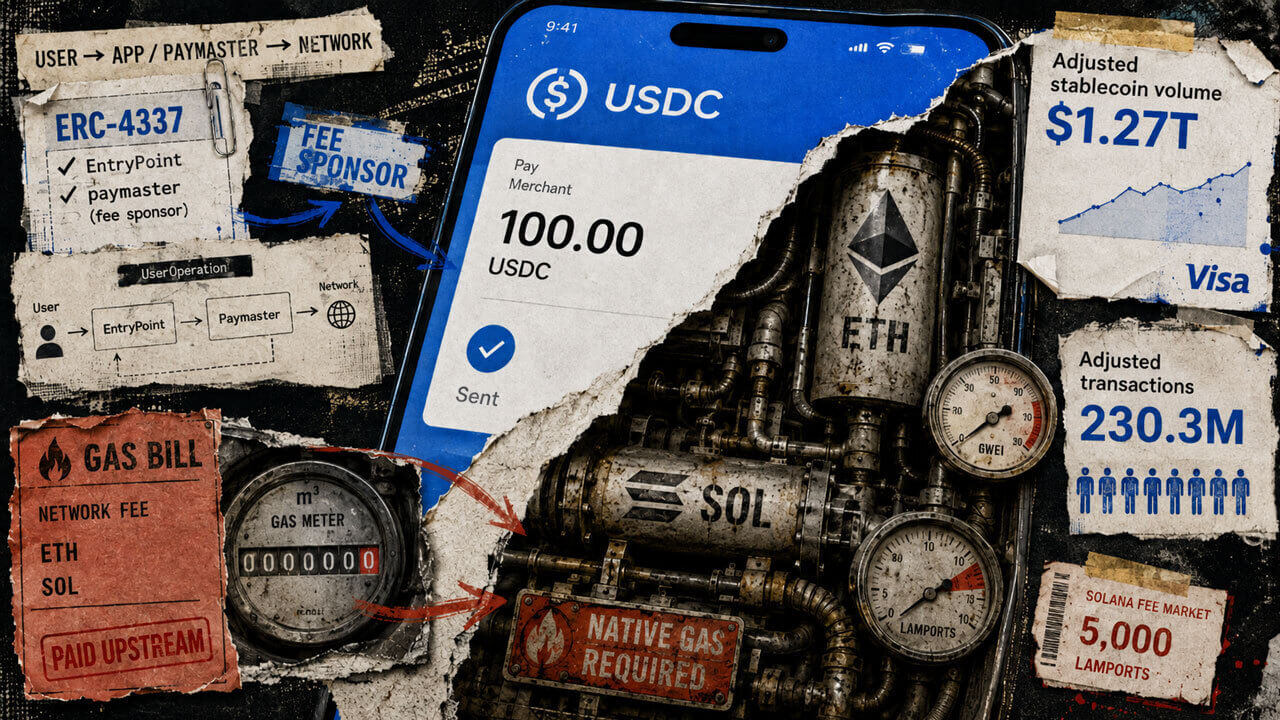
Ethereum and Solana are hosting trillions in dollar volume, yet their native tokens risk losing direct consumer demand
Matt Corallo followed up on an earlier post on Aug. 25, addressing what stablecoin users increasingly see: apps routing around ETH...

Bitcoin Cools Off After $3 Billion ETF-Driven Surge
Bitcoin Magazine Bitcoin Cools Off After $3 Billion ETF-Driven Surge Bitcoin slid Friday afternoon, cooling down after a phenomena...

Uniswap weekly DEX trading volume for tokenized stocks rises $325M
The rise in tokenized stock trading on DEXs like Uniswap signals a shift towards decentralized finance, challenging traditional st...

Coinbase tokenized stocks generate $124M in DEX trading volume within four days
Coinbase's tokenized stocks highlight the potential for decentralized finance to reshape global equity markets, despite regulatory...

Hyperliquid leads growth among top perp DEXs with 58% market share
Hyperliquid's dominance in the DEX market highlights the potential and risks of centralized infrastructure in decentralized financ...