In just 190 seconds, Grayscale quietly pulled the plug on three major altcoin ETFs
Three Grayscale ETF registrations for planned altcoin products were withdrawn in filings accepted just 190 seconds apart on Aug. 7. The sequence began with the Grayscale Cardano Trust ETF at 4:33:37 p.m. ET, followed by...
Watchlist
Archive context. The story has cross-source confirmation.
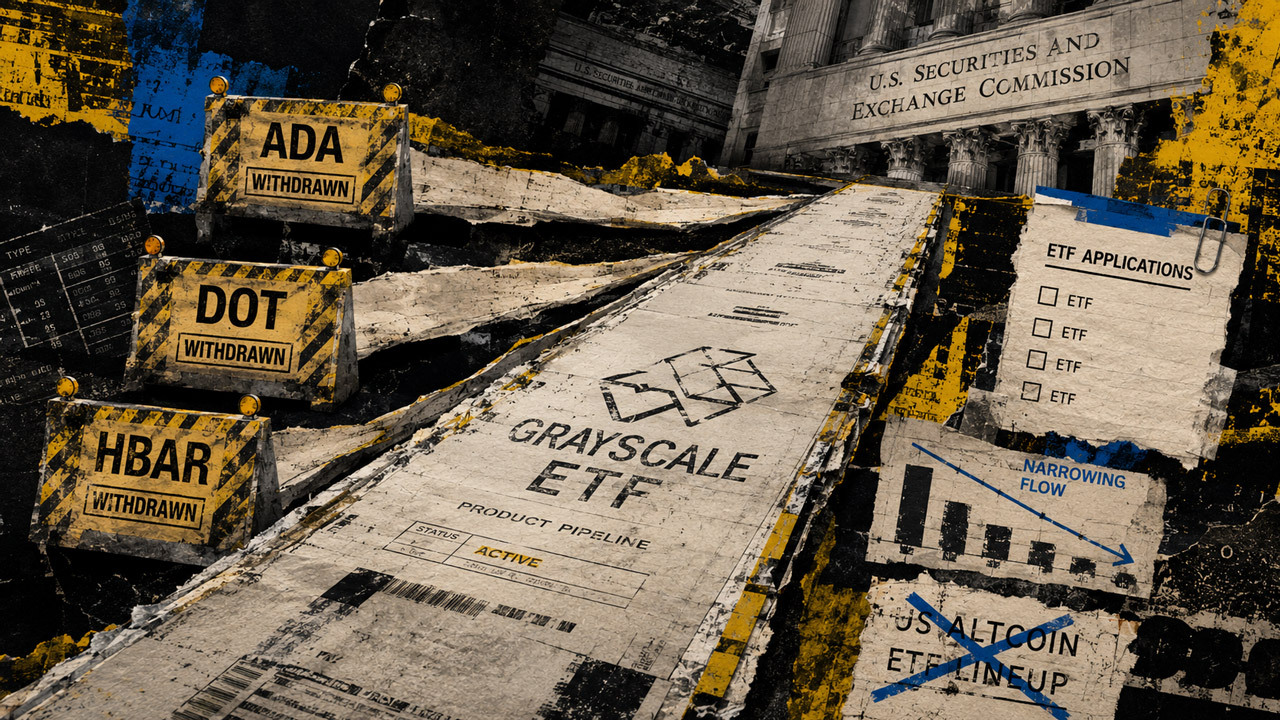
Three Grayscale ETF registrations for planned altcoin products were withdrawn in filings accepted just 190 seconds apart on Aug. 7.
The sequence began with the Grayscale Cardano Trust ETF at 4:33:37 p.m. ET, followed by the Grayscale Hedera Trust ETF at 4:34:55 p.m. and the Grayscale Polkadot Trust ETF at 4:36:47 p.m., according to EDGAR filing records.
The Cardano, Hedera and Polkadot Form RWs give the same operative explanation: Grayscale does not intend to proceed with the proposed distribution of shares. The requests also state that the registration statements had not been declared effective, that no securities had been or would be issued or sold under them, and that no preliminary prospectus had been distributed.
The documents are requests to withdraw the three S-1 registration statements under Rule 477, not SEC orders rejecting the proposed ETFs. They provide no separate commercial or regulatory reason for ending the registrations.
Related Reading ADA outperforms Bitcoin as Grayscale seeks approval for first US Cardano ETF in SEC filing Grayscale's Cardano ETF filing could reshape ADA's market position amid regulatory uncertainty Feb 11, 2025 · Oluwapelumi AdejumoThe related product-specific exchange rule proposals were already inactive. SEC records show NYSE Arca withdrew the Cardano proposal on Sept. 29, 2025, while Nasdaq's records list the Polkadot and Hedera proposals as withdrawn on Nov. 3, 2025.
Related Reading Grayscale seeks SEC approval for Polkadot ETF on Nasdaq Grayscale aims to boost its crypto ETF lineup with Polkadot focus despite market skepticism. Feb 25, 2025 · Oluwapelumi AdejumoThose proposals covered whether an exchange could list and trade the products, while the three Grayscale ETF registrations covered the proposed public offering of their shares. The Aug. 7 withdrawals were therefore a separate step that removes the current registration statements.
The SEC had approved generic exchange listing standards for qualifying commodity-based trust shares in September 2025. Eligible spot digital-asset products can use those standards without a product-specific Section 19(b) proposal, but the change did not make a registration statement effective or eliminate Securities Act requirements.
Other Grayscale ETF registrations remain preliminaryOther proposed Grayscale altcoin registrations remain at an earlier stage.
As of an Aug. 8 review of EDGAR records, registration statements for proposed Bittensor, Aave and BNB exchange-traded products remained preliminary and had not become effective.
Cited registration statements for proposed NEAR and Zcash products also remained preliminary. That status does not establish exchange approval or launch readiness.
Two Grayscale altcoin staking products had reached a later registration milestone. The SEC declared the registration statements for the Grayscale Avalanche Staking ETF and Grayscale Hyperliquid Staking ETF effective on March 11 and June 2, respectively. The effectiveness notices alone do not establish when either product began trading.
Related Reading Grayscale enables staking in its Ethereum ETFs – how will this impact market? Grayscale's innovative move may reduce fees and boost Ethereum ETF market competitiveness. Oct 6, 2025 · Oluwapelumi AdejumoThe withdrawals reduce the number of Grayscale ETF registrations while leaving other filings at different stages. Because the requests state no motive beyond the decision not to proceed, they do not show whether demand, regulation or another consideration drove the withdrawals.
The post In just 190 seconds, Grayscale quietly pulled the plug on three major altcoin ETFs appeared first on CryptoSlate.
Why this matters
Grayscale is showing up inside the Regulation theme, so this story is worth tracking for follow-through rather than treating it as a one-off headline.
Original source
Read on CryptoSlateRelated market context

Kain Warwick warns Hyperliquid’s HYPE token offers holders no investor protections
The lack of investor protections for HYPE token holders highlights the risks in DeFi, emphasizing reliance on code over legal safe...

Hyperliquid surpasses $1B revenue, $1B used for HYPE buybacks
Hyperliquid's strategic buybacks enhance HYPE's market value, reflecting strong financial health and boosting investor confidence...
Aave MCP now connects with MetaMask Agent Wallet for AI-driven DeFi actions
AI-driven DeFi integration enhances automation and security, empowering users with greater control and developers with streamlined...

Curve Finance: Ethereum’s Glamsterdam upgrade may boost DeFi execution
The Glamsterdam upgrade could enhance DeFi efficiency, potentially boosting Ethereum's market appeal and influencing future price...

STRK rallies as Starknet weighs a move from Ethereum layer 2 to its own layer 1
Starknet's potential shift to layer 1 could redefine blockchain security priorities, challenging Ethereum's timeline and reshaping...

Ethereum leads stablecoin market cap growth, adding $243M in a week
Ethereum's stablecoin growth highlights potential concentration risks and market consolidation, impacting DeFi liquidity and stabi...