Is XRP Safer Than Bitcoin? This Analyst Explains The Real Quantum Risk For Holders
Experts say XRP’s design leaves a smaller share of its supply exposed to a potential quantum attack than Bitcoin. An Armor Against Quantum Attacks? Following the recent spike of the crypto quantum-panic or “quantum FUD”...
Archive context
Older archive item. Useful for background and entity history, but not a fresh market-moving signal.

Experts say XRP’s design leaves a smaller share of its supply exposed to a potential quantum attack than Bitcoin.
An Armor Against Quantum Attacks?Following the recent spike of the crypto quantum-panic or “quantum FUD” (fear, uncertainty and doubt) after Google’s “doomsday” whitepaper, many crypto developers are analysts have taken into the job of running tests to make sure their coins are safe. Others are already writing up safety post-quantum protocols and proofs.
Vet, XRP Ledger dUNL validator and long‑time XRPL contributor, shared on a post on the social network X the belief that XRP’s underlying architecture is more favorably positioned against a possible quantum threat than Bitcoin’s.
Quick XRP acc quantum vulnerability check.
~300,000 accounts on XRP holding 2.4B XRP never transacted, thus public key unknown and quantum safe.
while only 2 accounts with larger holdings of 21M XRP are dormant (inactive over 5 years) and have their public key exposed.
Dormant…
— Vet (@Vet_X0) April 7, 2026
In short: it’s because of how keys and accounts are handled on XRPL.
XRP’s Quantum Armor ExplainedThe core risk that quantum computers pose and that has a lot of people on crypto very concerned is that, in theory, a future quantum computer could derive the private key that gets revealed once a wallet sends a transaction, thus making possible to drain all the wallet’s funds.
However, Vet’s “quick XRP acc quantum vulnerability check” revealed that roughly 300,000 XRP accounts holding about 2.4 billion XRP have never sent funds, so their public keys are unexposed and “quantum‑safe by default.
According to the XRPL validator, there are only two long‑dormant XRP whale accounts, together holding around 21 million XRP, whose public key is currently exposed. The holdings of these accounts represent just about 0.03% of the circulating supply, a rounding error next to the network’s total float (circulating supply is around 61 billion XRP as of early April 2026, according to Coinglass data).
XRPL’s account‑based model allows signing key rotation without moving funds, and escrow/timelock tools can keep tokens locked behind conditions, giving holders more options to harden security ahead of any quantum breakthrough.
On the flip side, in Bitcoin the early P2PK outputs and exposed public keys leave an estimated 11%–37% of BTC potentially vulnerable in a future quantum scenario. This includes Satoshi‑era coins that can’t just rotate keys.
Therefore, despite Ripple and Bitcoin’s approach to quantum resistance being very similar, their stances on dormant whale wallets diverges, simply because almost none exist on XRP.
What This Means For XRP TradersVet closes the post with calming words directed to XRP holders:
Important – your XRP is safe, there are no known quantum computers able to threaten public blockchains. By that time the industry figured a path out.
The immediate takeaway for XRP holders is that on‑chain data and XRPL’s toolset point to a relatively contained attack surface, especially for active users who can rotate keys ahead of time.
The quantum debate is turning into a new risk‑pricing vector between Bitcoin and high‑cap altcoins. If that narrative sticks, any progress on XRPL’s fully quantum‑resistant testnets or mainnet upgrades could become a fresh catalyst in the next security‑driven rotation.
Cover image from Perplexity. XRPUSD chart from Tradingview.
Why this matters
Bitcoin is showing up inside the Security Incidents theme, so this story is worth tracking for follow-through rather than treating it as a one-off headline.
Original source
Read on NewsBTCRelated market context
SEC Proposes Last-Resort Crypto Self-Custody for Advisers and Funds
The US Securities and Exchange Commission has proposed allowing investment advisers and regulated funds to self-custody crypto ass...

Following the Bitget Hack: BitOK Traces 87.8 BTC as Stolen Funds Reach Mixers
Research and reporting by Alexander Manev, BitOK. Reporting and adaptation by Brave New Coin. Investigators following the Bitget h...
XRP Price, $300M ETF Demand, and 45% Q3 Supply Overhang
XRP price rose more than 45% in Q3 as U.S. spot XRP ETFs attracted about $307.9 million, yet the token entered October near $1.50...
SEC Proposes Letting Advisers and Funds Hold Client Crypto When No Custodian Can
The Securities and Exchange Commission proposed rules on Thursday that would let registered investment advisers and regulated fund...
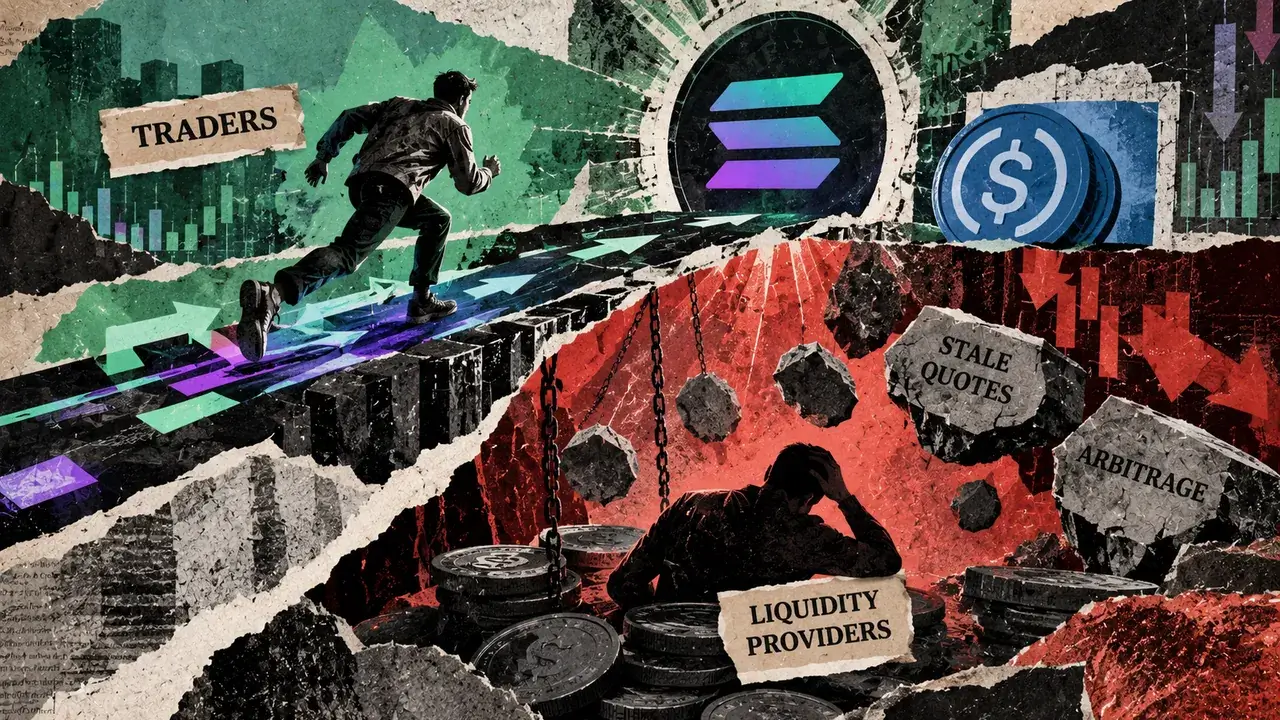
PropAMMs lower Solana trade costs, and public pool returns crash
A trader can get a better Solana (SOL) swap price while a passive pool depositor remains exposed to traders picking off stale quot...
3x Bitcoin and Ether futures funds clear SEC listing hurdle
On Oct. 2, the SEC approved the Cboe BZX exchange’s listing proposal for VS Trust’s 3x Bitcoin ETF and 3x Ether ETF. The decision...