New ChatGPT Predicts the Price of XRP, Shiba Inu and Solana by the End of 2025
The shiny new fifth generation of ChatGPT has a bullish crystal ball and it predicts that XRP, Shiba Inu, and Solana could be among the biggest winners as crypto enters a strong uptrend heading into the year’s final quar...
Archive context
Older archive item. Useful for background and entity history, but not a fresh market-moving signal.
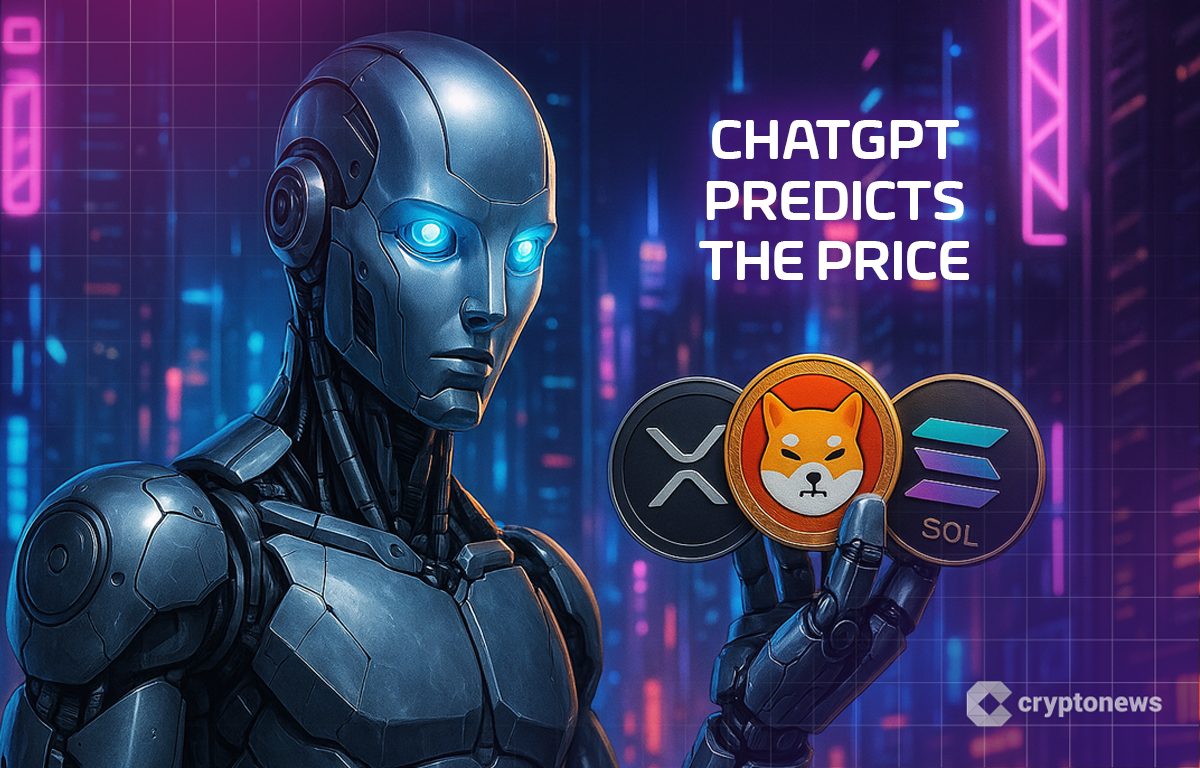
The shiny new fifth generation of ChatGPT has a bullish crystal ball and it predicts that XRP, Shiba Inu, and Solana could be among the biggest winners as crypto enters a strong uptrend heading into the year’s final quarter.
Bitcoin recently shattered its previous record, soaring to $124,128 last month before retreating slightly following a surprise uptick in July inflation.
Last week’s Federal Reserve decision to trim rates by 0.25% briefly boosted risk assets. However, Trump’s proposal for a one-off $100,000 H-1B visa fee on new applicants spooked markets, triggering a wave of liquidations over the weekend.
On the regulatory side, President Trump signed the GENIUS Act earlier this summer, marking the first U.S. law addressing stablecoins and requiring issuers to maintain full reserves. Meanwhile, the SEC rolled out Project Crypto, an initiative designed to update securities laws for the blockchain era.
Together, these developments could ignite the next altcoin supercycle.
If ChatGPT’s outlook proves accurate, XRP, Shiba Inu, and Solana may be the top beneficiaries in the coming months.
XRP (Ripple): ChatGPT Predicts $20 Indicating Potential 7× UpsideChatGPT projects that Ripple’s XRP ($XRP) could climb as high as $20 by late 2025, roughly seven times higher than its current price near $2.85.
The coin has already performed impressively this year, topping out at $3.65 on July 18 (above its prior all-time high of $3.40 set back in 2018) before sliding around 22%.
Ripple’s global expansion continues, highlighted by the UN Capital Development Fund’s 2024 recognition of XRP as a viable tool for cross-border payments in emerging markets.
Earlier this year, Ripple also closed the book on its long-standing legal fight with the SEC after the regulator dropped its lawsuit, reinforcing the 2023 ruling that XRP’s retail sales do not qualify as securities, a landmark for the broader altcoin market.
ChatGPT predicts a base range of $5–$7, with bullish scenarios potentially sending XRP up to $20, particularly if Trump’s administration maintains a crypto-friendly stance or if the SEC approves new spot XRP ETFs in the coming weeks.
Technical data backs this up. In the midst of a sell-off XRP’s RSI plunged to 41, indicating the token is nearly undervalued and more selling pressure could trigger a sudden rapid recovery rally. Additionally, the appearance of three bullish flags across its chart this year may be a precursor to a breakout.
A positive news cycle could lift the price to $4 by October. Over the past year, XRP has rallied 386%, dramatically outpacing Bitcoin’s 80% and Ethereum’s 62.5% gains.
Shiba Inu (SHIB): ChatGPT Sees Up to 17× Growth Potential in a Bull RunIntroduced in 2020, Shiba Inu ($SHIB) has cemented itself as Dogecoin’s fiercest rival, with a current market cap of $7.1 billion.
Trading at about $0.00001206 after a 6% intraday decrease, SHIB has held firm relative to the broader meme coin sector, which collectively dipped 10.4% overnight despite an $77.3 billion valuation.
Technically, SHIB has broken free of both a falling wedge and a bull flag this year. A decisive move above $0.000025 by November could validate ChatGPT’s base bullish target range of $0.00003–$0.00005 by year-end. Should a bull run emerge, ChatGPT predicts SHIB could even blow as high as $0.0002, a near 17x from current prices.
Its RSI currently stands at 39 following recent pullbacks, but this could reignite momentum should traders seize the dip-buying opportunity.
Shiba Inu is also more than a meme token. It now powers Shibarium, its dedicated Layer-2 network built for fast, low-cost transactions and decentralized app support, alongside added privacy features that set it apart from competitors.
Solana (SOL): Ecosystem Growth and ETF Hype Could Fuel a Run to $1,000, Predicts ChatGPTSolana ($SOL) has solidified its standing as a leading smart contract platform, with a market cap exceeding $119.9 billion and a Total Value Locked (TVL) around $12 billion. Developer participation and institutional involvement are both trending higher.
Part of the excitement comes from speculation that a U.S. spot Solana ETF could soon emerge, potentially attracting inflows similar to those seen after Bitcoin and Ethereum ETF approvals.
Adding intrigue, Trump has even floated the possibility of including Solana in a future U.S. national Bitcoin reserve, though under his proposal, the government could only acquire SOL through government seizures, not market purchases.
From a performance standpoint, Solana peaked at $250 in January, dropped to $100 in April, and last week rebounded to $247, nearing its highest level this year.
Breaking out of a descending wedge pattern, ChatGPT sees a path for Solana to potentially reach $1,000 by year’s end, more than tripling its prior record of $293.31. Achieving that milestone, however, will hinge on regulatory clarity and spot SOL ETF approvals from the SEC in the coming months.
Maxi Doge (MAXI): A Riskier Alternative to DogecoinFor those seeking speculative plays outside ChatGPT’s top picks, Maxi Doge ($MAXI) presents itself as Dogecoin’s edgier counterpart.
While Dogecoin has matured into a large-cap coin often trading in line with Bitcoin and Ethereum, its wild volatility from 2021 has cooled.
Maxi Doge, on the other hand, leans into high-risk, community-driven speculation, with tongue-in-cheek branding and grassroots campaigns. Its presale has already raised over $2.4 million in its first month.
Built as an ERC-20 token on Ethereum, MAXI emphasizes community expansion via Telegram and Discord events, trading competitions, and cross-project collaborations.
Of the 150.24 billion total supply, 25% is earmarked for the Maxi Fund, focused on partnerships and marketing. Staking is already live with eye-popping rewards of 137% APY, though rates are expected to taper off as more users join.
Currently priced at $0.0002585 in presale, the next price increase is scheduled in just over two days.
Investors can participate using wallets such as MetaMask or Best Wallet.
Stay updated through Maxi Doge’s official X and Telegram pages.
Visit the Official Website Here
The post New ChatGPT Predicts the Price of XRP, Shiba Inu and Solana by the End of 2025 appeared first on Cryptonews.
Why this matters
This altcoin story adds another data point to the current market tape and is useful when read alongside nearby source coverage.
Original source
Read on CryptonewsRelated market context
Bitcoin, Ethereum, XRP, and Solana slide as $90 billion exits crypto market
The crypto market's volatility highlights the fragility of leveraged positions and suggests a cooling institutional interest amid...
As traditional giants rush into digital dollars, USDD’s Yvonne Chia explains why 24/7 access, self-custody, and transparent yield give decentralized stablecoins an edge banks can’t replicate. 20 November – Road Town, Totorla, British Virgin Islands – Decentralized stablecoin protocol USDD is accelerating its multichain utility across TRON, Ethereum, and BNB Chain—combining automated sUSDD yield via its Smart Allocator with GasFree zero-TRX transfers—as traditional financial giants race to build competing stablecoin rails. In a recent industry interview with instant exchange partner ChangeNOW, USDD Head of Communications Yvonne Chia outlined why self-custody, 24/7 settlement, and transparent onchain reserves give decentralized digital dollars a structural advantage over bank-issued alternatives. 1. Permissionless Access vs. Gatekept Accounts For billions of people globally, opening and maintaining a traditional bank account still involves paperwork, minimum balance requirements, geographic restrictions, and approval delays. Even when banks integrate stablecoin rails behind the scenes, those services remain gated behind legacy compliance walls and intermediary control. Crypto-native stablecoins flip that model on its head. As Yvonne Chia highlighted during the interview: “Compare this to a stablecoin like USDD, where all you need is a phone, a working internet connection, you can immediately start a wallet and you have access to your funds right away.” With USDD, users can access and manage their digital dollars directly through their own wallets, without depending on traditional financial intermediaries. This represents a fundamental shift in financial access: users are no longer limited to the services, operating hours, or account structures of a single institution. Instead, they have the freedom to hold, manage, and transfer their assets on their own terms. Self-custody also gives users greater autonomy over their financial decisions. They can choose which wallets to use, where to transfer their assets, and which supported decentralized applications to interact with, without needing to route every transaction through a centralized financial institution. With USDD, users’ digital dollars can move with them across an open blockchain ecosystem, rather than remaining tied to a particular bank or service provider. 2. 24/7 Global Settlement vs. “Banking Hours” Legacy payment networks still operate on decades-old schedules: weekend cutoffs, bank holidays, and multi-day cross-border settlement delays accompanied by hefty wire fees. Blockchain networks never close. Whether it is a Sunday night or a public holiday, USDD moves globally without depending on traditional banking operating hours or settlement windows. “We are able to have transfers 24/7 and we’re not limited to any traditional banking hours. So I think that in some ways, stablecoins are not just becoming banks, but exceeding what traditional banks can offer to users.” To make everyday transfers even smoother than fintech apps, USDD introduced GasFree integration on TRON, allowing users on supported wallets to pay network fees directly in USDD without needing to hold TRX. This removes another practical barrier to stablecoin adoption: having to acquire and maintain a separate gas token just to transfer digital dollars. With GasFree, eligible users can pay approximately 0.5 USDD per transaction, compared with around 1.5 USDT for a standard USDT transfer under the referenced fee conditions. These improvements matter because the usefulness of a stablecoin is not determined by its peg alone. Low-cost transfers, straightforward wallet experiences, and around-the-clock availability are what make digital dollars practical for everyday payments and global value transfers. 3. Passing Yield Back to Users vs. Bank Spreads Perhaps the sharpest contrast between banks and decentralized stablecoins lies in how yield is distributed. In traditional banking, institutions take customer deposits, deploy them into yield-generating markets, and retain a significant portion of the returns. Everyday depositors may receive relatively low interest rates, while higher-yielding products often come with eligibility requirements, minimum deposits, or fixed maturity periods. Stablecoins introduce another way to participate in digital-dollar opportunities. Rather than keeping capital entirely within a traditional deposit account, users can access onchain yield opportunities through decentralized protocols and transparent investment mechanisms. USDD was built to return that value directly to holders. Through USDD Earn, users can deposit USDD to receive sUSDD, earning automated, competitive yield powered by our Smart Allocator system, with no fixed lock-up periods restricting access to their capital. For users, the distinction is important: USDD Earn provides access to a productive stablecoin while maintaining flexibility, rather than requiring users to commit their capital to a conventional fixed-term product. 4. Onchain Verification vs. Institutional Trust Traditional banks ask customers to trust closed-door balance sheets and periodic regulatory filings—until a crisis proves otherwise. USDD takes a different approach through its “Don’t trust, verify” ethos, emphasizing publicly accessible onchain information and independent verification. Onchain Transparency: Smart contract addresses, collateral reserves, and Smart Allocator deployments are publicly viewable, allowing users to examine relevant information directly on the blockchain. Structured Disclosures: Quarterly Treasury Reports provide additional information about reserve positions, financial performance, and operational developments. Independent Security Reviews: USDD undergoes third-party security audits to assess its smart contracts and identify potential vulnerabilities. Transparency does not eliminate financial or technical risks, but it changes how users can evaluate them. Instead of relying exclusively on an institution’s assurances, users have access to information that can be independently examined and verified. 5. Beyond a Single Network: An Open, Multichain Financial Ecosystem Financial freedom is not just about holding digital dollars. It is also about being able to use them wherever opportunities and applications exist. A stablecoin confined to a single network or limited use case cannot fully realize the potential of open blockchain finance. Following its January 2025 protocol upgrade, USDD expanded natively from TRON onto Ethereum and BNB Chain, extending its reach across multiple blockchain ecosystems. This multichain presence allows USDD to connect with different communities, liquidity environments, and decentralized applications. Its sUSDD product has also expanded into DeFi integrations, including Pendle and Morpho, giving users additional ways to access yield strategies across supported ecosystems. The bigger picture is an interconnected financial ecosystem in which users can move between holding, transferring, exchanging, and deploying their stablecoins according to their own needs. These are not isolated functions. Together, they make stablecoins more useful as everyday financial infrastructure. The Future: Interconnected, Open, and Multichain Banks will undoubtedly continue using stablecoin rails to modernize their back-end settlement. However, true financial freedom comes from open networks where assets flow freely across protocols without intermediaries. For USDD, the opportunity goes beyond offering a dollar-pegged asset. It is about making digital dollars accessible, transferable, and productive across an interconnected financial ecosystem. From self-custody and 24/7 transfers to flexible yield opportunities and multichain DeFi access, these capabilities give users more ways to put their money to work. Banks may be bringing stablecoins into traditional finance. Crypto-native protocols are showing what stablecoins can make possible beyond it.
As traditional giants rush into digital dollars, USDD’s Yvonne Chia explains why 24/7 access, self-custody, and transparent yield...
Solana adds 1.5% share of tokenized equities trading volume in a year
Solana's growing share in tokenized equities highlights its potential to reshape financial markets, though competition and volatil...

Ark buys $90 million worth of Anthropic shares on debut, trims Ethereum and Solana staking ETF holdings
Ark Invest bought nearly 1 million Anthropic shares and trimmed its Ethereum and Solana staking ETF holdings.

Elon Musk’s Grok AI Predicts ETH Vs SOL For 2027: Who Wins?
Ethereum vs. Solana in 2027: Elon Musk’s Grok AI predicts which is positioned for bigger gains at the end of this article. As of m...

Aave Raises Ethereum USDC Borrow Cap to $4 Billion
If supply stayed at Nov. 21 levels, filling the new cap would leave about 170 million USDC unborrowed, versus roughly 1.06 billion...