OUSD stole Hyperliquid’s homework — then hit Circle with it
Yesterday, a massive new competitor, Open USD (OUSD), arrived to displace Circle Internet Group, issuer of the world’s second-largest stablecoin, USDC. Behind its glamorous roster of financial titans was a stablecoin ins...
Archive context
Older archive item. Useful for background and entity history, but not a fresh market-moving signal.

Yesterday, a massive new competitor, Open USD (OUSD), arrived to displace Circle Internet Group, issuer of the world’s second-largest stablecoin, USDC. Behind its glamorous roster of financial titans was a stablecoin inspired by Hyperliquid’s USDH.
The list of OUSD backers is long and powerful; a who’s who of the world’s largest payments conglomerates.
It reads as though a crypto investor wished on a star and every dream came true.
Visa, Mastercard, Discover, American Express, Stripe, BlackRock, BNY, Google, Samsung Electronics, IBM, Shopify, Western Union, MoneyGram, Coinbase, OKX, Ripple, and MetaMask all appeared on the press release.
The consortium will cooperatively benefit from the interest on reserves backing OUSD. HyperLiquid popularized this idea of shared revenue from stablecoin reserves when it launched its USDH.
Circle’s common stock collapsed by 17% on Tuesday, erasing $3.3 billion in market capitalization in less than seven hours.
Behind it all was a Hyperliquid-inspired stablecoin model.
How OUSD cost Circle $3.3 billion in one dayHyperliquid is an upstart competitor of Binance and other crypto exchanges.
It made a media splash in 2025 due to controversial features like influencer-backed copytrading funds, highly leveraged trading pairs, and a leaderboard of degeneracy.
As Hyperliquid grew, it decided to launch its own blockchain and stablecoin, USDH.
Embracing an unconventional go-to-market strategy, Hyperliquid decided to diverge from the typical stablecoin model where the issuer enjoys all of the passive yield from the stablecoin’s reserves.
Instead, Hyperliquid launched a scheme to reward a consortium that would collaboratively operate USDH and share the passive interest payments.
In much the same way, OUSD is a new stablecoin that a consortium of more than 140 companies will operate. Its economic design pulls pages from Hyperliquid’s USDH playbook.
Open Standard, the entity behind OUSD, will not charge consortium members to mint or redeem tokens.
Most of the interest earned on its US Treasury bonds will also disburse to partners. Open Standard, as the operator, will keep only a small management fee.
Circle’s centralized USDC, by contrast, keeps the yield on its reserves and shares it with almost nobody except except Coinbase.
The consortium stablecoin model, spearheaded by Hyperliquid and taken to unimaginable heights with OUSD, is a direct attack on Circle’s business. Investors noticed immediately, panicking out of Circle’s common stock yesterday.
CCircle Internet Group (NYSE:CRCL). Source: TradingView. The yield is the moatOperating a stablecoin is one of the most profitable endeavors in the crypto industry.
Tether, the world’s largest stablecoin issuer, claims to be one of the most profitable companies per employee on the planet.
A stablecoin issuer may simply own risk-free US Treasury bonds yielding around 4% as reserves. The customer holds non-yield bearing tokens. The issuer pockets all the interest.
At USDC’s current supply of roughly $73 billion, that annual profit is worth about $2.7 billion a year.
Crypto trader Luke Cannon recognized the structure of OUSD instantly. “This is basically the USDH proposal except instead of Agora, Paxos, and Native Markets, it’s Visa, Stripe, Mastercard, Blackrock, Google, Samsung, IBM, Western Union,” he noted.
Why is Tether 213% bigger than Circle but 8,000% more profitable?Read more: Circle vs. Tether: What’s in the reserves?
Hyperliquid wrote the script in SeptemberIn September 2025, Hyperliquid opened up a governance vote. Validators chose an issuer for the exchange’s native dollar token, USDH.
Bidders included Paxos, Ethena, Agora, Frax, and Sky. Each bidder competed by offering ever-larger shares of the reserve yield back to the Hyperliquid ecosystem.
Native Markets, a Stripe-aligned entrant, proposed a 50/50 split. Paxos pledged 95%. Agora pledged 100%.
Open Standard frames OUSD in similar terms.
The launch post argues that “Existing stablecoins have great strengths, but to use them at scale, businesses need something that’s open, low-cost, high-throughput, broadly accessible, and aligned to their interests.”
Translated into plain English, that means the titans of finance will share OUSD’s interest payments, please and thank you.
Circle CEO Jeremy Allaire tried to calm the panic yesterday to little avail. “USDC remains the most trusted, widely adopted, institutional-ready stablecoin in the world.”
CRCL closed at $62.63, down from a previous close of $75.96. Volume hit 37.5M shares, or 2.7x the daily average.
The stock is now 76% below its 52-week high after losing more than 17% of its value during yesterday’s trading session.
Got a tip? Send us an email securely via Protos Leaks. For more informed news and investigations, follow us on X, Bluesky, and Google News, or subscribe to our YouTube channel.
The post OUSD stole Hyperliquid’s homework — then hit Circle with it appeared first on Protos.
Why this matters
Hyperliquid is showing up inside the Stablecoins theme, so this story is worth tracking for follow-through rather than treating it as a one-off headline.
Original source
Read on ProtosRelated market context

Samsung Wallet Brings USDC to 82M Galaxy Devices With Coinbase, Solana and Sui Support
Key Takeaways: Samsung Wallet will support 82 million U.S. Galaxy to add transfers on USDC. Coinbase will keep USDC in their Coinb...
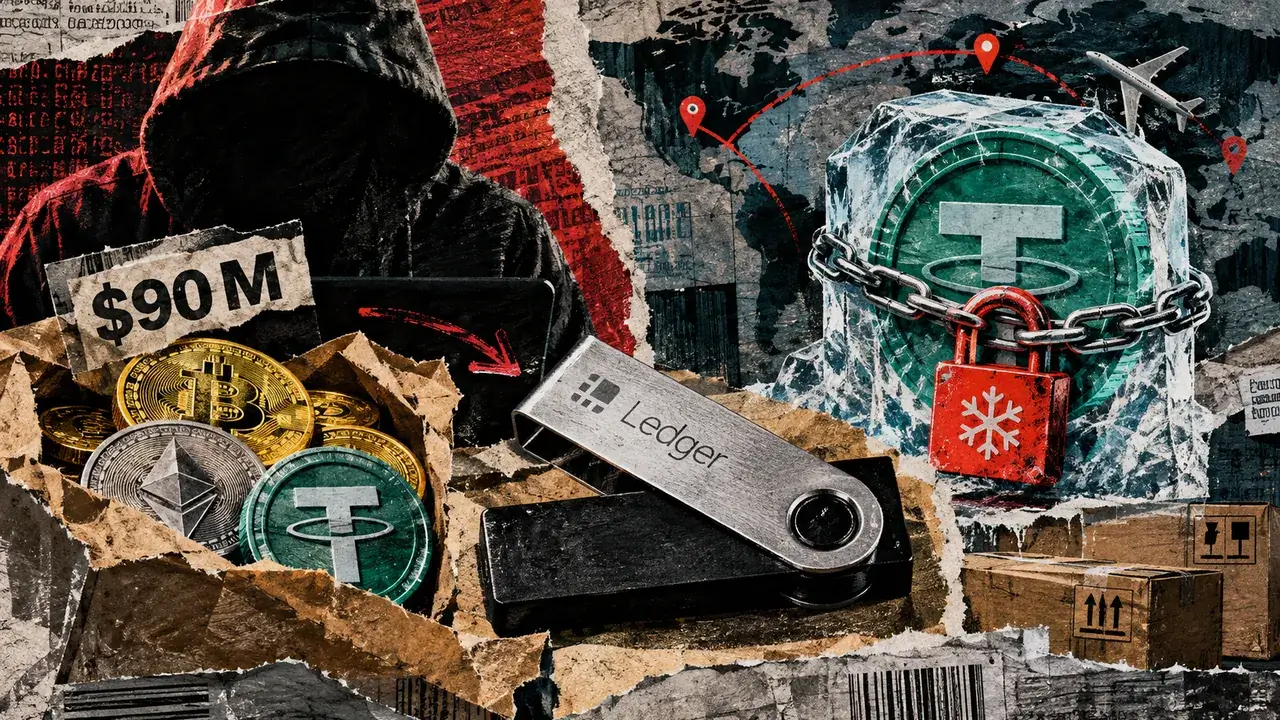
Ledger hack scare nears $90 million as Tether moves to freeze stolen USDT
Suspected Ledger wallet thefts are approaching $90 million as Tether freezes USDT stablecoin linked to the incident, according to...
Tether Freezes $1.45M in THORChain USDT Vaults, Then Reverses Blacklist Hours Later
Key Takeaways: The amount of about $1.45 million in USDT was temporarily frozen in THORChain vault addresses. According to THORCha...
Ledger theft-linked funds shift from USDT to USDD to dodge Tether freezes
The shift from USDT to USDD underscores vulnerabilities in stablecoin freeze mechanisms, prompting scrutiny on regulatory and secu...
Circle Brings USDC and EURC Into SAP Workflows Powering 84% of Global Commerce
Key Takeaways: Circle and Tereina are introducing USDC and EURC to the SAP payment flow. USDC will process eligible dollars while...

Circle mints 250M USDC on Solana, boosting liquidity and network potential
Increased USDC supply on Solana may enhance network activity and adoption, but market caution persists regarding significant price...