Pundit Elaborates On Ripple/SWIFT Theory That Will Send The XRP Price To $1,000
A prominent crypto commentator known as Remi Relief has expanded on theories linking Ripple, SWIFT, and the global banking system to the long-term valuation of XRP. His post on the social media platform X came in respons...
Archive context
Older archive item. Useful for background and entity history, but not a fresh market-moving signal.
A prominent crypto commentator known as Remi Relief has expanded on theories linking Ripple, SWIFT, and the global banking system to the long-term valuation of XRP.
His post on the social media platform X came in response to a discussion initiated by well-known analyst Paul Barron, who questioned whether Ripple’s strategy has always been to bridge the increasingly fragmented world of bank-issued stablecoins. The idea brings attention to XRP’s utility in facilitating liquidity between institutional networks, with Remi Relief noting that this could push the XRP price to $1,000.
The Ripple/SWIFT Dual-System TheoriesRemi Relief proposed that the global payment structure could split into two interconnected systems where both ultimately rely on XRP for settlement and support the cryptocurrency’s price at $1,000. The first theory proposes a revamped version of SWIFT that would retain much of its existing framework but incorporate blockchain-based assets such as XRP, XDC, HBAR, and Chainlink to achieve faster transaction speeds and improved efficiency. Despite these upgrades, it would still face skepticism from some financial institutions due to it being weaponized in the past.
The second theory is the setup of a new Ripple-based network built in collaboration with Thunes, which would function as a more trusted and independent channel for cross-border payments. This system would be much quicker, much cheaper and more trusted by countries.
In Remi’s view, both models would coexist for a time, giving banks and governments the freedom to choose based on transaction scale, cost, and reliability. However, he believes that the Ripple-Thunes system will later gain dominance and overtake SWIFT as more and more banks use that system.
Regardless of which of the two theories prevails, Remi Relief pointed out that both have the potential to lead to a $1,000 XRP more quickly than most people think.
Paul Barron’s Perspective On Institutional StablecoinsPaul Barron’s initial post that prompted Remi Relief’s response is based on the growing race among major banks to issue their own stablecoins. He pointed out that while SWIFT continues to promote neutral rails, banks like JPMorgan, Bank of America, Citi, and Wells Fargo are developing US-based consortium stablecoins. Similarly, European institutions such as ING and Deutsche Bank plan to launch euro-denominated versions by 2026.
Barron warned that this trend toward proprietary stablecoin systems would fragment the global financial network even further and create walled gardens where each bank’s stablecoin operates in isolation.
In his view, such fragmentation will bring out the original purpose of XRP, and this might have been the plan of Ripple CEO Brad Garlinghouse all along. The plan has always been to use XRP as a bridge asset capable of allowing interoperability between otherwise disconnected financial ecosystems. This function aligns with Ripple’s long-standing vision for the XRP Ledger as a neutral settlement layer for easy cross-border value transfer between different digital and fiat systems.
At the time of writing, XRP is trading at $2.41 and is a long way away from trading at $1,000.
Why this matters
This altcoin story adds another data point to the current market tape and is useful when read alongside nearby source coverage.
Original source
Read on NewsBTCRelated market context
Ripple Study Finds Banks Could Unlock $100M Beyond Crypto Custody
Digital asset services and custody choices could improve a regional bank’s financial results by up to $100 million, according to r...
Bank of Korea Wants Stablecoins Written Into Forex Law as Crypto Bill and Tax Fight Come to a Head
Bitcoin Magazine Bank of Korea Wants Stablecoins Written Into Forex Law as Crypto Bill and Tax Fight Come to a Head The Bank of Ko...

Parker Lewis: Bitcoin Will Settle 100% of Global Payments
▶Bitcoin Magazine Parker Lewis: Bitcoin Will Settle 100% of Global Payments Parker Lewis says Bitcoin will settle 100% of global p...
Chainlink And LG CNS Target South Korean Banks With Digital Asset Infrastructure Deal
TL;DR: Chainlink and LG CNS are partnering on oracle and cross-chain infrastructure aimed at South Korea’s financial institutions;...

Ripple Partners With CryptEscrow to Simplify Crypto-Funded U.S. Real Estate Deals
Key Takeaways: Ripple and CryptEscrow to launch regulated foundations for crypto real estate transactions. Sellers and title compa...
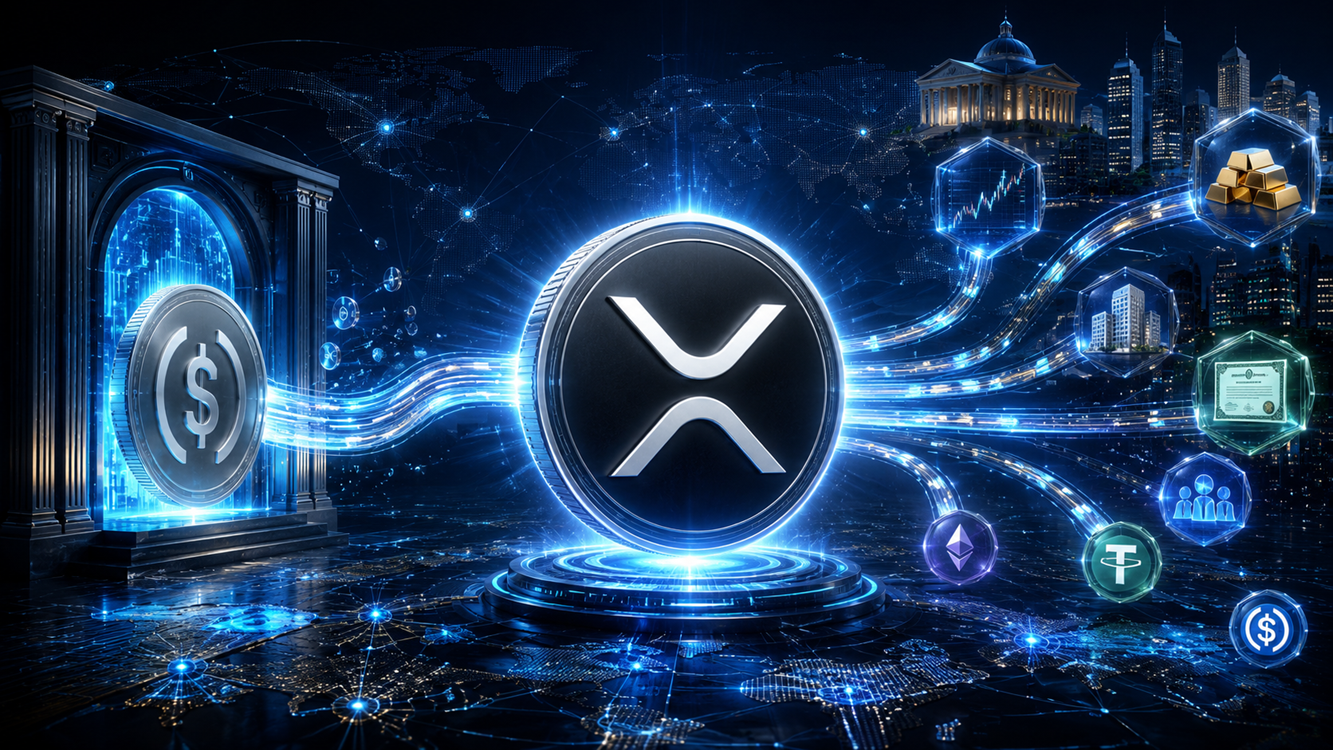
Ripple And Arf Target The Short Funding Gap Behind Cross-Border Payments
A payment can move across a blockchain in seconds while the company delivering it remains short of cash for days. Ripple’s new arr...