Ripple CEO Accused Jamie Dimon of Lying About CLARITY Act And Called Out $20Bn Reason Why
Ripple CEO Brad Garlinghouse went directly at JPMorgan chief Jamie Dimon on Fox Business Wednesday, accusing him of ‘intentional misrepresentation’ over the CLARITY Act, the pending Senate legislation that would establis...
Archive context
Older archive item. Useful for background and entity history, but not a fresh market-moving signal.

Ripple CEO Brad Garlinghouse went directly at JPMorgan chief Jamie Dimon on Fox Business Wednesday, accusing him of ‘intentional misrepresentation’ over the CLARITY Act, the pending Senate legislation that would establish a comprehensive regulatory framework for U.S. crypto markets.
The charge is specific: Garlinghouse says Dimon is distorting the bill’s compliance implications to protect JPMorgan’s payments business, which generates roughly $20 billion in annual revenue and over $5 billion in profit.
The confrontation follows Dimon’s late-May Fox Business interview with host Maria Bartiromo, where he called the CLARITY Act inadequate on AML and BSA grounds and labeled Coinbase co-founder and CEO Brian Armstrong, the bill’s most vocal corporate champion, ‘full of shit.’ Garlinghouse used the same platform, the same host, to fire back.
JPMorgan CEO Jamie Dimon: "We will fight the CLARITY Act. If we lose, we lose, and we'll live. But it will be fought."
"Nobody is going to bow down to Brian Armstrong or Coinbase… He is full of sh*t" pic.twitter.com/okbuiu2Q0s
The flashpoint is one specific provision: whether crypto exchanges like Coinbase can offer stablecoin yield to users holding stablecoin balances on their platforms. That single clause has drawn the full force of the banking lobby, and, Garlinghouse argues, Dimon’s personal opposition.
Discover: The Best Crypto to Diversify Your Portfolio
Garlinghouse vs. Dimon: What the CLARITY Act Fight Is Actually AboutGarlinghouse’s accusation is direct. ‘What Jamie Dimon did a disservice around… is that he’s representing that this reduces compliance concerns, that it makes it easier to do bad things,’ he told Bartiromo.
‘That’s just not true. It’s either intentional misrepresentation or even negligent to try to make support for the Clarity Act go away.’
Dimon’s stated position, that the CLARITY Act weakens anti-money-laundering and Bank Secrecy Act protections, gets one sentence of steel-manning: banks have a legitimate structural interest in ensuring crypto products carry equivalent compliance burdens.
NEW: RIPPLE'S BRAD GARLINGHOUSE GOES OFF ON JP MORGAN-CHASE CEO
"Jamie Dimon has been dismissing this industry for a DECADE. He’s called it a Ponzi scheme, he’s called Bitcoin a pet rock.”
"JP Morgan generates $20 BILLION of revenue from their payments business.. So its clear… pic.twitter.com/v6QUeRlsDw
The problem, per Garlinghouse, is that the bill doesn’t actually reduce those burdens. It creates a framework where none currently exists.
The dispute centers on one provision: stablecoin yields offered on crypto exchanges. Armstrong threatened to pull Coinbase’s support for any draft that excluded the clause.
Dimon framed Armstrong as ‘the only one’ pushing for it, spending ‘hundreds of millions of dollars in Washington.’
Garlinghouse acknowledged Armstrong is representing Coinbase’s interests specifically, but added that ‘the industry wants clarity, and wants regulation.’
That distinction matters structurally: the fight over stablecoin yield is Coinbase’s hill, but the broader crypto regulation framework behind the CLARITY Act has wide industry support.
JPMorgan’s $20B Payments Business: Why Dimon Has a Dog in This Fight$20 billion in annual revenue. $5 billion in profit. That is JPMorgan’s payments empire, and it is the number that makes Garlinghouse’s accusation land as analysis rather than rhetoric.
Stablecoin yields on exchanges directly threaten that business model. If users can park stablecoins on Coinbase or a Ripple-adjacent platform and earn yield, deposits migrate away from bank accounts.
JPMorgan’s custody and payments revenue depends on controlling that liquidity. Allowing crypto exchanges to replicate a core banking function, interest-bearing balances, chips at the foundation of that moat.
Photo: Brad Garlinghouse‘Jamie Dimon also should be clear he is trying to protect and dig a deeper moat for a business that’s extremely profitable for them,’ Garlinghouse said plainly.
JPMorgan has its own blockchain projects, JPM Coin and the Onyx platform, but critics including Garlinghouse have argued those are closed, permissioned systems designed to preserve JPMorgan’s control rather than enable open competition.
Dimon opposing the CLARITY Act while running a proprietary token network is the contradiction Garlinghouse is pointing at. Meanwhile, other major banks like Citi are moving deeper into tokenization, a divergence that exposes Dimon’s opposition as strategic, not principled.
Discover: The Best Token Presales
The post Ripple CEO Accused Jamie Dimon of Lying About CLARITY Act And Called Out $20Bn Reason Why appeared first on Cryptonews.
Why this matters
XRP is showing up inside the Stablecoins theme, so this story is worth tracking for follow-through rather than treating it as a one-off headline.
Original source
Read on CryptonewsRelated market context

CFTC advances crypto regulation plan after CLARITY Act defeat in Senate
The CFTC's proactive regulation efforts may stabilize crypto markets, but ongoing legislative uncertainty could hinder comprehensi...

Morgan Stanley Builds Crypto Lab to Test Stablecoins, Tokenization and DeFi at Scale
Key Takeaways: Morgan Stanley has opened a Digital Asset Lab dedicated to blockchain technologies. The test is to be applied to th...

Coinbase and Marqeta Bring 24/7 Stablecoin Card Spending to Millions of Merchants
Key Takeaways: Coinbase and Marqeta are taking a stab at stablecoin-based cards. Coinbase infrastructure makes it easy for busines...
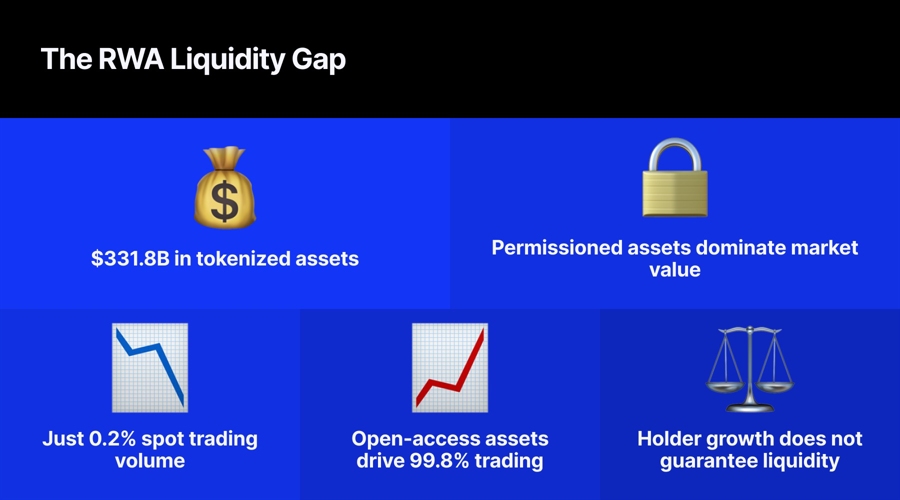
More Holders, Little Trading: The RWA Liquidity Problem Is Worse Than You Think
Let me ask you something straight. Does real-world asset trading on crypto exchanges feel like a genuine revolution, or does it fe...

BitTorrent Ushers in Next-Gen Web3 Infrastructure with Strategic Rebrand and Inaugural BTT Burn
The first round of BTT repurchased with decentralized service revenue has been completely burned, as BitTorrent leverages its reim...

Coinbase tokenized stocks in DeFi soar to $262M on Base platform
The surge in tokenized stocks on Base highlights DeFi's evolving role in equity markets, potentially influencing future token laun...