Ripple SEC Case Becomes a Warning for Crypto Lawmakers
Ripple CEO Brad Garlinghouse is using his company’s own legal bill as evidence that Washington’s approach to digital assets has a direct, measurable cost. Garlinghouse has said Ripple spent roughly $150 million fighting...
Archive context
Older archive item. Useful for background and entity history, but not a fresh market-moving signal.
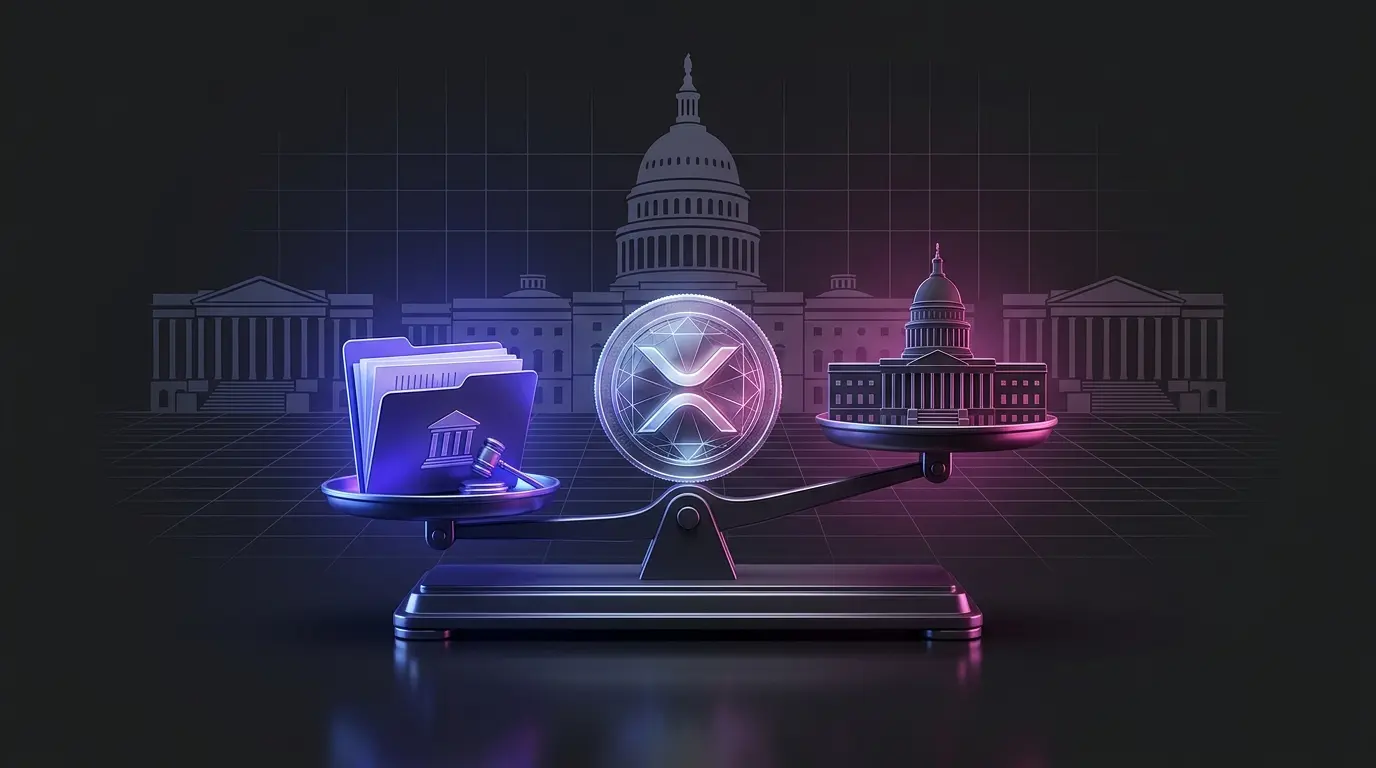
Ripple CEO Brad Garlinghouse is using his company’s own legal bill as evidence that Washington’s approach to digital assets has a direct, measurable cost. Garlinghouse has said Ripple spent roughly $150 million fighting the SEC over more than four years
On the same occasion, Garlinghouse also noted that a majority of the company’s hiring during that stretch happened outside the United States. It’s as proof that regulatory ambiguity pushes capital and jobs offshore, not just headlines into court dockets.
RIPPLE CEO: "The status quo is not good enough."
Brad Garlinghouse says Ripple spent MILLIONS fighting the SEC over four years, while 80% of its hiring happened outside the U.S. as a result.
He says America needs clear crypto rules to protect users and keep innovation at home… https://t.co/BaNrlR5RZN pic.twitter.com/HwLONKul9y
The SEC sued Ripple, Garlinghouse, and co-founder Chris Larsen in December 2020, alleging the company raised funds through unregistered securities sales of XRP. The case dragged through multiple rulings before both sides filed a joint stipulation dismissing their appeals in August 2025, per the SEC’s own litigation release, leaving a $125,035,150 civil penalty and a registration-related injunction in place.
That outcome distinguished between institutional sales and secondary-market trading of XRP rather than declaring the token categorically exempt from securities law. It’s a nuance that matters when Ripple invokes the case as a template for how crypto assets should be regulated going forward.
Xrp (XRP)24h7d30d1yAll timeGarlinghouse has previously called the resolution a long overdue surrender by the SEC, arguing the agency pursued the case to intimidate the industry rather than to police fraud.
Discover: The Best Token Presales
Selig Declares an End to Regulation by EnforcementThe renewed attention to Ripple’s legal costs surfaced around an August 19 White House innovation meeting that brought crypto executives together with regulators to discuss digital-asset policy and the stalled CLARITY Act. CFTC Chair Michael Selig used the appearance to draw a hard line under the prior enforcement posture.
Selig said, adding that innovators were now being welcomed to the White House instead of being “railroaded to the big house.” He also said additional regulatory roadmap details would follow at the CFTC’s inaugural Innovation Advisory Committee meeting on August 20, whose published agenda covers digital assets, tokenized collateral and emerging financial products.
BREAKING: CFTC Chairman Selig says he “remains hopeful” Congress will get CLARITY to President Trump’s desk and lock in durable crypto rules.
“Passing CLARITY is the surest way that we can prevent another Gary Gensler from running a rogue campaign of lawfare.”
If the bill… pic.twitter.com/DuyYptBdLe
Garlinghouse, who attended alongside SEC Chair Paul Atkins and executives from Coinbase, Kraken, Gemini, Robinhood, Nasdaq and Intercontinental Exchange, posted his own read on the meeting afterward.
Garlinghouse said, citing a figure of 67 million Americans, or close to one in four people, are now holding crypto. That’s the political backdrop against which he’s positioning Ripple’s litigation history: not as a closed chapter, but as a cautionary case study lawmakers should point to when arguing for a formal SEC regulatory pathway for crypto issuers.
Trade XRP Market on Kalshi and Get a $25 Signing-up Bonus
Beyond Ripple and SEC: Why the CLARITY Act Is the Real StakesThe practical argument underneath Garlinghouse’s comments is that the CLARITY Act would replace the case-by-case litigation model that consumed Ripple legal budget with a defined split of jurisdiction between the SEC and CFTC. That’s the same logic driving industry proposals for a token safe harbor that would let projects raise funds and build networks without facing an enforcement action years into their operating history.
Whether that framework moves through Congress this session remains an open question, and Ripple’s own post-litigation position, including its financial standing after the SEC dispute, will likely stay a reference point in that debate regardless of the outcome.
Selig’s comments suggest the CFTC intends to move on rulemaking with or without a finished statute, but a durable division of authority between regulators still requires legislative action rather than agency posture alone.
For traders, the immediate takeaway isn’t a new legal threat to XRP – the SEC’s case against Ripple is closed, with the penalty and injunction from the district court’s judgment standing as final. The relevant signal is political: a sitting CFTC chair publicly renouncing enforcement-led regulation, with Ripple’s leadership in the room, tightens the odds that market-structure legislation gets prioritized before the next election cycle rather than shelved again.
Discover: The Best Crypto to Diversify Your Portfolio
The post Ripple SEC Case Becomes a Warning for Crypto Lawmakers appeared first on Cryptonews.
Why this matters
XRP is showing up inside the Regulation theme, so this story is worth tracking for follow-through rather than treating it as a one-off headline.
Original source
Read on CryptonewsRelated market context
CFTC proposes a divide between prediction contracts and sportsbook wagers
The Commodity Futures Trading Commission announced two actions on Oct. 9 seeking to clarify the federal regulatory boundary betwee...

Robinhood Explores Stock Token Tied to T. Rowe Price Actively Managed ETF
Robinhood Crypto said in a post on Thursday that it is exploring a Stock Token tied to an actively managed ETF, with T. Rowe Price...
Polymarket Gives Dems 62% Midterm Sweep Odds, CLARITY Act in Jeopardy
Prediction markets are flashing warning signs for the cryptocurrency industry ahead of the Nov. 3 midterms. Polymarket gives Democ...

Samsung Wallet Brings USDC to 82M Galaxy Devices With Coinbase, Solana and Sui Support
Key Takeaways: Samsung Wallet will support 82 million U.S. Galaxy to add transfers on USDC. Coinbase will keep USDC in their Coinb...

Ripple CEO Owns ‘a Lot of XRP’: Why He’s ‘Incredibly Bullish’ on Crypto
Ripple CEO Brad Garlinghouse’s XRP conviction combines a personal investment with a business strategy centered on financial applic...

Stealing $1.5B in crypto is easy, cashing out is the trap
North Korean hackers stole around $1.5 billion from Bybit in February 2025. While the hack itself has been widely covered and anal...