Ripple used Ethereum to list its RLUSD stablecoin in Japan
Ripple won a regulatory milestone in Japan this week — but it needed a rival blockchain to do it. Earlier today, SBI VC Trade, a crypto arm of the $11 billion Japanese financial giant SBI Holdings, listed Ripple’s dollar...
Watchlist
Archive context. The story has cross-source confirmation.

Ripple won a regulatory milestone in Japan this week — but it needed a rival blockchain to do it.
Earlier today, SBI VC Trade, a crypto arm of the $11 billion Japanese financial giant SBI Holdings, listed Ripple’s dollar-pegged stablecoin for trading, heralding it as the country’s first “Type 4 electronic payment instrument” under Japan’s revised Payment Services Act.
However, the only Ripple USD (RLUSD) tokens that SBI traders in Japan can deposit or withdraw are on the Ethereum blockchain.
The irony is rich. Ethereum is the primary competitor of the XRP Ledger (XRPL), the blockchain that Ripple incubated.
The Japanese approval of RLUSD as its first Type 4 instrument is unambiguous. The supported chain is Ethereum, and RLUSD on any other chain will not be accepted for deposit, including XRPL-based RLUSD.
Additional blockchains could earn approval in the future, although regulators have not specified any particular timeline for review.
BigScoop
Starting TODAY (June 24), Japanese people will be able to use a new kind of digital money called @Ripple $RLUSD via @sbivc_official. FIRST “Type 4 electronic payment method” in Japan.
1. On Ethereum ONLY
2. Limited to ~$6.2K USD per transaction*
*JPY/USD rate… pic.twitter.com/sr7wvswHTk
Japan’s 2023 amendments to its Payment Services Act created a dedicated regulatory bucket for fiat-pegged stablecoins.
These “electronic payment instruments” separated digital money-type tokens from ordinary crypto assets like ether or XRP, which aren’t pegged in value to any fiat currency.
Pursuant to Article 2 of the act, Type 1 instruments include currency-denominated value usable for payment to and tradable with unspecified persons, Type 2 covers value instantly exchangeable with Type 1, and Type 3 covers instruments with specific trust beneficiary rights.
Type 4 is a residual, catch-all slot for property value designated, by cabinet office ordinance, as otherwise equivalent in value to the first three categories.
It’s the bucket regulators can reach for when an instrument doesn’t fit cleanly anywhere else.
That residual quality explains the awkward legal footnote in SBI VC Trade’s own announcement. The RLUSD token is not a trust beneficiary right under US law, the company noted, yet SBI workers were able to help it gain Type 4 classification for Japanese purposes anyway after establishing its financial equivalencies to the USD to the satisfaction of regulators.
The Type 4 label is as much a classification as a regulatory admission that Ethereum has some superiority over the XRPL.
RLUSD didn’t slot neatly into the three main categories, but thanks to the help of Ethereum, it was able to gain a catch-all designation.
It’s issued by Standard Custody & Trust Company, a New York-chartered Ripple subsidiary, and is backed by dollar deposits and short-term Treasuries subject to monthly, third-party attestations.
It’s the second dollar stablecoin on the SBI VCTRADE platform, which has handled Circle’s USDC since March 2025. USDC is a Type 3 instrument in Japan.
An XRP milestone using EthereumStill, XRP influencers framed the event as a win. RLUSD started trending on X.
The president of SBI VC Trade billed the listing as a milestone and credited Ripple Labs for the momentous occasion.
Jack McDonald, Ripple’s senior vice president for stablecoins, praised Japan’s regulatory clarity and applauded RLUSD’s ability to link Japanese institutions with global liquidity.
Neither executive dwelt on which blockchain was actually linking up the liquidity.
“They launched this one on ETHEREUM,” one account posted in reply to celebratory coverage.
A separate post highlighted the fine print on the approval. RLUSD is live “on Ethereum ONLY” as a Japanese Type 4 electronic payment instrument and capped at roughly $6,200 per transaction, a ceiling that matches the 1 million yen per-transaction limit set in SBI VC Trade’s own announcement.
Most of RLUSD already lives on EthereumThe Japanese listing isn’t an anomaly. Indeed, despite being a Ripple project, the majority of RLUSD tokens have historically existed outside of the XRPL.
As Protos reported on June 15, around $879 million of the token in circulation was parked on Ethereum, ahead of roughly $760 million on the XRP Ledger.
Most of Ripple’s own stablecoin lives on EthereumRead more: Ripple dumps XRP to pump RLUSD — still 0.2% the size of USDT
Ethereum’s dominance had been wider earlier in the cycle, with Ethereum holding close to 88% of RLUSD supply as recently as October 2025.
Coin listing sites like CoinMarketCap reinforce the preeminence of Ethereum-based RLUSD, listing RLUSD’s primary blockchain as Ethereum and pointing to the token’s ERC-20 contract address as its primary smart contract, rather than any XRP Ledger issuance.
Dwarfing the size of XRPL, Ethereum gave RLUSD deeper liquidity, mature DeFi venues like Aave and Curve, and a far larger base of dollar-stablecoin holders.
For a Japanese exchange wiring up a new asset, Ethereum-based RLUSD was the quickest path to approval and trade listings.
Got a tip? Send us an email securely via Protos Leaks. For more informed news and investigations, follow us on X, Bluesky, and Google News, or subscribe to our YouTube channel.
The post Ripple used Ethereum to list its RLUSD stablecoin in Japan appeared first on Protos.
Why this matters
Ethereum is showing up inside the Stablecoins theme, so this story is worth tracking for follow-through rather than treating it as a one-off headline.
Original source
Read on ProtosRelated market context
Tether Freezes $1.45M in THORChain USDT Vaults, Then Reverses Blacklist Hours Later
Key Takeaways: The amount of about $1.45 million in USDT was temporarily frozen in THORChain vault addresses. According to THORCha...
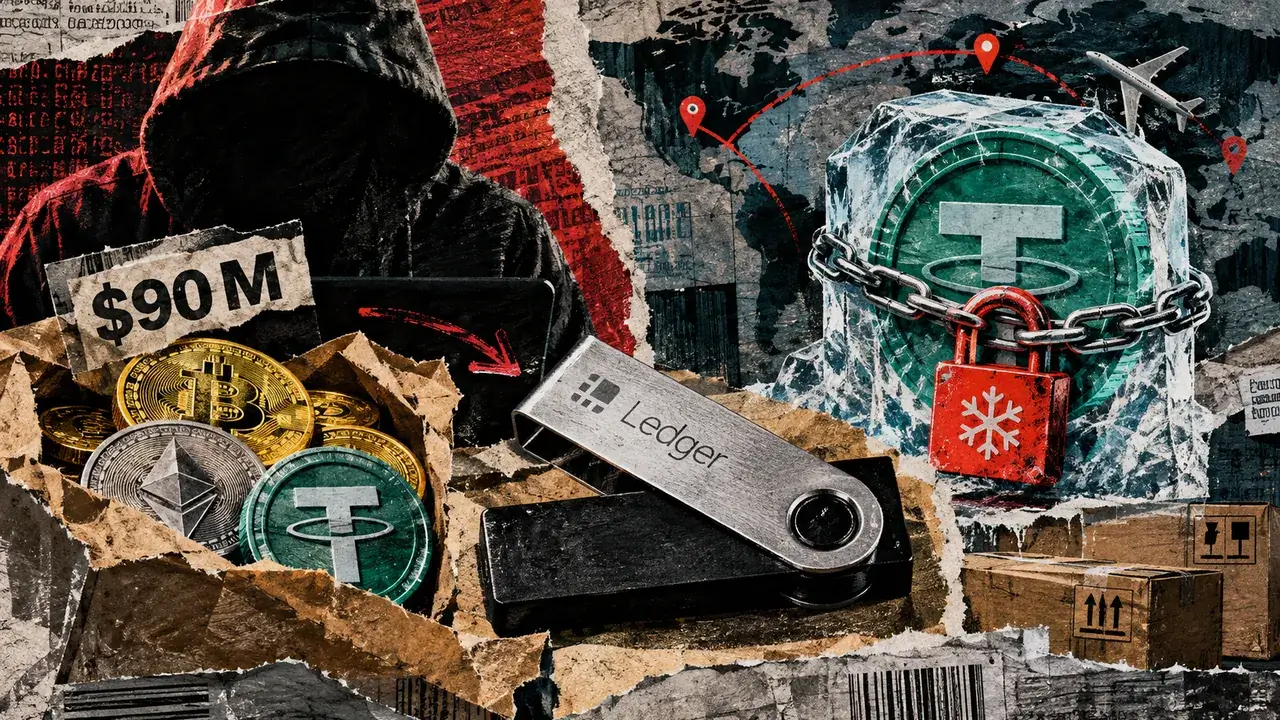
Ledger hack scare nears $90 million as Tether moves to freeze stolen USDT
Suspected Ledger wallet thefts are approaching $90 million as Tether freezes USDT stablecoin linked to the incident, according to...

Ledger theft-linked funds shift from USDT to USDD to dodge Tether freezes
The shift from USDT to USDD underscores vulnerabilities in stablecoin freeze mechanisms, prompting scrutiny on regulatory and secu...

Ethereum leads stablecoin market cap growth, adding $243M in a week
Ethereum's stablecoin growth highlights potential concentration risks and market consolidation, impacting DeFi liquidity and stabi...

Circle mints 250M USDC on Solana, boosting liquidity and network potential
Increased USDC supply on Solana may enhance network activity and adoption, but market caution persists regarding significant price...

Stealing $1.5B in crypto is easy, cashing out is the trap
North Korean hackers stole around $1.5 billion from Bybit in February 2025. While the hack itself has been widely covered and anal...