SEC Pushes Back Decision on Grayscale’s Avalanche and Cardano ETFs
Key Takeaways: The SEC has officially postponed its ruling on Grayscale’s proposals for Avalanche (AVAX) and Cardano (ADA) ETFs. The Commission cited the need for more time to evaluate the applications. Public comments a...
Archive context
Older archive item. Useful for background and entity history, but not a fresh market-moving signal.

Key Takeaways:
- The SEC has officially postponed its ruling on Grayscale’s proposals for Avalanche (AVAX) and Cardano (ADA) ETFs.
- The Commission cited the need for more time to evaluate the applications.
- Public comments and rebuttal deadlines have been extended, with final decisions expected later this year.
- The move highlights persistent regulatory hesitation toward crypto ETFs beyond Bitcoin.
Grayscale, one of the largest crypto asset management firms, has been actively expanding its product suite by proposing new spot ETFs tied to individual cryptocurrencies. Following the long-awaited approval of several Bitcoin spot ETFs earlier this year, Grayscale turned its focus to other leading layer-1 blockchain assets: Avalanche (AVAX) and Cardano (ADA).
The firm’s filings aim to list these ETFs on the Nasdaq, allowing traditional investors exposure to AVAX and ADA without needing to directly hold or manage the underlying digital tokens. For many institutional players, this structure is preferred, offering regulatory compliance and operational convenience within the frameworks of traditional finance.
SEC’s Latest Delay AnnouncementOn May 29, 2025, the U.S. Securities and Exchange Commission (SEC) formally announced it would be extending the review period for both ETF applications. The agency stated that it required more time to carefully consider the proposals, evaluate market conditions, and gather public input before issuing a final decision.
The new timeline sets:
- A public comment period ending 21 days after official publication in the Federal Register.
- A rebuttal period of 35 days after publication for additional responses.
This marks the SEC’s latest instance of cautious handling of crypto-backed exchange-traded products (ETPs), a space it has historically approached with significant regulatory scrutiny.
Why the Delay MattersThe SEC’s hesitation comes amid growing pressure to expand approved crypto ETFs beyond Bitcoin. While spot Bitcoin ETFs have gained traction in the U.S., altcoin ETFs — covering assets like Ether, Solana, Avalanche, and Cardano — remain in regulatory limbo.
Key Factors Influencing the SEC’s DeliberationsThe SEC’s cautious stance is rooted in specific concerns. These include the inherent risks of market manipulation in the spot markets for the underlying cryptocurrencies. Furthermore, the agency is carefully evaluating challenges related to liquidity and the accurate valuation of altcoin assets. The ongoing uncertainty regarding the classification and regulation of different cryptocurrencies under U.S. securities laws also plays a significant role in their decision-making process.
Until these issues are resolved, regulators are expected to continue delaying or rejecting non-Bitcoin crypto ETF applications.
Impact on the Crypto MarketThe SEC’s delay had an immediate, if moderate, impact on market sentiment:
- AVAX and ADA saw minor price fluctuations following the announcement, reflecting subdued investor expectations.
- The news was widely anticipated by traders familiar with the SEC’s recent cautious behavior toward crypto funds.
- Institutional investors remain in a holding pattern, awaiting regulatory clarity before increasing exposure to altcoin-backed ETPs.
While no major sell-offs occurred, the delay reinforces the sense of regulatory uncertainty hanging over the U.S. crypto investment landscape.
What’s Next for GrayscaleGrayscale now faces a longer waiting period as it works to address potential SEC concerns through supplementary filings and public commentary. The company is likely to emphasize:
- Robust custody and security arrangements for digital assets.
- Comprehensive market surveillance mechanisms to detect manipulation.
- Transparent asset valuation methodologies.
Success in addressing these points will be crucial if Grayscale hopes to secure approval later this year or early 2026.
Contextualizing the Delay: A Wider Regulatory ViewThe decision to delay the Grayscale ADA and AVAX ETFs fits into the broader narrative of U.S. crypto regulation. We’ve seen this deliberate pace before: Bitcoin spot ETFs were only greenlit after years of initial refusals and court interventions. The future of Ether ETFs also hangs in the balance, subject to ongoing reviews and mixed regulatory feedback. Consequently, it’s reasonable to expect that other ETF applications for altcoins, including those for assets like Solana and Ripple, are either currently pending or will probably face similar hurdles and extended timelines.
This situation highlights the widening gap between the U.S. and other markets such as Hong Kong, Canada, and parts of Europe, where multi-asset and single-token crypto ETFs have already launched and attracted significant capital.
More News: SEC Issues Guidance on Proof-of-Work Mining and Securities Regulation
The post SEC Pushes Back Decision on Grayscale’s Avalanche and Cardano ETFs appeared first on CryptoNinjas.
Why this matters
This altcoin story adds another data point to the current market tape and is useful when read alongside nearby source coverage.
Original source
Read on CryptoNinjasRelated market context

Grayscale Opens 3 Crypto Funds on Republic With $2,500 Minimum for Eligible Investors
Key Takeaways: Grayscale has introduced three crypto-investment products to Republic. A minimum investment of $2,500 is required f...
XRP spot volume surpasses Bitcoin and Ethereum on South Korea’s Upbit
XRP's dominance on Upbit highlights the potential impact of local regulatory shifts on global crypto liquidity and market dynamics...

OKX opens onchain spot and perps beta with 250K USDT reward pool
OKX's beta fosters risk-free trading practice, potentially democratizing access to complex financial instruments while highlightin...

The 7 Best USDC on Solana to XMR Swap Platforms in 2026
Swapping USDC on Solana for Monero (XMR) offers a fast, low-cost route into a privacy-focused asset. Leading platforms in 2026 pro...

Bitcoin ETFs trade over $7.5B in a week despite $145M in net selling
Despite net outflows, robust trading volume in Bitcoin ETFs suggests resilient investor interest, indicating potential market stab...
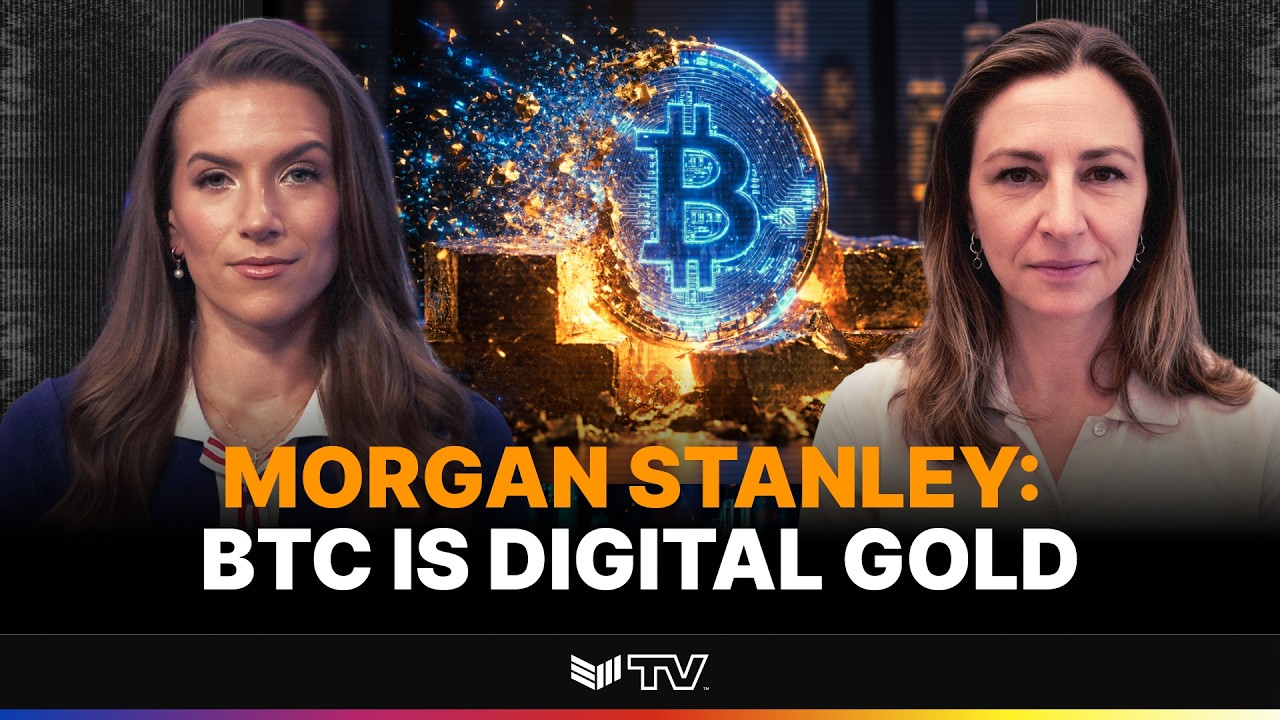
Morgan Stanley’s Amy Oldenburg: The Digital Gold Investment Case for Bitcoin
Bitcoin Magazine Morgan Stanley’s Amy Oldenburg: The Digital Gold Investment Case for Bitcoin Bitcoin’s digital gold case is “a pr...