Solana Fee Proposal Shows Validator Economics Are Still Being Rewritten
Solana Fee Proposal Shows Validator Economics Are Still Being Rewritten is the kind of crypto story that looks simple at headline level but becomes more useful once you place it inside the wider market backdrop. Solana’s...
Archive context
Older archive item. Useful for background and entity history, but not a fresh market-moving signal.

Solana Fee Proposal Shows Validator Economics Are Still Being Rewritten is the kind of crypto story that looks simple at headline level but becomes more useful once you place it inside the wider market backdrop. Solana’s fee market is no longer just a technical footnote; it is central to how the network pays validators, handles congestion, and keeps users moving.
The reason it deserves attention today is not that one announcement or filing magically changes the whole market. It is that the update adds another data point to a sector still trying to work out where capital, users, and regulation are actually moving.
For more details, visit the official GitHub platform.
TL;DR- Solana governance advanced priority fee changes through SIMD-0097.
- The proposal affects how validator incentives and transaction fees are handled.
- Fee design is becoming one of Solana’s most important technical and economic debates.
Priority fees matter when network demand rises and users compete for blockspace.
The proposal adjusts validator-level incentives around those fees.
Protocol updates rarely arrive with the drama of a courtroom ruling or an ETF filing, but they are often more important over time. They decide how networks handle scale, incentives, cross-chain activity, and user cost. For builders, those details are not optional.
Why Builders Care About The UpdateFor traders, the point is not only fee size but whether the network can scale without creating perverse incentives.
The market tends to reward finished products, but those products depend on this kind of maintenance. A chain that keeps improving its technical base gives developers more reasons to stay.
For NewsBTC readers, the practical takeaway is to avoid treating this as an isolated headline. The stronger read is to connect it with the current market environment: liquidity is still selective, regulatory pressure has not disappeared, and the projects that keep shipping useful updates are the ones most likely to hold attention when the cycle gets noisy.
That does not mean the story should be stretched beyond what the source supports. The cleaner approach is to keep the facts tight, explain the mechanism, and show readers why it may matter if follow-up data confirms the same direction over the next few sessions.
In other words, this is a development to watch rather than a guaranteed turning point. Crypto moves quickly, but the useful signals are usually the ones that still make sense after the first reaction fades.
The important thing for readers is context. A single development rarely defines the market on its own, but a series of source-backed updates can show where momentum is building. That is why this article keeps the focus on the specific mechanism in play, the source behind it, and the reason traders or builders may care today.
This article is based on information from github.com.
This article was written by the News Desk and edited by Samuel Rae.
Why this matters
Solana is showing up inside the Regulation theme, so this story is worth tracking for follow-through rather than treating it as a one-off headline.
Original source
Read on NewsBTCRelated market context
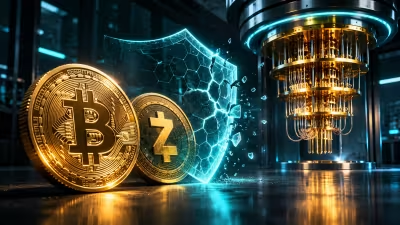
Zcash Developers Race to Secure Crypto. Can Quantum Computing Break Bitcoin?
Key takeaways Zcash development team Zakura (November 26) called for accelerated retirement of the older Sapling privacy pool, whi...

Ethereum’s Co-Founder Takes On Crypto’s Next Security Threat. Who Is Vitalik Buterin?
Key takeaways Vitalik Buterin’s November 26 essay argues that crypto security must extend to the physical chips inside devices, su...
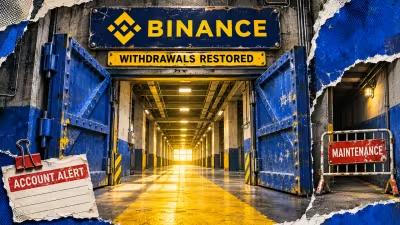
Binance withdrawals are back after October’s hack and here’s why yours might still be blocked
Binance said it lifted the October suspension on Nov. 26, and customers can still encounter network maintenance or account restric...
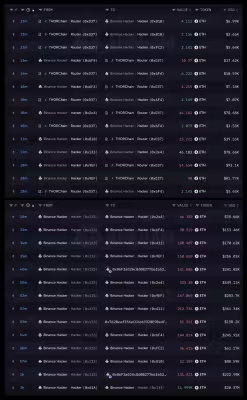
Binance Hacker Moves $35.5M in Ethereum, With $1.9B in Stolen Crypto Still Unfrozen
Key Takeaways: Hacker wallets belonging to Binance transfer $35.52 million worth of ETH. Almost 19 million bitcoins and almost 10...
Binance moves 210.2 million USDT to an unlabeled Solana wallet
Increased scrutiny on Binance's transactions highlights the growing importance of transparency and security in crypto asset manage...

China, Japan, South Korea, ASEAN form crypto regulation working group
Regional cooperation in crypto regulation may enhance digital payment systems, potentially leading to increased market stability a...