Solana Meme Coin Launchpad Pump.fun Rolls Out “Project Ascend” – Can It Finally End Rug Pulls?
Solana-based memecoin launchpad Pump.fun has unveiled “Project Ascend,” a sweeping update it claims will transform its ecosystem and address one of the crypto industry’s most persistent issues: sustainability for token c...
Archive context
Older archive item. Useful for background and entity history, but not a fresh market-moving signal.
Solana-based memecoin launchpad Pump.fun has unveiled “Project Ascend,” a sweeping update it claims will transform its ecosystem and address one of the crypto industry’s most persistent issues: sustainability for token creators.
The announcement sent Pump.fun’s native token PUMP surging more than 10% as traders reacted to the promise of “100x growth” across the platform.
introducing Project Ascend, a series of updates that will 100x the pump fun ecosystem by making coins more sustainable & aligned with their communities
to start:
– 10x more creator earnings via Dynamic Fees
– 10x faster processing of CTO Creator Fee applications
learn more pic.twitter.com/ATO1HCjarR
The centerpiece of the rollout is a reimagined creator fee system designed to better align projects with their communities and reduce incentives for short-lived, high-risk token launches.
Pump.fun Revamps Creator Fees in Bid to End Short-Lived Token HypeAt the heart of Project Ascend is Dynamic Fees V1, a new tiered structure applied exclusively to PumpSwap tokens. Instead of charging flat fees, the system reduces creator fees as a token’s market capitalization grows.
Pump.fun says the model will make launching new coins “10x more rewarding,” encouraging fresh talent ranging from streamers to startups, while still allowing successful projects to scale without being weighed down by costs.
Additionally, allocations for protocol fees and liquidity providers remain unchanged, ensuring continuity for the broader ecosystem.
Pump.fun argues the change directly addresses problems with its earlier Creator Fees initiative, which faced community criticism and proved ineffective in covering the costs of building real projects.
According to the team, while the original system offered a proof of concept, it fell short of supporting expensive needs like marketing campaigns, exchange listings, and long-term development.
The updated fee model, combined with faster processing of community takeover applications for inactive tokens, is intended to give legitimate builders a clearer path to sustainability.
The update comes at a key moment for Pump.fun. In recent weeks, the platform has rolled out a series of expansions designed to strengthen its footprint within Solana’s ecosystem.
On July 17, it announced its first acquisition, purchasing wallet-tracking tool Kolscan to integrate advanced analytics and social trading features.
Just days later, the project launched its public token sale, seeking to raise up to $600 million, representing 15% of PUMP’s total supply.
over the past week, pump fun purchased $10,657,503 in $PUMP tokens, which equates to 99.32% of total revenue for that period (Aug 20-Aug 26)
to date, pump fun has purchased a total of $58,134,191 of $PUMP tokens, offsetting 4.261% of the circulating supply pic.twitter.com/YIsGH4Jr95
Pump.fun has also introduced a real-time revenue dashboard, reporting over $58 million in token buybacks to date, equivalent to offsetting 4.26% of the circulating supply.
Pump.fun Pushes Beyond Memes With Liquidity Fund and Social Trading ToolsIn parallel, Pump.fun launched the Glass Full Foundation, a fund dedicated to injecting liquidity into promising community-driven projects. The initiative, revealed on August 8, has already begun supporting several tokens, planning to accelerate the most vibrant and organic communities on the platform.
More recently, Pump.fun added a Kolscan-powered leaderboard on August 25, allowing users to track top traders and influencers in real time.
Despite the momentum, questions linger about whether Project Ascend can meaningfully curb the plague of rug pulls and failed meme coins.
The platform’s promise of becoming “the hub for the most successful projects and creators” rests on its ability to turn structural incentives into long-term value.
Critics note that while fee reforms may encourage higher-quality projects, they do not directly eliminate the risks of bad actors launching short-lived tokens.
Even so, Pump.fun’s broader strategy appears to be positioning itself as a central hub for Solana startups and meme projects alike.
By combining new fee mechanics, social trading features, liquidity injections, and real-time transparency tools, the platform hopes to strengthen its reputation as more than just a generator of fleeting meme coins.
Pump.fun Surges Past LetsBonk, Capturing 75% of Solana DEX RevenueSolana’s decentralized exchange (DEX) activity is showing sharp declines after a year of explosive growth fueled by meme coins.
August Data from Dune Analytics shows that daily active traders on Solana DEXs have dropped 81%, from 4.8 million earlier this year to just 900,000 in August. Daily transactions have also fallen, sliding from 45 million in July to 28.8 million this month.
The slowdown marks the fourth straight day that Solana’s trader count has stayed under one million, indicating what many see as the end of the frenzy that drove record volumes in late 2024.
Activity had surged last year as meme coins and experimental tokens dominated trading, with weekly traders peaking above 30 million by October. But inflows collapsed in early 2025, leaving recurring users to sustain activity at a lower baseline of 10–15 million weekly.
Amid this downturn, Pump.fun has staged a comeback after losing ground to Solana-based rival LetsBonk.fun in July. LetsBonk led daily volumes and revenue for nearly a month before Pump.fun reclaimed the top spot in early August.
https://t.co/45JfH1EVhs is down 50% with no airdrop in sight. As LetsBonk takes the lead, can PUMP turn things around or keep sliding?#PumpFun #PUMP #memecoinshttps://t.co/1i0PA2Q3L3
— Cryptonews.com (@cryptonews) July 23, 2025On August 6, Pump.fun outpaced LetsBonk across all metrics, including tokens minted, trading volume, and revenue.
Fresh Dune data from September 2 shows Pump.fun’s dominance, with $1.13 million in revenue over the past 24 hours. BonkFun followed with $381,730, while Sugar ($52,052), Heaven ($12,615), and Bags ($5,854) trailed far behind.
Source: Dune Analytics/ @adam_tehcCombined, Pump.fun and BonkFun account for more than 90% of fee revenue, reflecting a heavily concentrated market.
Token creation trends mirror the revenue gap. Pump.fun users minted 16,697 tokens in the last 24 hours, far ahead of LetsBonk’s 6,087. Pump.fun also led in graduations, with 164 compared to LetsBonk’s 32, though graduation rates remain below 1%, showing high churn across platforms.
Source: Dune Analytics/ @adam_tehcMeanwhile, PUMP, Pump.fun’s native token, rallied 14% following the launch of “Project Ascend.” The update builds on a buyback program that has lifted the token 25% in the past week and 32% over two weeks.
The post Solana Meme Coin Launchpad Pump.fun Rolls Out “Project Ascend” – Can It Finally End Rug Pulls? appeared first on Cryptonews.
Why this matters
This altcoin story adds another data point to the current market tape and is useful when read alongside nearby source coverage.
Original source
Read on CryptonewsRelated market context
PrimeRevenue plans to tokenize its trade finance instruments on Solana
Tokenizing trade finance on Solana could streamline processes, enhance transparency, and potentially create new liquidity avenues...
Sunrise CEO says Solana is not being left behind in the tokenization race
Solana's strategic focus on non-U.S. markets and real asset backing could redefine global equity access, challenging traditional b...

SPCXb leads tokenized SpaceX stocks with a market cap above $110 million
The rise of tokenized SpaceX stocks like SPCXb highlights the growing influence of blockchain in traditional finance, offering 24/...
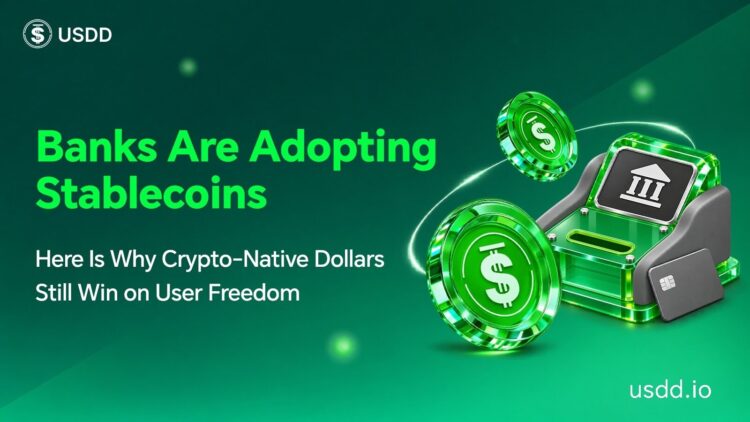
As traditional giants rush into digital dollars, USDD’s Yvonne Chia explains why 24/7 access, self-custody, and transparent yield give decentralized stablecoins an edge banks can’t replicate. 20 November – Road Town, Totorla, British Virgin Islands – Decentralized stablecoin protocol USDD is accelerating its multichain utility across TRON, Ethereum, and BNB Chain—combining automated sUSDD yield via its Smart Allocator with GasFree zero-TRX transfers—as traditional financial giants race to build competing stablecoin rails. In a recent industry interview with instant exchange partner ChangeNOW, USDD Head of Communications Yvonne Chia outlined why self-custody, 24/7 settlement, and transparent onchain reserves give decentralized digital dollars a structural advantage over bank-issued alternatives. 1. Permissionless Access vs. Gatekept Accounts For billions of people globally, opening and maintaining a traditional bank account still involves paperwork, minimum balance requirements, geographic restrictions, and approval delays. Even when banks integrate stablecoin rails behind the scenes, those services remain gated behind legacy compliance walls and intermediary control. Crypto-native stablecoins flip that model on its head. As Yvonne Chia highlighted during the interview: “Compare this to a stablecoin like USDD, where all you need is a phone, a working internet connection, you can immediately start a wallet and you have access to your funds right away.” With USDD, users can access and manage their digital dollars directly through their own wallets, without depending on traditional financial intermediaries. This represents a fundamental shift in financial access: users are no longer limited to the services, operating hours, or account structures of a single institution. Instead, they have the freedom to hold, manage, and transfer their assets on their own terms. Self-custody also gives users greater autonomy over their financial decisions. They can choose which wallets to use, where to transfer their assets, and which supported decentralized applications to interact with, without needing to route every transaction through a centralized financial institution. With USDD, users’ digital dollars can move with them across an open blockchain ecosystem, rather than remaining tied to a particular bank or service provider. 2. 24/7 Global Settlement vs. “Banking Hours” Legacy payment networks still operate on decades-old schedules: weekend cutoffs, bank holidays, and multi-day cross-border settlement delays accompanied by hefty wire fees. Blockchain networks never close. Whether it is a Sunday night or a public holiday, USDD moves globally without depending on traditional banking operating hours or settlement windows. “We are able to have transfers 24/7 and we’re not limited to any traditional banking hours. So I think that in some ways, stablecoins are not just becoming banks, but exceeding what traditional banks can offer to users.” To make everyday transfers even smoother than fintech apps, USDD introduced GasFree integration on TRON, allowing users on supported wallets to pay network fees directly in USDD without needing to hold TRX. This removes another practical barrier to stablecoin adoption: having to acquire and maintain a separate gas token just to transfer digital dollars. With GasFree, eligible users can pay approximately 0.5 USDD per transaction, compared with around 1.5 USDT for a standard USDT transfer under the referenced fee conditions. These improvements matter because the usefulness of a stablecoin is not determined by its peg alone. Low-cost transfers, straightforward wallet experiences, and around-the-clock availability are what make digital dollars practical for everyday payments and global value transfers. 3. Passing Yield Back to Users vs. Bank Spreads Perhaps the sharpest contrast between banks and decentralized stablecoins lies in how yield is distributed. In traditional banking, institutions take customer deposits, deploy them into yield-generating markets, and retain a significant portion of the returns. Everyday depositors may receive relatively low interest rates, while higher-yielding products often come with eligibility requirements, minimum deposits, or fixed maturity periods. Stablecoins introduce another way to participate in digital-dollar opportunities. Rather than keeping capital entirely within a traditional deposit account, users can access onchain yield opportunities through decentralized protocols and transparent investment mechanisms. USDD was built to return that value directly to holders. Through USDD Earn, users can deposit USDD to receive sUSDD, earning automated, competitive yield powered by our Smart Allocator system, with no fixed lock-up periods restricting access to their capital. For users, the distinction is important: USDD Earn provides access to a productive stablecoin while maintaining flexibility, rather than requiring users to commit their capital to a conventional fixed-term product. 4. Onchain Verification vs. Institutional Trust Traditional banks ask customers to trust closed-door balance sheets and periodic regulatory filings—until a crisis proves otherwise. USDD takes a different approach through its “Don’t trust, verify” ethos, emphasizing publicly accessible onchain information and independent verification. Onchain Transparency: Smart contract addresses, collateral reserves, and Smart Allocator deployments are publicly viewable, allowing users to examine relevant information directly on the blockchain. Structured Disclosures: Quarterly Treasury Reports provide additional information about reserve positions, financial performance, and operational developments. Independent Security Reviews: USDD undergoes third-party security audits to assess its smart contracts and identify potential vulnerabilities. Transparency does not eliminate financial or technical risks, but it changes how users can evaluate them. Instead of relying exclusively on an institution’s assurances, users have access to information that can be independently examined and verified. 5. Beyond a Single Network: An Open, Multichain Financial Ecosystem Financial freedom is not just about holding digital dollars. It is also about being able to use them wherever opportunities and applications exist. A stablecoin confined to a single network or limited use case cannot fully realize the potential of open blockchain finance. Following its January 2025 protocol upgrade, USDD expanded natively from TRON onto Ethereum and BNB Chain, extending its reach across multiple blockchain ecosystems. This multichain presence allows USDD to connect with different communities, liquidity environments, and decentralized applications. Its sUSDD product has also expanded into DeFi integrations, including Pendle and Morpho, giving users additional ways to access yield strategies across supported ecosystems. The bigger picture is an interconnected financial ecosystem in which users can move between holding, transferring, exchanging, and deploying their stablecoins according to their own needs. These are not isolated functions. Together, they make stablecoins more useful as everyday financial infrastructure. The Future: Interconnected, Open, and Multichain Banks will undoubtedly continue using stablecoin rails to modernize their back-end settlement. However, true financial freedom comes from open networks where assets flow freely across protocols without intermediaries. For USDD, the opportunity goes beyond offering a dollar-pegged asset. It is about making digital dollars accessible, transferable, and productive across an interconnected financial ecosystem. From self-custody and 24/7 transfers to flexible yield opportunities and multichain DeFi access, these capabilities give users more ways to put their money to work. Banks may be bringing stablecoins into traditional finance. Crypto-native protocols are showing what stablecoins can make possible beyond it.
As traditional giants rush into digital dollars, USDD’s Yvonne Chia explains why 24/7 access, self-custody, and transparent yield...

Solana adds 1.5% share of tokenized equities trading volume in a year
Solana's growing share in tokenized equities highlights its potential to reshape financial markets, though competition and volatil...

Jesse Pollak Says Tokenized Stocks on Base Have Crossed $1 Billion in Weekly Volume
Tokenized stocks on Base, the Ethereum layer 2 network built by Coinbase, have “just crossed $1 billion of weekly volume” less tha...