Solana Policy Institute Urges Senate To Protect Developers In CLARITY Act Debate
The Solana Policy Institute is urging Senate leaders to preserve protections for open-source developers and validators as lawmakers debate the CLARITY Act, adding another crypto industry voice to one of the most importan...
Archive context
Older archive item. Useful for background and entity history, but not a fresh market-moving signal.

The Solana Policy Institute is urging Senate leaders to preserve protections for open-source developers and validators as lawmakers debate the CLARITY Act, adding another crypto industry voice to one of the most important U.S. policy fights of the year.
TL;DR- The Solana Policy Institute is pushing lawmakers to protect developer and validator activity.
- The issue centres on Section 604 of the CLARITY Act and related broker/money-transmitter concerns.
- The letter does not mean the bill has passed or failed; it is part of the lobbying process.
- The market cares because unclear rules can affect DeFi, validators, wallets and open-source software.
The debate may sound technical, but the stakes are easy to understand. If open-source developers, validators or infrastructure providers are treated like financial intermediaries simply because they write code or run networks, much of the crypto stack becomes harder to operate in the United States. If lawmakers carve out sensible protections, builders get more breathing room while regulators can still focus on actual custodians and intermediaries.
The Solana Policy Institute’s public letter is part of that fight. Led by Kristin Smith, the group is pushing Senate leaders to preserve language that would help distinguish neutral technology providers from businesses that custody assets or directly handle customer funds.
The developer protection issueCrypto regulation often struggles because blockchains do not map cleanly onto old financial categories. A validator is not a bank teller. A wallet developer is not necessarily a broker. A smart contract developer may publish code that others use, but that does not automatically mean they control customer assets.
That distinction matters. If the law fails to separate software from custody, the result could be a chilling effect on U.S.-based development. Smaller teams may avoid open-source work, validators may face unclear obligations, and infrastructure projects may decide the regulatory risk is not worth it.
For Solana, this is especially relevant because the network depends on high-performance infrastructure, active validators and a large developer base. But the issue is not limited to one chain. Ethereum, Bitcoin layer-2 projects, DeFi protocols and wallet providers all have a stake in how Congress defines responsibility across decentralized systems.
A lobbying push, not a final outcomeIt is important not to overstate the letter. This is not final law. It is not a court ruling. It is an attempt to influence how lawmakers shape the bill before it moves further through the legislative process.
That said, lobbying letters can matter. They help lawmakers understand where the industry sees unintended consequences. They also create a public record of which protections crypto groups consider essential.
Why traders should careRegulatory structure can affect market value even when it does not move prices immediately. If U.S. rules make it easier for developers and validators to operate, the market may treat that as constructive for on-chain ecosystems. If rules become too broad, the opposite risk appears: fewer domestic builders, less infrastructure investment and more activity pushed offshore.
The CLARITY Act debate is still moving, and the final language may change. For now, the Solana Policy Institute’s message is clear: do not regulate neutral blockchain infrastructure as if it were a custodial financial business.
This article was written by the News Desk and edited by Samuel Rae.
Originally shared by Kristin Smith on X
Why this matters
Solana is showing up inside the Regulation theme, so this story is worth tracking for follow-through rather than treating it as a one-off headline.
Original source
Read on NewsBTCRelated market context

Ethereum developers cancel Oct. 26 Glamsterdam upgrade on Hoodi testnet
The delay in Ethereum's testnet upgrade highlights the complexities of protocol changes, potentially impacting the timeline for ma...

Starknet Moves Toward Post-Quantum Layer 1 as Voters Back Ethereum Split
Starknet is taking its first formal steps toward potentially becoming an independent, quantum-resistant Layer 1 blockchain, follow...

Ethereum Scraps Glamsterdam’s Hoodi Fork After ChainSecurity Flags Gas Risks
Ethereum developers have called off Glamsterdam’s activation on the Hoodi testnet, four days before the upgrade was due to go live...

Blockchain Association Presses Congress on Crypto Taxes as Clarity Act Stalls
Bitcoin Magazine Blockchain Association Presses Congress on Crypto Taxes as Clarity Act Stalls The Blockchain Association sent a l...
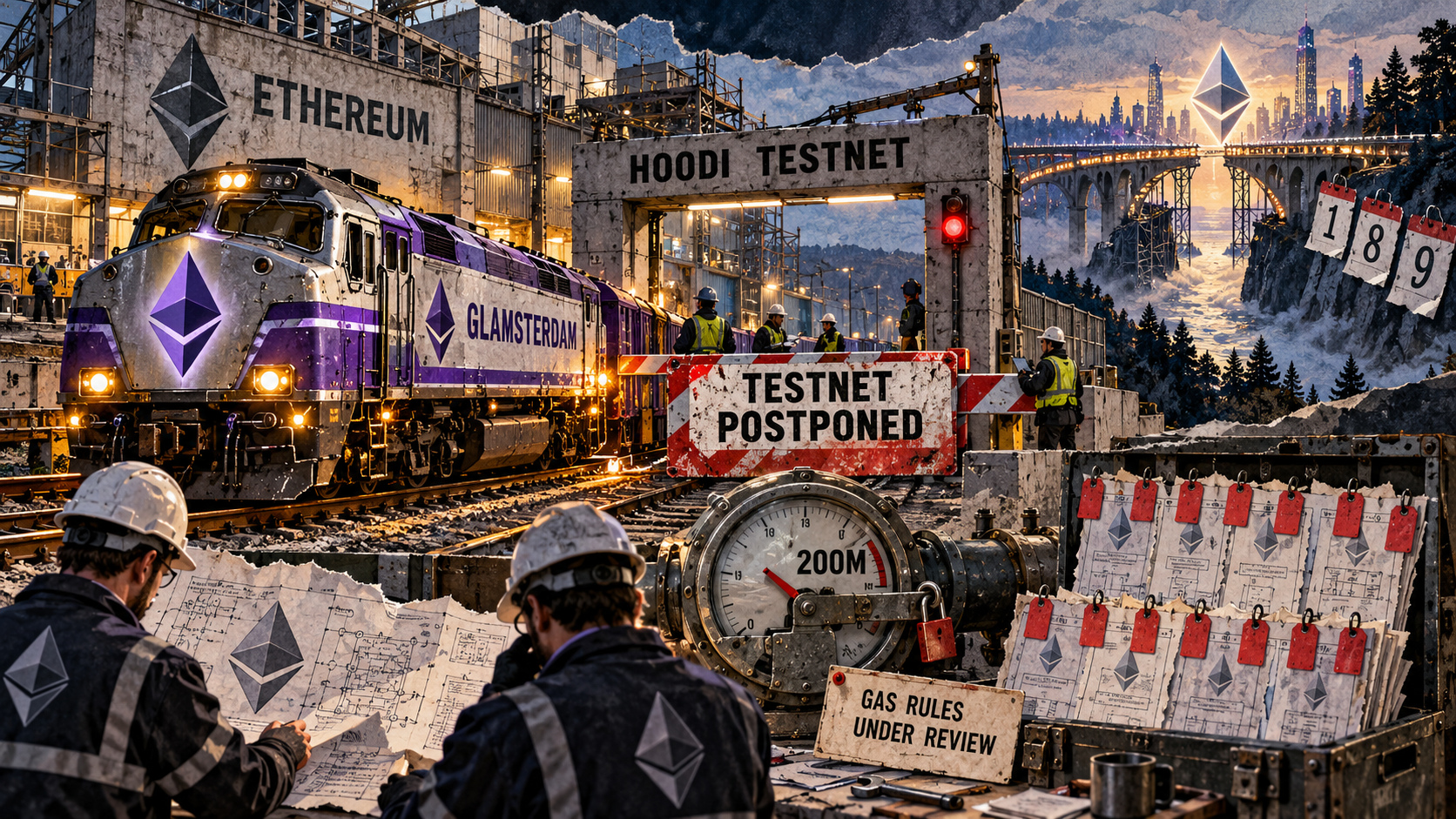
Ethereum’s long-awaited Glamsterdam upgrade hits another roadblock as 13 security risks emerge
Ethereum developers have postponed the Glamsterdam upgrade on a major test network after identifying potential security risks affe...

Dogecoin Labs Brings MyDoge And DogeOS Together In Commercial Reset
TL;DR: Dogecoin Labs is bringing wallet, payment and application teams into one organization. House of Doge says it will contribut...