The Great Exodus: Why Are Japanese Investors Choosing XRP Over Bitcoin?
A recent study has revealed that Japanese investors are choosing to invest in Ripple’s XRP over the world’s flagship cryptocurrency, Bitcoin. XRP Over Bitcoin And Ethereum In contrast to the treatment Ripple and the XRP...
Archive context
Older archive item. Useful for background and entity history, but not a fresh market-moving signal.

A recent study has revealed that Japanese investors are choosing to invest in Ripple’s XRP over the world’s flagship cryptocurrency, Bitcoin.
XRP Over Bitcoin And EthereumIn contrast to the treatment Ripple and the XRP token are receiving in the US, Japan seems more welcoming to the crypto asset, according to a research paper by the Department of Economics and Finance at the City University of Hong Kong.
According to the report, XRP is preferred over the biggest cryptocurrencies by market cap, Bitcoin and Ethereum. It referenced a survey conducted by the Japanese crypto exchange BITMAX, with 25% of the 1,498 respondents who took the survey choosing XRP as their favorite cryptocurrency, while 26% and 9% chose Bitcoin and Ethereum, respectively.
While this survey may be considered insufficient to prove Japanese investors’ preference for the XRP token, it suggests that the token has quite the following in the country. Interestingly, XRP enjoyed the highest spot trading volume in February last year, with “nearly 1.36 billion units” traded during that period.
The report attributed Japan’s fondness for the token to the country’s customs and “the confidence that Japan’s largest venture capital fund has in Ripple.” The venture capital firm in question is SBI Holdings, with the company being one of Ripple’s early partners. SBI allegedly invested close to $300 million in Ripple in 2017.
SBI Holdings A “Primary Driver Of Ripple’s Success”The report labels SBI holdings as the “primary driver of Ripple’s success” in Japan. This assertion may not be far-fetched, especially considering SBI’s role in helping Ripple break into the Japanese market.
In 2016, the financial services company partnered with Ripple to create SBI Ripple Asia with the goal of providing cross-border payment services to banks in the Asian region. Using Ripple’s distributed ledger technology (DLT), these banks can process cross-border transactions in “40 currencies and more than 70 countries.”
SBI Ripple was to service banks in countries like Japan, China, South Korea, and other Southeast Asian countries. This move undoubtedly paved the way for Ripple and its XRP token to penetrate the Asian market (Japan in particular) early enough, especially when non-cash payments were on the rise in those countries.
Ripple and XRP’s adoption in the Asian region is also expected to grow further as SBI Remit (a subsidiary company under SBI Holdings) recently expanded the SBI Ripple Asia partnership with the introduction of an XRP-based international remittance service for banks in the Philippines, Vietnam, and Indonesia.
This move aligns with Ripple’s goal to disrupt the global financial system as the crypto asset will be used as a bridge currency for foreigners who want to send money to their families back home. Impressively, Ripple’s Ledger can process these transactions faster and more affordably than the traditional financial system.
Why this matters
This altcoin story adds another data point to the current market tape and is useful when read alongside nearby source coverage.
Original source
Read on NewsBTCRelated market context

Micron stock soars nearly 700% in a year as tokenized version trades on Ethereum via Ondo
Micron's stock surge and tokenization highlight the growing intersection of traditional finance and decentralized finance, impacti...

Barcelona lists Jules Koundé for €80M as crypto fan tokens brace for transfer ripple effects
Barcelona's financial maneuvers highlight the volatile impact of sports events on crypto fan token markets, emphasizing narrative-...

Dubai tops Asian crypto hubs, India isolates banks from crypto: Asia Express
Japan's SBI Crypto shuts down 12th largest Bitcoin mining pool in the world, Russia gears up to launch digital ruble despite EU sa...
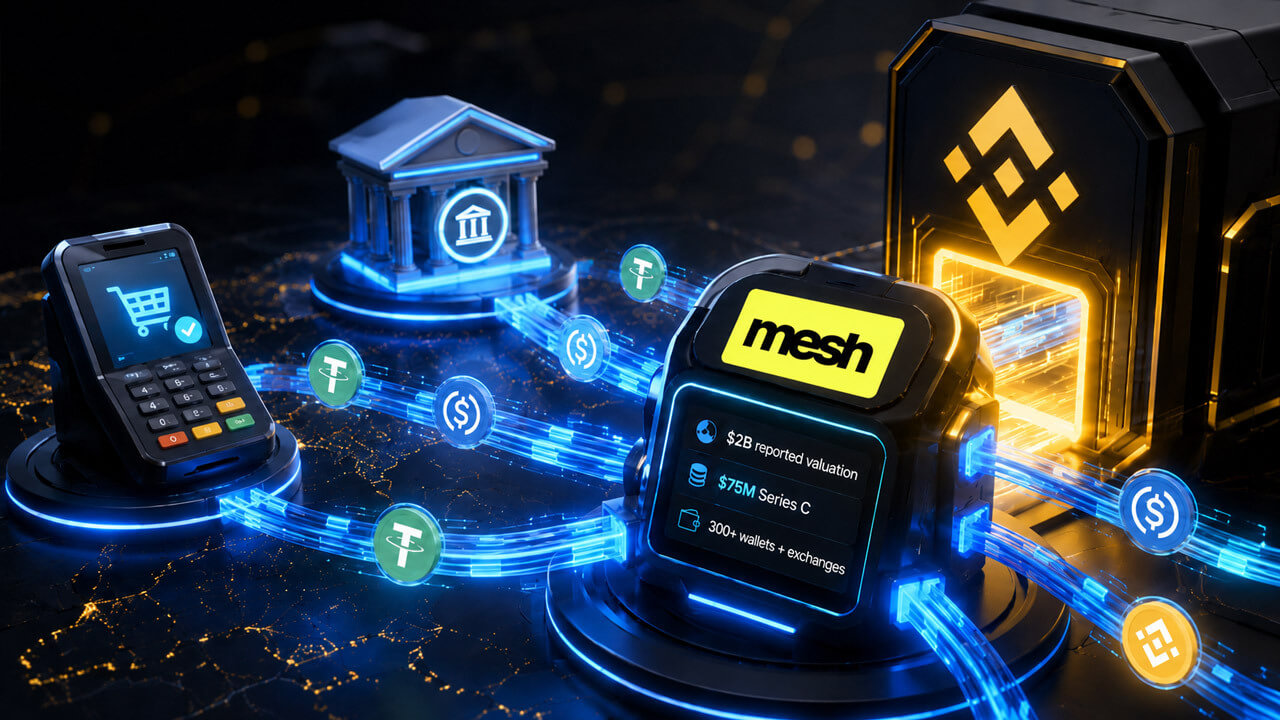
Why Binance’s reported $2B Mesh investment could decide who controls stablecoin payments
Binance's reported move to lead a new Mesh funding round puts a strategic price on the payment routes stablecoins need to leave ex...

Reuters Crypto Coverage Infrastructure Underpins Global Digital Asset Reporting
Reuters' 2,500 journalists across 165 countries cover crypto markets. How wire service infrastructure shapes digital asset informa...

Vitalik’s Lean Ethereum Plan Targets 10x Lower Fees, Quantum Safety, and Faster Finality
Key Takeaways: Vitalik Buterin announced the multi-year “Lean Ethereum” roadmap and declared it a third generation update for Ethe...