The Solana Foundation Asserts Ability to Address Offensive Meme Coins Issue
During a panel discussion at the recent BUIDL Asia summit in Seoul, the issue of racist meme coins and how to handle them was debated among panelists. These meme coins, containing offensive terms and themes, have become...
Archive context
Older archive item. Useful for background and entity history, but not a fresh market-moving signal.
During a panel discussion at the recent BUIDL Asia summit in Seoul, the issue of racist meme coins and how to handle them was debated among panelists. These meme coins, containing offensive terms and themes, have become increasingly prevalent in the crypto space in recent months, raising concerns within the community.
Austin Federa, the head of strategy at the Solana Foundation, offered his perspective on the matter. He argued that while users should have the ability to reveal content if they choose to, the core network should remain permissionless. Federa likened the situation to the internet, where it’s impractical to expect internet service providers (ISPs) to filter out offensive content. Similarly, in the crypto space, wallet developers can implement block lists to filter out certain tokens, but the core network should remain decentralized and permissionless.
On the other hand, Marc Zeller, founder of the Aave Chan Initiative, highlighted the legal obligations in some jurisdictions, such as France, where ISPs are required to block certain content. Zeller acknowledged the cultural differences in approaches to censorship and emphasized the importance of censorship resistance in the blockchain ethos.
Federa also mentioned the legal obligations faced by validators and nodes, citing instances where the U.S. Office of Foreign Assets Control (OFAC) imposed sanctions on certain crypto transactions. However, he noted that addressing racist meme coins should be kept in perspective, as they represent a small fraction of the overall crypto market.
In summary, while there are differing views on how to address offensive meme coins, the discussion at the BUIDL Asia summit highlighted the complexities involved and the importance of balancing censorship resistance with legal obligations and community standards.
Featured Image: Freepik
Why this matters
This altcoin story adds another data point to the current market tape and is useful when read alongside nearby source coverage.
Original source
Read on CryptoCurrencyNewsRelated market context

Federal Reserve’s Waller embraces AI, stablecoins, and tokenization as future of payments
Waller's embrace of AI and stablecoins signals a shift towards modernizing payment systems, potentially reshaping regulatory and f...

Dan Tapiero: “We’ve Begun a Bull Phase” in Bitcoin
Bitcoin Magazine Dan Tapiero: “We’ve Begun a Bull Phase” in Bitcoin Dan Tapiero says a new bull phase has begun in the core assets...

Token Spotlight: What is SoFiUSD (SOFID)?
Key takeaways SoFiUSD (SOFID) is a stablecoin, a crypto asset designed to hold a steady value of about one US dollar rather than m...
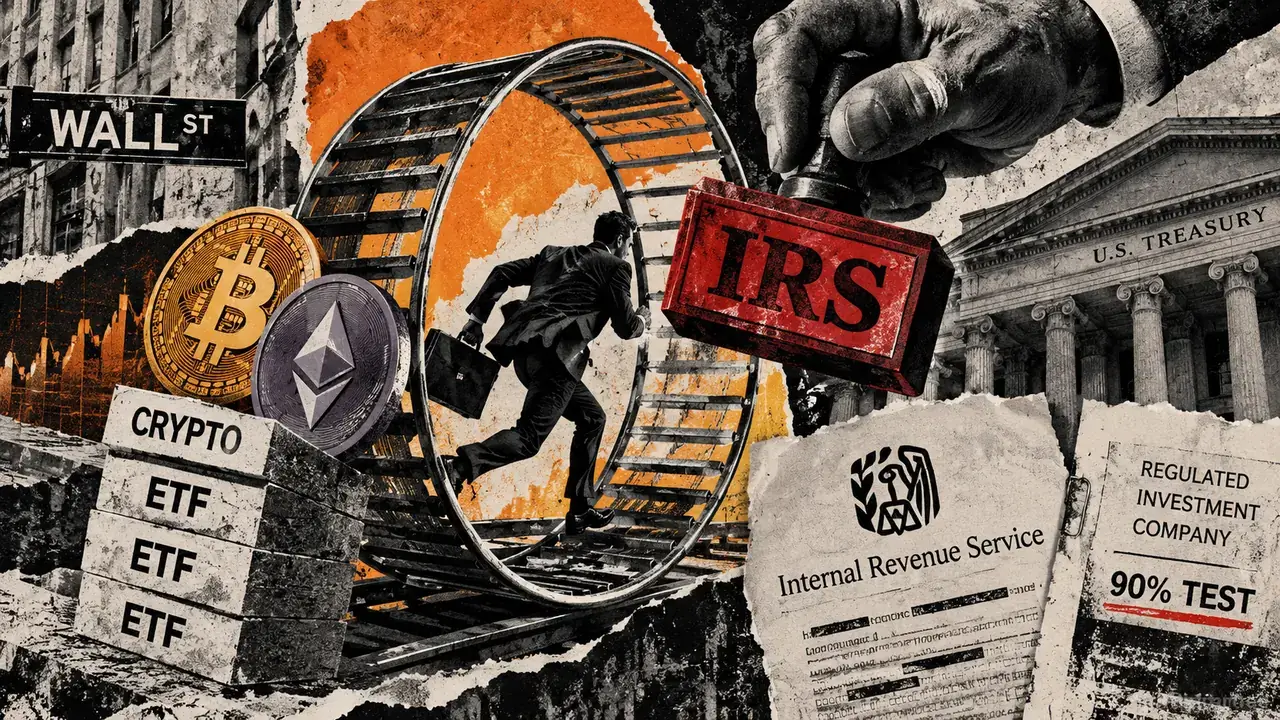
A $7 billion crypto ETF plumbing boom just ran into the IRS
The Internal Revenue Service (IRS) is scrutinizing a crypto-linked ETF tax strategy as Washington intensifies its campaign against...
Solana’s DeFi TVL recovers above $6.5B after Drift hack wiped $285M
The recovery highlights the resilience of DeFi systems and sets a precedent for future compensation mechanisms, emphasizing securi...

Morgan Stanley Sets Up Lab to Test Stablecoins and DeFi
Morgan Stanley has established an internal Digital Asset Lab to test stablecoins, tokenization and decentralized finance applicati...