This XRP Level Is ‘Where Everything Changes,’ Analyst Says
XRP is in a compression phase rather than a breakdown, according to analyst EGRAG CRYPTO, who says the chart’s most important trigger now sits at $2.20. In a post published Friday, he argued that reclaiming that level wo...
Archive context
Older archive item. Useful for background and entity history, but not a fresh market-moving signal.

XRP is in a compression phase rather than a breakdown, according to analyst EGRAG CRYPTO, who says the chart’s most important trigger now sits at $2.20. In a post published Friday, he argued that reclaiming that level would mark the point where the current structure turns decisively constructive again.
EGRAG’s analysis is built around the monthly XRP chart and, specifically, the 21-period exponential moving average. “I keep repeating this: I don’t predict the future. I read charts, study cycles, and utilize on indicators,” he wrote, framing the setup less as a directional call than as a structural read of the market. “Right now the 21 EMA is the key.”
What This Mean For XRP PriceOn his chart, that yellow 21 EMA has acted as the central trend reference through multiple XRP cycles. The latest monthly candles show price slipping below that line after a sharp rally, then moving into what he describes as a “descending compression / falling Channel.” He paired that with another key observation: “Price lost the 21 EMA,” “formed a descending compression / falling Channel,” and was “rejected from the $2.20 macro zone.” His conclusion from that combination was blunt: “This is not a crash structure.”
That distinction is the core of the thesis. Rather than reading the recent decline as broad capitulation, EGRAG says the candle behavior points to a controlled retracement. “Look at the candles: shrinking bodies, weakening downward momentum, controlled retracement,” he wrote. “That’s seller exhaustion, not collapse.”
The chart supports that reading visually. The candles on the right side of the structure are smaller than during the earlier impulse move, and the decline appears more contained than impulsive. The falling yellow guide lines drawn over the recent price action show a narrowing channel rather than a steep vertical unwind. In practical terms, the setup looks like compression into a decision point, not an outright structural failure.
EGRAG then laid out two possible paths from here. The first is what he called a “Liquidity Sweep First,” meaning “a final shakeout toward $0.80-$1.00.” In his wording, that scenario would reflect a “wedge measured move & liquidity below,” suggesting XRP could still dip toward the lower part of the structure before any broader reversal attempt.
The second path is the more immediate bullish alternative. “Fast Reclaim,” he wrote, would come “if XRP reclaims $1.65–$1.80,” at which point “the structure flips bullish again.” That reclaim zone matters because it would indicate that the compression has failed to produce follow-through to the downside and that buyers are regaining control before a deeper flush.
Still, the chart’s most important level sits higher. EGRAG is explicit on that point: “The Level That Changes Everything $2.20: Reclaim that level and the expansion phase reactivates.” He followed that with the roadmap above it: “Next targets: $2.20 reclaim, $2.50 retest.”
That makes $2.20 more than just a nearby resistance band. On this reading, it is the macro pivot separating a still-unresolved correction from a renewed expansion phase. The analyst had already identified it as the zone where XRP was previously rejected, so a move back above it would not just recover lost ground; it would invalidate the idea that the market remains trapped below a failed breakout area.
For now, though, his message is that the market remains in waiting mode. “Until then…This is compression, not capitulation,” EGRAG wrote. “Structure > Noise.”
At press time, XRP traded at $1.41.
Why this matters
XRP is showing up inside the Market Structure theme, so this story is worth tracking for follow-through rather than treating it as a one-off headline.
Original source
Read on NewsBTCRelated market context
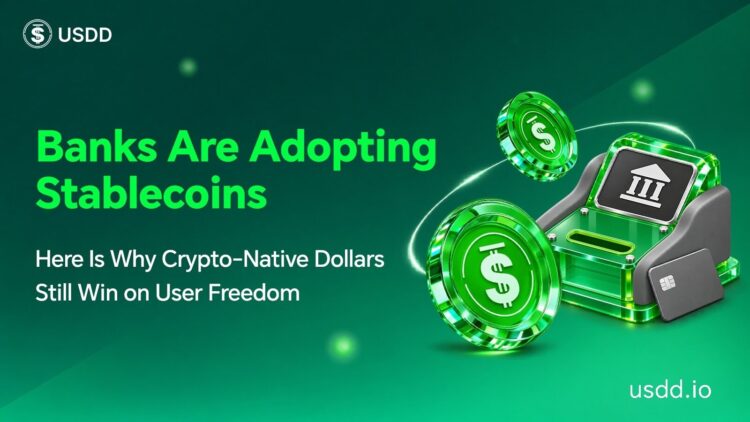
As traditional giants rush into digital dollars, USDD’s Yvonne Chia explains why 24/7 access, self-custody, and transparent yield give decentralized stablecoins an edge banks can’t replicate. 20 November – Road Town, Totorla, British Virgin Islands – Decentralized stablecoin protocol USDD is accelerating its multichain utility across TRON, Ethereum, and BNB Chain—combining automated sUSDD yield via its Smart Allocator with GasFree zero-TRX transfers—as traditional financial giants race to build competing stablecoin rails. In a recent industry interview with instant exchange partner ChangeNOW, USDD Head of Communications Yvonne Chia outlined why self-custody, 24/7 settlement, and transparent onchain reserves give decentralized digital dollars a structural advantage over bank-issued alternatives. 1. Permissionless Access vs. Gatekept Accounts For billions of people globally, opening and maintaining a traditional bank account still involves paperwork, minimum balance requirements, geographic restrictions, and approval delays. Even when banks integrate stablecoin rails behind the scenes, those services remain gated behind legacy compliance walls and intermediary control. Crypto-native stablecoins flip that model on its head. As Yvonne Chia highlighted during the interview: “Compare this to a stablecoin like USDD, where all you need is a phone, a working internet connection, you can immediately start a wallet and you have access to your funds right away.” With USDD, users can access and manage their digital dollars directly through their own wallets, without depending on traditional financial intermediaries. This represents a fundamental shift in financial access: users are no longer limited to the services, operating hours, or account structures of a single institution. Instead, they have the freedom to hold, manage, and transfer their assets on their own terms. Self-custody also gives users greater autonomy over their financial decisions. They can choose which wallets to use, where to transfer their assets, and which supported decentralized applications to interact with, without needing to route every transaction through a centralized financial institution. With USDD, users’ digital dollars can move with them across an open blockchain ecosystem, rather than remaining tied to a particular bank or service provider. 2. 24/7 Global Settlement vs. “Banking Hours” Legacy payment networks still operate on decades-old schedules: weekend cutoffs, bank holidays, and multi-day cross-border settlement delays accompanied by hefty wire fees. Blockchain networks never close. Whether it is a Sunday night or a public holiday, USDD moves globally without depending on traditional banking operating hours or settlement windows. “We are able to have transfers 24/7 and we’re not limited to any traditional banking hours. So I think that in some ways, stablecoins are not just becoming banks, but exceeding what traditional banks can offer to users.” To make everyday transfers even smoother than fintech apps, USDD introduced GasFree integration on TRON, allowing users on supported wallets to pay network fees directly in USDD without needing to hold TRX. This removes another practical barrier to stablecoin adoption: having to acquire and maintain a separate gas token just to transfer digital dollars. With GasFree, eligible users can pay approximately 0.5 USDD per transaction, compared with around 1.5 USDT for a standard USDT transfer under the referenced fee conditions. These improvements matter because the usefulness of a stablecoin is not determined by its peg alone. Low-cost transfers, straightforward wallet experiences, and around-the-clock availability are what make digital dollars practical for everyday payments and global value transfers. 3. Passing Yield Back to Users vs. Bank Spreads Perhaps the sharpest contrast between banks and decentralized stablecoins lies in how yield is distributed. In traditional banking, institutions take customer deposits, deploy them into yield-generating markets, and retain a significant portion of the returns. Everyday depositors may receive relatively low interest rates, while higher-yielding products often come with eligibility requirements, minimum deposits, or fixed maturity periods. Stablecoins introduce another way to participate in digital-dollar opportunities. Rather than keeping capital entirely within a traditional deposit account, users can access onchain yield opportunities through decentralized protocols and transparent investment mechanisms. USDD was built to return that value directly to holders. Through USDD Earn, users can deposit USDD to receive sUSDD, earning automated, competitive yield powered by our Smart Allocator system, with no fixed lock-up periods restricting access to their capital. For users, the distinction is important: USDD Earn provides access to a productive stablecoin while maintaining flexibility, rather than requiring users to commit their capital to a conventional fixed-term product. 4. Onchain Verification vs. Institutional Trust Traditional banks ask customers to trust closed-door balance sheets and periodic regulatory filings—until a crisis proves otherwise. USDD takes a different approach through its “Don’t trust, verify” ethos, emphasizing publicly accessible onchain information and independent verification. Onchain Transparency: Smart contract addresses, collateral reserves, and Smart Allocator deployments are publicly viewable, allowing users to examine relevant information directly on the blockchain. Structured Disclosures: Quarterly Treasury Reports provide additional information about reserve positions, financial performance, and operational developments. Independent Security Reviews: USDD undergoes third-party security audits to assess its smart contracts and identify potential vulnerabilities. Transparency does not eliminate financial or technical risks, but it changes how users can evaluate them. Instead of relying exclusively on an institution’s assurances, users have access to information that can be independently examined and verified. 5. Beyond a Single Network: An Open, Multichain Financial Ecosystem Financial freedom is not just about holding digital dollars. It is also about being able to use them wherever opportunities and applications exist. A stablecoin confined to a single network or limited use case cannot fully realize the potential of open blockchain finance. Following its January 2025 protocol upgrade, USDD expanded natively from TRON onto Ethereum and BNB Chain, extending its reach across multiple blockchain ecosystems. This multichain presence allows USDD to connect with different communities, liquidity environments, and decentralized applications. Its sUSDD product has also expanded into DeFi integrations, including Pendle and Morpho, giving users additional ways to access yield strategies across supported ecosystems. The bigger picture is an interconnected financial ecosystem in which users can move between holding, transferring, exchanging, and deploying their stablecoins according to their own needs. These are not isolated functions. Together, they make stablecoins more useful as everyday financial infrastructure. The Future: Interconnected, Open, and Multichain Banks will undoubtedly continue using stablecoin rails to modernize their back-end settlement. However, true financial freedom comes from open networks where assets flow freely across protocols without intermediaries. For USDD, the opportunity goes beyond offering a dollar-pegged asset. It is about making digital dollars accessible, transferable, and productive across an interconnected financial ecosystem. From self-custody and 24/7 transfers to flexible yield opportunities and multichain DeFi access, these capabilities give users more ways to put their money to work. Banks may be bringing stablecoins into traditional finance. Crypto-native protocols are showing what stablecoins can make possible beyond it.
As traditional giants rush into digital dollars, USDD’s Yvonne Chia explains why 24/7 access, self-custody, and transparent yield...

Crypto News Today: Bitcoin Price Nears $55K as Ethereum Plunges 10% and XRP Tests $0.87 Support
The November 21 selloff has kept all three cryptocurrencies under pressure, with moving averages indicating sustained bearish mome...

Bitcoin (BTC) Price Today: Glassnode Warns of Holder Losses as BTC Approaches Critical $61K Support
Glassnode data also points to a shrinking profit margin for the average Bitcoin holder, raising concerns that another decline coul...
Bitcoin Hovers Just Above Average Holder’s Cost Basis as Price Keeps Dipping
Bitcoin Magazine Bitcoin Hovers Just Above Average Holder’s Cost Basis as Price Keeps Dipping Bitcoin is trading just above its re...

Bitcoin (BTC) Price Prediction: $59.9K Weekly Demand Zone Could Decide Between a $55K Drop and $86K Recovery
The sharp reversal followed approximately $2.7 billion in crypto liquidations within 24 hours, while Bitcoin’s weekly chart identi...

Elon Musk’s Grok AI Predicts ETH Vs SOL For 2027: Who Wins?
Ethereum vs. Solana in 2027: Elon Musk’s Grok AI predicts which is positioned for bigger gains at the end of this article. As of m...