An Overview Of The Stablecoin Market
The U.S. dollar accounts for nearly 100% of stablecoin value and a window of opportunity for policymakers has emerged with the collapse of UST. In this excerpt from Bitcoin Magazine Pro, we will take a more in-depth look...
Archive context
Older archive item. Useful for background and entity history, but not a fresh market-moving signal.

The U.S. dollar accounts for nearly 100% of stablecoin value and a window of opportunity for policymakers has emerged with the collapse of UST.
In this excerpt from Bitcoin Magazine Pro, we will take a more in-depth look at the redemption mechanism of USDT, and cover why the concerns about the stablecoin and the apparent risks it presents to the bitcoin/cryptocurrency ecosystem.
Before digging in, it should be said that the advent of bitcoin on a long enough timeframe obfuscates the need for a “stablecoin,” which is really just a blockchain-based IOU held by a counterparty. A digital bearer asset that is completely stable on the protocol level and from an issuance and absolute supply perspective that can be held with no counterparty risk is the innovation. With that being said, the natural demand for dollars in the “crypto-economy” does make sense given the dollar’s incumbent status as the world reserve currency.
With today’s release and focus on stablecoins, as well as the recent collapse of UST, an interesting window of opportunity for policymakers has emerged to provide guidance and clarity to stablecoin issuers, which would result in a rising demand for monetizing U.S. Treasury debt. After all, in the cryptocurrency ecosystem, USD stablecoins account for nearly 100% of stablecoin value. Given the dollar's role as the world reserve currency today, this makes intuitive sense.
The U.S. dollar accounts for nearly 100% of stablecoin value.The main takeaway from the rapid growth of stablecoins over the past two years is that despite the emergence of a digital monetary bearer asset with a fixed supply (bitcoin), there still is demand for a bearer instrument form of dollars, even if accompanied by trade-offs. All in all, a vibrant market for stablecoins ultimately will lead to smoother rails to bitcoin itself for those without access to the walled garden Western financial system, without offering the assurances of bitcoin’s monetary policy or decentralization.
The is an excerpt from a recent edition of Bitcoin Magazine Pro, Bitcoin Magazine's premium markets newsletter. To be among the first to receive these insights and other on-chain bitcoin market analysis straight to your inbox, subscribe now.
Why this matters
This bitcoin story adds another data point to the current market tape and is useful when read alongside nearby source coverage.
Original source
Read on Bitcoin MagazineRelated market context
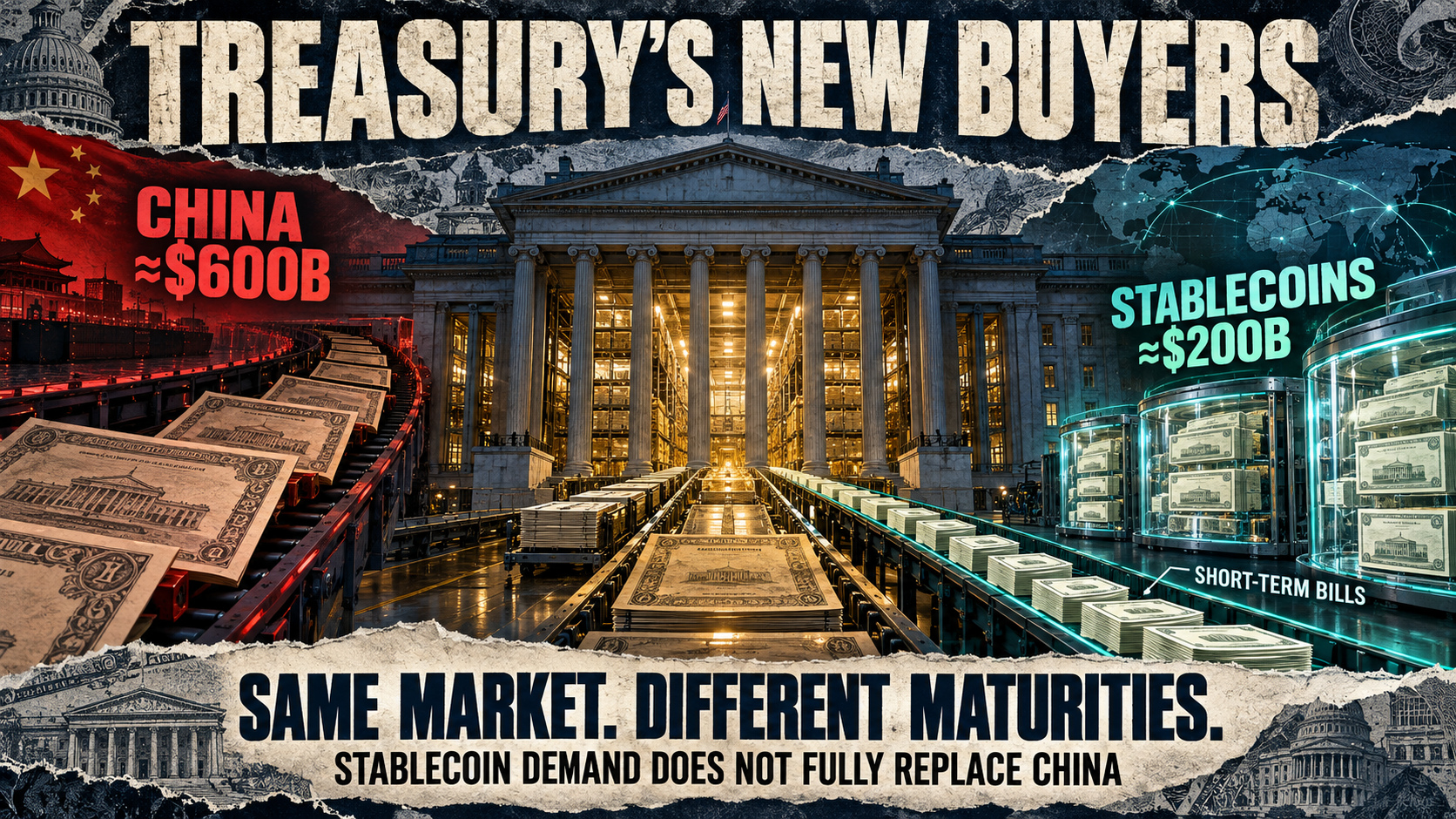
Stablecoin issuers have replaced 40% of China’s lost US Treasury demand
Stablecoin issuers are emerging as a new source of demand for US government debt as foreign official holdings lose ground. Tether...
Circle Pushes Back on MiCA's Bank-Deposit Mandate for Stablecoins
The USDC issuer told the European Commission that MiCA's reserve mandates and concentration caps keep the largest global stablecoi...

Congress weighs letting banks hold crypto, issue stablecoins
The proposal could accelerate institutional crypto adoption, potentially stabilizing digital asset markets and influencing Bitcoin...

Visa Says Business Payments Now Drive 17% Of Stablecoin-Linked Card Volume
TL;DR Visa says roughly 17% of its stablecoin-linked card volume in fiscal 2026 year-to-date came from business and commercial car...

Circle Urges EU to Replace Stablecoin Bank-Deposit Mandates
The USDC issuer also wants to preserve cross-border co-issuance and create a recognition route for foreign stablecoins, while cent...

Fiserv Puts Stablecoin Banking Platform Live With North Dakota Roughrider Coin
TL;DR Fiserv says its digital-asset platform is now live with financial-institution clients. Bank of North Dakota’s dollar-backed...