As D.C. Adopts Sound Money Principles, States Must Continue to Lead
Conservatives vowed to bring sound money policy to Washington in 2025, but the battle for your financial freedom is closer to home than you would expect. States pioneered this effort, and should capitalize on this nation...
Archive context
Older archive item. Useful for background and entity history, but not a fresh market-moving signal.
Conservatives vowed to bring sound money policy to Washington in 2025, but the battle for your financial freedom is closer to home than you would expect. States pioneered this effort, and should capitalize on this national momentum to defend American financial liberties locally.
This month, the Republican National Committee released a draft proposal for changes to the party platform that would assert the party’s stance against a central bank digital currency — also known as a CBDC or digital dollar — and in support of the right to mine, own, and privately transact in digital assets like Bitcoin.
Sound monetary policy has been a growing focus of the 2024 election as Republican candidates like Former President Trump and Vivek Ramaswami publicly supported digital assets — specifically Bitcoin — while denouncing the implementation of a CBDC. Even the independent presidential candidate Robert F. Kennedy Jr. holds a similar stance on these issues.
As fresh as these issues may seem at the national level, states have been in discussions over sound money for some time. The Idaho Republican party was the first to add pro-digital asset, anti-CBDC language to a major state party platform. The Gem State also considered two bills during the 2024 legislative session that would have fulfilled that pillar of the platform, but ultimately failed by close votes in the House and Senate.
Though Idaho still faces roadblocks, other states have successfully enacted sound money policy in recent years. Florida passed legislation to ban CBDCs. North Carolina and Arizona considered similar legislation that ultimately failed. Meanwhile, Wyoming, Montana, Arkansas, Oklahoma, and Louisiana passed legislation to defend fundamental rights on digital assets.
These policies come as states attempt to stem the threats to Americans’ liberties posed by private banks and the federal bureaucracy.
Financial institutions are the new scene of the Left’s cultural warfare. Many banks are ending their business with certain religious organizations, firearms manufacturers, or non-green industries. This can be crippling in a modern, mostly digital economy and threatens agriculture, mining, and energy — some of the leading industries in Idaho’s economy.
Privacy is also a chief concern for many Americans. The federal government weaponizes its power over the banking system to search citizens’ transaction histories without a warrant despite this infringing on the Fourth Amendment of the U.S. Constitution.
Worse yet, bureaucracies in Washington, D.C. — being dissatisfied with their existing degree of outsized control — want to monitor and control every American’s financial transactions through a CBDC. This new, digital dollar, could offer unparalleled control through programmable issuance, use, and taxation.
It’s worrisome that bureaucrats want even more control over a financial system they already proved they cannot manage well. The hidden tax of inflation is devastating the savings of all Americans who use the dollar as a store of value. Yet, the government continues to borrow and print to sustain its ever-increasing size.
States that have proposed and passed legislation to protect the financial liberties of their constituents recognize these problems and are acting accordingly. They are providing a way for the market to escape from a financial system that is no longer private, stable, and free.
Even if sound money policy advances at the federal level, this would not relieve the need for states to act. States that do not yet have these protections must continue to advance these policies locally.
States should take advantage of the national momentum for sound money policy and work to defend the financial sovereignty of their constituents. Idaho is a prime candidate for these policies. After all, both of the Gem State’s neighbors to the east already enacted some of these policies.
Idaho should catch up to her peers by executing its own sound money policy agenda. This starts with acknowledging a CBDC is not money and banning the state’s cooperation with the Federal Reserve’s implementation of the system. It must also defend the right to mine, own, and transact in digital assets. This will allow Idahoans to defend their financial liberties by opting out of a system poised to control and regulate their finances.
Of course, Idaho is not the only state that could benefit from these policies. Now is the time for state legislatures to leverage this national momentum and consider how they can protect the finances of their constituents. Otherwise, they may find that the nation has left them behind on an issue where states are leading.
This is a guest post by Niklas Kleinworth. Opinions expressed are entirely their own and do not necessarily reflect those of BTC Inc or Bitcoin Magazine.
Why this matters
This bitcoin story adds another data point to the current market tape and is useful when read alongside nearby source coverage.
Original source
Read on Bitcoin MagazineRelated market context

CFTC submits rules to define event contracts as swaps, defying states’ gambling claims
The CFTC's move to classify event contracts as swaps could centralize regulatory oversight, potentially reshaping prediction marke...
Aave’s $50 million lending plan could lose money without a single default
Aave’s proposed institutional lending business would put crypto collateral on both sides of the financing chain. Institutions woul...

Is "Reverse Solicitation" Under Scrutiny? EU Probes Binance’s Services after Wind-Down Order
EU officials are questioning crypto exchange Binance over its use of reverse solicitation, a legal exemption, to keep serving cust...

Superstate Expands Tokenized Short-Duration US Treasury Fund (USTB) To Base
In a major development confirmed on SEPTEMBER 30, 2026, Confirmed announcement/filing for Superstate Expands Tokenized Short-Durat...
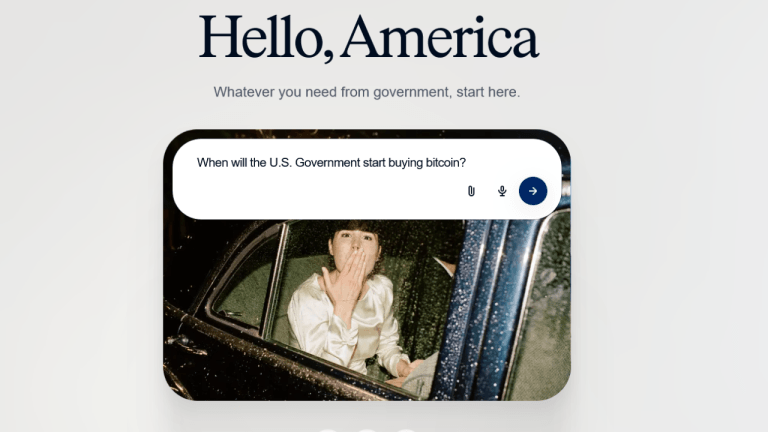
Does America.gov Know Bitcoin Policy as Well as ChatGPT and Claude? We Asked
The newly launched U.S. government AI chatbot America.gov can also help bitcoin and crypto users with answers to their questions....
Ripple Tokenizes Brazilian Investment Fund & Real Estate Records On XRP Ledger
In a major development confirmed on SEPTEMBER 30, 2026, Confirmed announcement/filing for Ripple Tokenizes Brazilian Investment Fu...