Bhutan Secretly Mines $1.3B in Bitcoin—Now Holds Nearly 40% of Its GDP in BTC
Key Takeaways: Bhutan has mined over 12,000 BTC since 2020, now worth approximately $1.3 billion. Its Bitcoin holdings account for nearly 40% of the country’s total GDP. The government quietly scaled mining operations us...
Archive context
Older archive item. Useful for background and entity history, but not a fresh market-moving signal.

Key Takeaways:
- Bhutan has mined over 12,000 BTC since 2020, now worth approximately $1.3 billion.
- Its Bitcoin holdings account for nearly 40% of the country’s total GDP.
- The government quietly scaled mining operations using hydropower and now ranks as the world’s third-largest state Bitcoin holder.
In a bold yet largely undisclosed move, the Royal Government of Bhutan has spent the last five years quietly building one of the largest national Bitcoin reserves. With over 12,000 BTC mined using its abundant hydropower resources, the country has joined the global elite in sovereign crypto holdings—without ever publicly announcing it.
Read More: Bhutan’s New Economic Hub Adds Crypto to National Reserves
A Silent Accumulation: Bhutan Mines Its Way into the Global Top 3Bhutan, a landlocked Himalayan kingdom known for its focus on Gross National Happiness and environmental sustainability, has quietly emerged as a major force in Bitcoin mining. Since 2020, Bhutan’s state-owned investment arm, Druk Holding and Investments (DHI), has accumulated more than 12,000 BTC—valued at roughly $1.3 billion at current prices.
This reserve now represents almost 40% of Bhutan’s GDP, positioning the country just behind the United States and El Salvador in terms of sovereign Bitcoin holdings. While countries like El Salvador made headlines for adopting BTC as legal tender, Bhutan kept its activities largely under wraps—until now.
The first public confirmation came through reports from financial and crypto policy leaders, including a tweet by Dennis Porter, CEO of the Satoshi Act Fund, who called the move a “crypto milestone” for state-level participation.
The Origin of the Bitcoin Initiative: A Royal VisionThe idea apparently came from King Jigme Khesar Namgyel Wangchuck, who had ordered his government to find new means to invigorate Bhutan’s economy in the wake of the pandemic. Already endowed with renewable hydropower, which fuel the energy-hungry mining operations, Bhutan enjoyed a natural advantage.
The government acted swiftly. The first mining pooling site near the Dochula Pass was set up with only two computers. The early installation was so primitive that at one point the machines got so hot they set off a security alarm.
But the project’s team — led by Ujjwal Deep Dahal, CEO of DHI — moved quickly to increase its size. By 2022, Bhutan had four or more state-owned mining installations up and running, powered by their green energy and cold mountain climes allowing them to keep these installations running at their peak.
How Bhutan Has Rolled Up a $1.3B Reserve in Less Than 5 Years- Start Year: 2020
- BTC Mined: ~12,000
- Estimated Value: $1.3 billion
- GDP Ratio: ~40%
- Power Source: 100% Hydropower
- Number of Mines: At least 6, including facilities built with Bitdeer
Now, based on satellite imagery and analysis from a third party, at least six new mining operations are responsible for the increase of power usage in Bhutan, including operations that the country spawned with Bitdeer Technologies, a digital mining company with its headquarters in Singapore. Bitdeer pays Bhutan for the electricity in USD, helping to build the nation’s reserves of foreign currency.
Mining equipment is strategically located in remote, cooler regions with access to reliable hydropower grids, keeping operational costs low. The model is not only sustainable but also economically efficient, especially with BTC trading near all-time highs.
Read More: Pakistan’s Bold Crypto Leap: Unveiling a Strategic Bitcoin Reserve in 2025 Vegas
Economic Impact and Strategic ValueBhutan’s Bitcoin reserve isn’t just an example of speculation; it is already making a concrete economic difference. Former prime minister Tshering Tobgay said civil servants’ increments were financed by the proceeds from mining Bitcoin.
The recent drop in hydropower exports — owing to regional climate shifts — has in recent years reduced Bhutan’s dependence on hydroplants as Bitcoin mining diversifies the Bhutanese market. It opens a new source of foreign currency, a critical need for an economy dependent on imports for key goods.
The government established Green Digital as a company to oversee the operation, insuring compliance and oversight. There have been some complaints about a lack of transparency from officials, but the overall economic benefits seem to have drowned out the complaints.
Crypto Integration Beyond MiningBhutan isn’t stopping at mining. The country has begun trialing the practical uses of crypto in everyday life. In May 2025, this agency launched a service allowing citizens to pay with 100+ cryptocurrencies. Yup, and now travelers can book flights, hotel and even buy visas with digital assets too.
Bhutan’s futuristic development project, the Gelephu Mindfulness City, also includes a key feature of crypto integration. Dubbed a new economic and innovation city, the city is being developed around the integration of blockchain.
Former Prime Minister and chairman of the Gelephu zone, Dr. Lotay Tshering, explained the role crypto plays in a local context takeaway style:
“It’s basically the salt in your curry. It will touch every element in the curry.”
That means digital assets might contribute as a foundation for commercial and governmental infrastructure in the city.
Global Ranking Among State Bitcoin HoldersAs of mid-2025, Bhutan’s Bitcoin reserve would place it in the top three among sovereign holders:
- United States – Over 200,000 BTC (mainly seized through law enforcement actions)
- El Salvador – ~5,750 BTC (purchased under government program)
- Bhutan – ~12,000 BTC (self-mined)
Bhutan’s method of acquiring Bitcoin—through direct mining rather than market purchases—differentiates it from other nations. It avoids market volatility during acquisition and ensures a cleaner source of BTC unlinked to tainted coins.
The post Bhutan Secretly Mines $1.3B in Bitcoin—Now Holds Nearly 40% of Its GDP in BTC appeared first on CryptoNinjas.
Why this matters
This bitcoin story adds another data point to the current market tape and is useful when read alongside nearby source coverage.
Original source
Read on CryptoNinjasRelated market context

US Hoovers up Bitcoin While the World Runs on Its Digital Dollars: Report
Bitcoin Magazine US Hoovers up Bitcoin While the World Runs on Its Digital Dollars: Report America is accumulating bitcoin while e...

MEXC Releases October 2026 Proof of Reserves, Reinforcing User Trust Through Verifiable Transparency
Mutsamudu, Comoros, October 16, 2026 – MEXC, a pioneer in 0-fee digital asset trading, has released its October 2026 Proof of Rese...

USDC’s EU Reserves and Capital Shift to EBA Supervision in MiCA’s First ‘Significant’ Call
Circle’s European USDC issuer will answer to the European Banking Authority (EBA) on reserves, liquidity and capital from Nov. 12,...
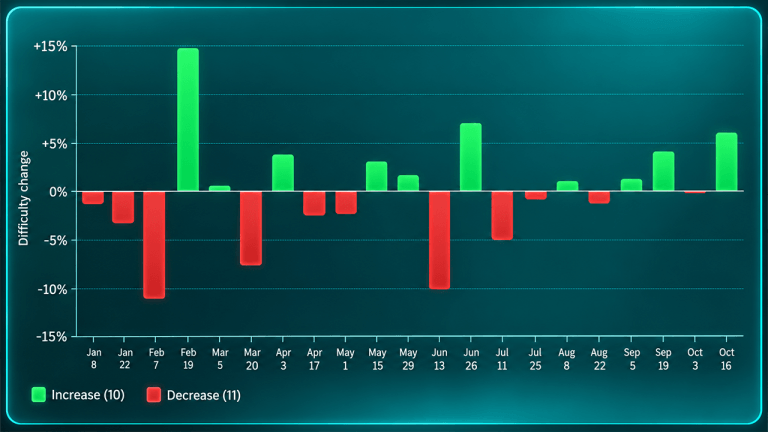
Bitcoin Mining Difficulty Jumps 5.92% in Third-Largest Hike of 2026
On Friday, at block height 971712, bitcoin mining grew considerably more demanding as the network’s latest difficulty adjustment c...

BFFS26 Denver: Joseph Kelly on Bitcoin Custody and Credit; Alan Lane on Banking Lessons
Bitcoin Magazine BFFS26 Denver: Joseph Kelly on Bitcoin Custody and Credit; Alan Lane on Banking Lessons The Bitcoin for Financial...

OKX Marketing Chief Haider Rafique Steps Back After Seven Years at Crypto Exchange
Key Takeaways: After nearly seven years at OKX, Haider Rafique has decided to step aside due to family and various personal reason...