Binance Removes Bitcoin Trading Fees In Fifth Anniversary
The world’s largest cryptocurrency exchange will squash spot bitcoin trading fees starting July 8 as it celebrates its fifth year of operation.Binance will remove bitcoin trading fees in its global platform in celebratio...
Archive context
Older archive item. Useful for background and entity history, but not a fresh market-moving signal.
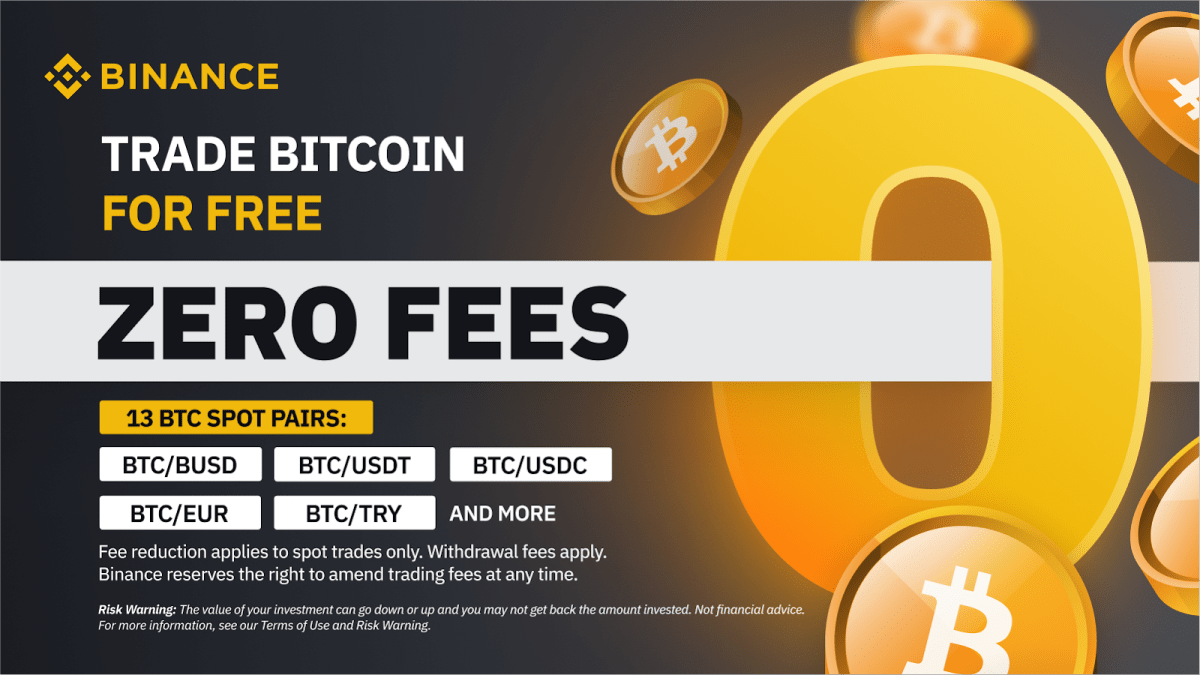
The world’s largest cryptocurrency exchange will squash spot bitcoin trading fees starting July 8 as it celebrates its fifth year of operation.
Binance will remove bitcoin trading fees in its global platform in celebration for its fifth anniversary.
The move by the world’s biggest cryptocurrency exchange comes on the heels of a similar strategy enacted by its U.S. subsidiary, Binance.US. Late last month, the American firm squashed fees for spot bitcoin trading as it sought to increase its presence in the country and fire up competition. U.S. rival Coinbase’s stock took a hit after the feature was announced.
Binance’s move covers more ground than its U.S. counterpart. The global exchange said in a press release on Wednesday that starting on July 8, 2022 users will be able to trade spot BTC with no fees in 13 pairs, among fiat currencies and stablecoins, including the euro and the British pound as well as the two most popular stablecoins in the market: Tether’s USDT and Circle’s USDC. Traders can get the fee cut benefit with U.S. dollars only at Binance.US.
“In line with our user-first philosophy, Binance has always strived to provide the most competitive fees in the industry,” Binance founder and CEO, Changpeng Zhao, said in a statement. “At its core, Binance is an inclusive platform with accessibility in mind. Eliminating the trading fees on selected BTC spot trading pairs is another move towards that direction.”
Other fiat currencies that will also fall under the new fee-free rule include the Brazilian real, the Australian dollar, the Russian ruble and the Turkish lira. The feature will be live “until further notice,” Binance said.
Despite providing a convenient Bitcoin on-ramp, centralized exchanges can become a security hole if leveraged as custody providers by users. Those interested in reducing risk can mitigate exposure to third parties by securing their own bitcoin – which, despite the learning curve, can prove advantageous over the long run.
Why this matters
This bitcoin story adds another data point to the current market tape and is useful when read alongside nearby source coverage.
Original source
Read on Bitcoin MagazineRelated market context
True Markets Launches Tokenized Equity Trading, Starting with Nvidia
True Markets has launched an on-chain orderbook for tokenized equities, starting with Nvidia against USDC.The DeFi Orderbook is de...
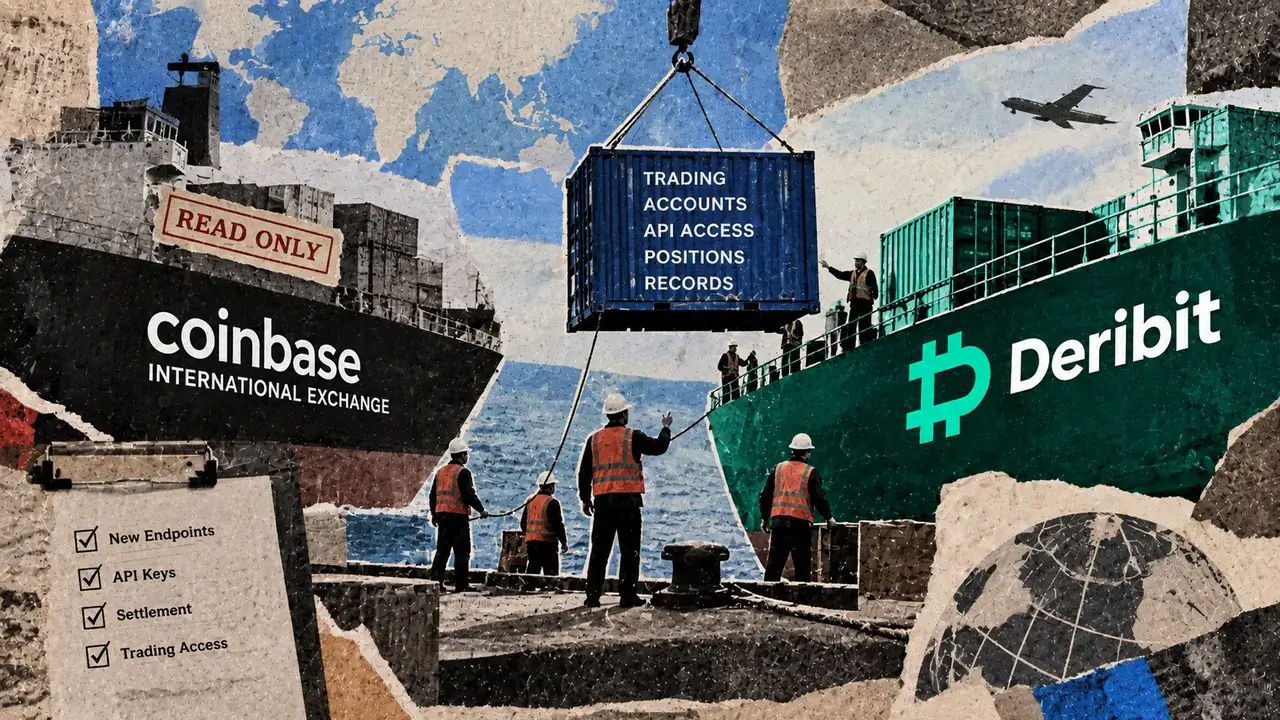
Coinbase completes Deribit switch, ending International Exchange trading
Coinbase completed the migration of Coinbase International Exchange to Deribit on Oct. 1, ending trading on its former internation...

Solana leads all chains in spot DEX volume for fifth straight quarter with $197B in Q3 2026
Solana's sustained DEX volume dominance suggests a potential shift in trading dynamics, impacting fee structures and liquidity dis...

OpenWorld Begins Nasdaq Trading As VerifyMe Deal Creates Public Tokenization Company
TL;DR OpenWorld and VerifyMe have completed their business combination, with the combined company trading on Nasdaq under OPNW fro...

South Korea crypto exchange profits fall 78% in H1 amid trading slump
South Korean crypto exchange operating profits fell 78% in the first half of 2026 as trading volumes, market capitalization and cu...

Bitcoin (BTC) Price Today: 2028 Halving Cycle and BlackRock ETF Inflow Signal Long-Term Rally
Recent market data also show that Bitcoin buyers have absorbed a key sell wall around $85,000, reducing one source of near-term re...