Binance SAFU Fund Adds 3,600 Bitcoin ($233M) As Market Faces Pressure
Bitcoin has experienced one of its sharpest corrections in recent years, slipping below the $65,000 level and reaching its lowest price since October 2024. The decline reflects persistent selling pressure across the cryp...
Archive context
Older archive item. Useful for background and entity history, but not a fresh market-moving signal.

Bitcoin has experienced one of its sharpest corrections in recent years, slipping below the $65,000 level and reaching its lowest price since October 2024. The decline reflects persistent selling pressure across the crypto market, accompanied by deteriorating macro sentiment, reduced liquidity, and cautious positioning among institutional participants. Recent price action suggests the market is entering a critical phase where confidence, rather than technical levels alone, may determine the next directional move.
Amid this uncertainty, the Binance SAFU Fund disclosed the purchase of an additional 3,600 BTC, valued at roughly $233.37 million. While such acquisitions do not guarantee a market reversal, they indicate continued strategic accumulation by major industry players even during periods of elevated volatility.
Market sentiment has deteriorated markedly. Several sentiment indicators now sit near levels last observed during the 2022 bear market, when risk appetite contracted sharply and investors adopted defensive positioning. This environment typically coincides with reduced speculative activity, heightened caution among retail traders, and increased scrutiny from institutional capital.
Institutional Accumulation Emerges Amid Prolonged Capitulation PhaseArkham data indicates that the Binance SAFU fund has continued accumulating Bitcoin, bringing its total recent purchases to approximately 6,230 BTC, valued near $434.5 million. While such activity signals ongoing participation from large institutional entities, it does not necessarily imply an imminent price recovery. Historically, significant purchases during corrective phases often occur alongside broader market stress rather than marking an immediate turning point.
Current market conditions increasingly resemble a classic capitulation phase. Capitulation typically emerges when sustained price declines force weaker holders to exit positions, often at losses, leading to elevated exchange inflows, compressed liquidity, and sharp sentiment deterioration. These episodes can persist longer than many participants anticipate, particularly when macroeconomic uncertainty, risk-off positioning, and tightening liquidity conditions coincide.
Importantly, capitulation does not follow a fixed timeline. In prior cycles, similar phases unfolded over weeks or even months before a durable bottom formed. During these periods, volatility tends to remain elevated, failed rallies are common, and confidence rebuilds gradually rather than abruptly.
The key variables to monitor include exchange flows, derivatives leverage, spot demand recovery, and broader macro signals. Until those metrics stabilize, the base case remains continued market fragility. Large-scale accumulation by institutional funds may provide structural support, but it rarely prevents extended consolidation or further downside during capitulation environments.
Weekly Structure Shows Breakdown Below Key SupportBitcoin’s weekly chart shows a clear deterioration in market structure after losing the $70K region, a level that had previously acted as both psychological and technical support. The latest candle reflects strong downside momentum, with price briefly touching the $60K zone before stabilizing near $65.9K. This move confirms a breakdown from the prior consolidation range and shifts focus toward whether this decline represents a deeper bear phase or a late-cycle correction.
From a trend perspective, Bitcoin is now trading below the 50-week moving average while approaching the 100-week average. Historically, a critical dynamic support during corrective phases. The 200-week average remains far below, indicating the long-term macro trend has not fully reversed, although intermediate momentum has clearly weakened.
Volume dynamics also matter here. The recent selloff shows rising participation compared with earlier consolidation periods, suggesting distribution rather than simple profit-taking. However, sustained high volume without further price acceleration downward could signal seller exhaustion.
If Bitcoin fails to reclaim the $70K area, downside risk toward the $60K–$55K zone remains plausible. Conversely, stabilization above current levels would indicate absorption, a necessary precursor for any meaningful recovery.
Featured image from ChatGPT, chart from TradingView.com
Why this matters
Bitcoin is showing up inside the Institutional Adoption theme, so this story is worth tracking for follow-through rather than treating it as a one-off headline.
Original source
Read on NewsBTCRelated market context

Hyperliquid (HYPE) Price Today: HYPE Holds $80 Support Despite Mounting Bearish Pressure
CoinGecko data puts Hyperliquid’s market capitalization at approximately $18.04 billion and its daily trading volume near $918 mil...

Bybit Expands Beyond Crypto as CEO Outlines Next Phase of Financial Platform
Dubai, United Arab Emirates, October 13th, 2026, Chainwire Bybit Co-founder and CEO Ben Zhou has outlined the latest stage of the...

Peter Schiff Surprised by Bitcoin’s Strength as Michael Saylor’s Strategy Boosts BTC Holdings to 848,250
Schiff continues to expect further declines, but Strategy’s latest purchases highlight the company’s commitment to Bitcoin as a lo...
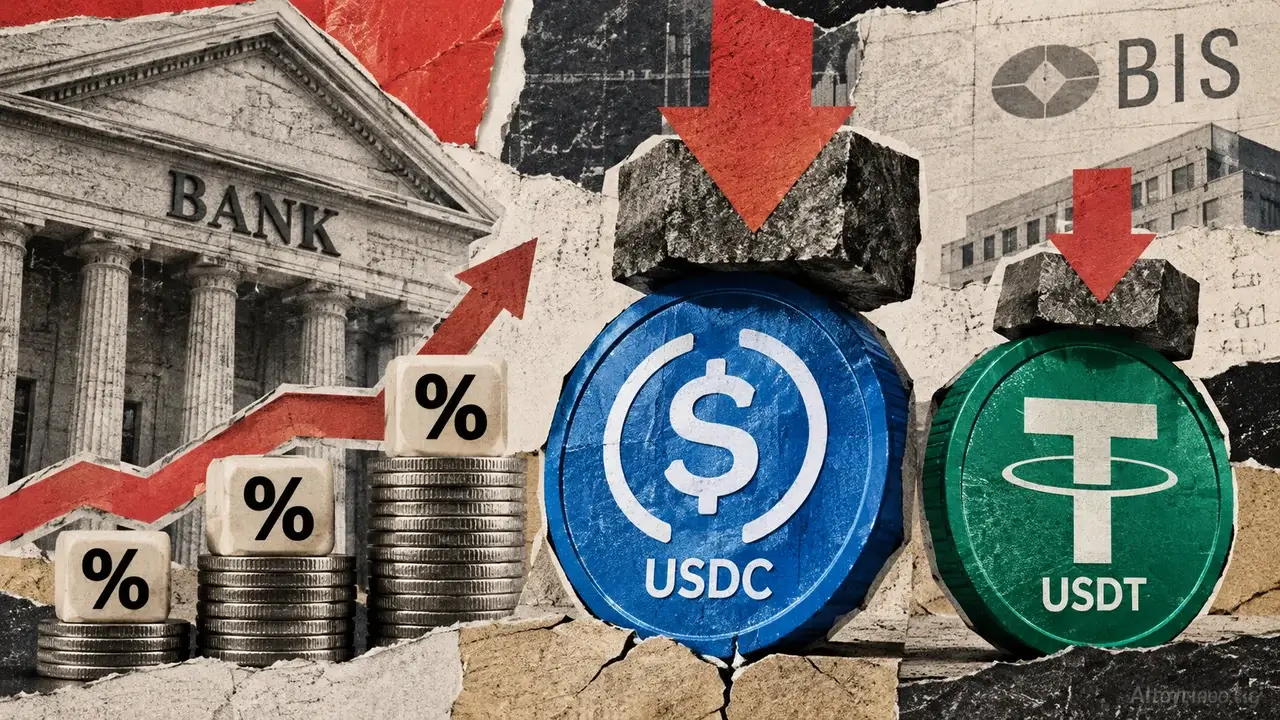
US deposit rates choke USDC adoption, and a BIS model reveals why
Historical estimates point to stronger USDC growth sensitivity to deposit repricing, while exchange rewards complicate adoption fo...

Grok AI Predicts Hyperliquid to Surge 20x by 2027
Elon Musk’s Grok AI predicts that Hyperliquid (HYPE) could reach $1,500 by January 1, 2027, assuming a full-blown crypto bull mark...

XRP Price Prediction: Ripple Makes XRPL Payments Easier With Privy
XRP traded at $1.37, almost flat, with little to no movement as its price prediction and sentiment started to recover. Ripple’s ne...