Bitcoin Achieves All-Time Low Inflation Rate Post-Halving
Bitcoin’s inflation rate has plummeted to a historic low of approximately 1.74% following the recent Bitcoin halving. With 93.3% of Bitcoin already mined, amounting to 19.6 million out of a possible 21 million BTC, the s...
Archive context
Older archive item. Useful for background and entity history, but not a fresh market-moving signal.

Bitcoin’s inflation rate has plummeted to a historic low of approximately 1.74% following the recent Bitcoin halving. With 93.3% of Bitcoin already mined, amounting to 19.6 million out of a possible 21 million BTC, the scarcity element is poised to escalate demand, potentially propelling the leading cryptocurrency’s price surge. In contrast, fiat currencies grapple with higher inflation rates due to governmental controls and economic policies. For instance, in 2023, countries like Argentina encountered exceptionally high inflation rates, hitting 161.0%, as per Inflation Data. The European Union reported more moderate levels, with the euro area’s annual inflation rate at 2.9% in December 2023.
The recent halving event is anticipated to further diminish Bitcoin’s inflation rate, impacting both its scarcity and investor sentiment. The trend suggests that each halving event, which halves the reward for mining new blocks, tends to bolster buyer interest due to reduced supply growth.
According to a report from CoinGecko, historical data reveals a consistent trend of significant growth in Bitcoin prices following each halving event. Following the first halving in 2012, Bitcoin’s price surged by an impressive 8,858%. Subsequent halvings witnessed diminishing returns, with increases of 294% and 540% respectively, yet the pattern of price spikes post-halving remains discernible. These events not only affect Bitcoin but also resonate across other leading cryptocurrencies, such as Ethereum, albeit with varying impacts due to differing supply mechanisms.
The completion of the fourth halving has triggered speculation within the cryptocurrency community regarding short-term market dynamics. Recently, Bitwise noted that while the month immediately following the halving typically witnesses a modest price decline, the subsequent year often heralds exponential gains. After the 2012 halving, Bitcoin experienced a meager 9% increase in the month post-halving, only to soar by a staggering 8,839% over the following year. Similar patterns were observed after the 2016 and 2020 halvings, with Bitcoin’s price witnessing significant surges in the year following each event.
Bitcoin’s market cap fluctuations around halving events provide valuable insights into consumer behavior during these critical periods. Initially pegged at $123.3 million during the first halving, the market cap swiftly surged to $947.4 million shortly thereafter.
Similar patterns were observed in subsequent halvings, reflecting a tendency among Bitcoin holders to speculate around halving events, often opting to hold onto their assets in anticipation of value increases. The analysis of pre-and post-halving periods suggests a strong inclination toward holding Bitcoin, deemed to become more valuable as future supply constraints tighten post-halving.
Featured Image: Freepik
Why this matters
This bitcoin story adds another data point to the current market tape and is useful when read alongside nearby source coverage.
Original source
Read on CryptoCurrencyNewsRelated market context

Pokemon Crypto Case: Collector Faces Trial Over $55 Million Hack
U.S. indictment alleges two Uranium Finance crypto exploits moved through Tornado Cash before being used to buy Pokemon cards and...

Tether claims $550 million in Iran freezes, but $35 million slipped past Senate
Tether says it helped freeze nearly $550 million in Iran-linked USDT during 2026, while Democratic investigators on a Senate subco...
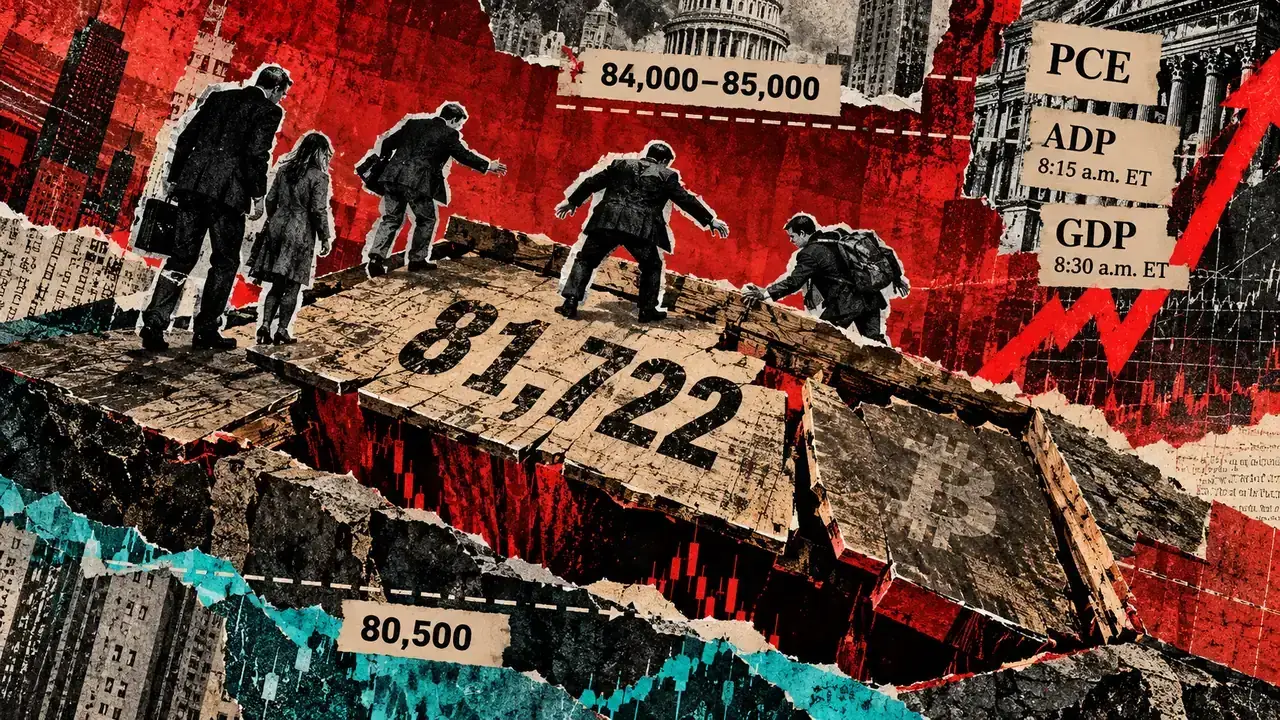
Bitcoin could put the average ETF buyer back in losses this week
Bitcoin registered an intraday low of $82,775.94 on Sept. 29 before rebounding above $83,000, close to a price that could change t...

Bitcoin’s $84,000 wall gets harder to break as ETF inflows sink to $31 million
US Bitcoin exchange-traded funds drew just $31 million in inflows on Sept. 28 as institutional demand weakened while BTC stalled b...

TRON DAO Celebrates Canary Staked TRX ETF (Ticker: TRXS) Debut With Cboe Closing Bell in Chicago
Geneva, Switzerland, September 29, 2026 — TRON DAO, the community-governed DAO dedicated to accelerating the decentralization of t...

Anthropic tokenized pre-IPO volume hits $643M, but liquidity test looms
Anthropic’s planned IPO could force a fast-growing crypto derivatives market to reconcile its synthetic valuation with Wall Street...