Bitcoin As The World’s First Over-Unity Power Generator
This is an opinion editorial by Kevin Melody, a node runner and real estate professional.An “over-unity” power generator (similar to the concept of a perpetual-motion machine) is a hypothetical device that produces more...
Archive context
Older archive item. Useful for background and entity history, but not a fresh market-moving signal.

This is an opinion editorial by Kevin Melody, a node runner and real estate professional.
An “over-unity” power generator (similar to the concept of a perpetual-motion machine) is a hypothetical device that produces more energy than is required to run it. Although there is quite a bit of controversy in this field, the mainstream scientific consensus is that over-unity power generation is impossible, because it defies the first law of thermodynamics.
According to this law, energy can undergo transformations from one form to another, but the total amount of energy within a closed system remains constant. This principle is derived from empirical observations and has been validated through numerous experiments and theoretical frameworks.
In practical terms, this means that energy can neither be created "out of nothing" nor spontaneously disappear. It exists in various forms, such as mechanical, thermal, electrical, chemical and nuclear energy. These forms can be converted into one another, but the total amount of energy remains constant throughout the process.
However, it's important to note that the law of conservation of energy applies to closed or isolated systems where no external energy sources or sinks are involved. In open systems, such as those interacting with their surroundings, energy can be exchanged with the environment, leading to changes in the system's total energy.
For proponents, the trick behind the concept of an over-unity power generator is that it does not, in reality, break the law of conservation of energy. On the surface, it appears to be a closed system (i.e., one that powers itself and keeps itself running as well as producing excess energy). But many of whom believe such an invention is possible do not claim that the device creates energy out of nothing. They claim that, once the device is started, it is able to draw energy from an unproven source and then use that energy to run itself forever as well as provide excess energy to be applied to some other useful purpose.
There have been many devices created that claim to be able to tap this “free energy” source, but to date, none of these devices has been empirically proven to work. However, there is a persistent notion that many of them do indeed work and that they are deliberately suppressed and withheld from the public.
Are Over-Unity Devices Real?Conspiracy theories surrounding the suppression of over-unity devices suggest that powerful entities, such as governments, corporations and energy conglomerates, actively prevent the development and dissemination of such technologies due to economic interests, desire to retain power and control, national security concerns, patent and legal issues and other related reasons.
If the conspiracy theories are true, then these technologies are able to be suppressed because they rely upon third parties for protection. For example, inventors typically file for patents, presuming that patent law enforced by governments will enable them to monetize their inventions without fear of theft or exploitation by bad actors.
However, governments are made up of people, and people are subject to bribery, extortion, coercion and their own personal biases, as well as many other influences. The common denominator is trust. If you have to trust a third party, you are subject to the honesty, integrity, ability and resources of that party.
Enter Bitcoin, A Unique Energy UserEnter Bitcoin: the first technological discovery in human history specifically designed to resist and disincentivize violence.
The Bitcoin network has survived primarily because the only way to attack it is to turn it against itself. But the Bitcoin network is antifragile: the harder it is attacked, the stronger it becomes and that includes attacks against itself! The only practical way to defeat it is via a 51% attack and, to date, there has never been a successful one carried out against the Bitcoin network. In fact, such an attack is so difficult and expensive that prospective attackers would benefit more by devoting the same resources to mining and spending bitcoin honestly.
As a result of this antifragility, the Bitcoin network has proven to be an extremely reliable way to convert energy to stored value. In a sense, Bitcoin is the equivalent of a battery that allows its users to retrieve nearly all of the energy provided to create/acquire it at any time in the future. In addition, due to its fixed supply of units, each unit will also capture the deflationary effect of advancing technology. The net result is that, in a way, users are able to take advantage of more energy in the future than what was required to create/acquire each unit at any given moment in time.
Therefore, the Bitcoin network effectively operates like an over-unity power generator by using the energy it receives from outside sources to run and protect itself as well as capturing additional outside energy over time.
Contrast this with the fiat system, which does claim to be able to break the law of conservation of energy by creating value out of thin air. But note that even the “strongest” fiat systems all require inflation to work for any period. Inflation is a euphemism for theft and all the users in such a system are participating in theft to one degree or another. The main benefactors are those in charge of creating and distributing the monetary units, but everyone who uses the system is counting on receiving some value from the productive efforts of others without having to contribute to those productive efforts themselves. For their own excess production, rational people will seek a means of saving rather than spending.
Thus, all fiat systems eventually fail because they require energy stolen by means of fraud and coercion from actual producers and actual producers save as much of their productive efforts in more efficient systems (e.g., real estate and equities). Since no new energy is created by the system, and far less energy is put in than is taken out, the system eventually fails due to lack of energy.
This is how the Bitcoin network ultimately wins: People who produce value will see it as a better means of escaping the parasitical fiat system, thereby depriving it of energy and effectively starving it to death.
This is a guest post by Kevin Melody. Opinions expressed are entirely their own and do not necessarily reflect those of BTC Inc or Bitcoin Magazine.
Why this matters
This bitcoin story adds another data point to the current market tape and is useful when read alongside nearby source coverage.
Original source
Read on Bitcoin MagazineRelated market context
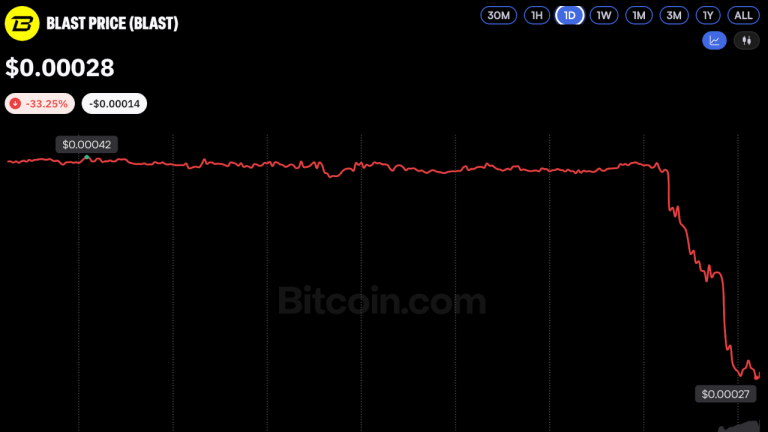
Ethereum Layer 2 Network Blast to Shut Down After Revenue Collapse
Blast, a once-buzzy Ethereum Layer 2 network, is set to shut down later this month after a dramatic decline in activity left the s...

Ethereum Foundation Launches Privacy Tool That Cuts the Link Between AI Prompts and Payers
The Ethereum Foundation has launched zkAPI, a system for paying for AI models and other metered online services without that usage...

Visa Says Business Payments Now Drive 17% Of Stablecoin-Linked Card Volume
TL;DR Visa says roughly 17% of its stablecoin-linked card volume in fiscal 2026 year-to-date came from business and commercial car...

Coinbase enables OUSD transfers across Base, Ethereum, Solana and Tempo
Coinbase's rapid OUSD integration could reshape stablecoin dynamics, enhancing cross-chain liquidity and challenging existing doll...

New SEC crypto rules threaten small advisers, but big firms win
The US Securities and Exchange Commission’s proposed crypto custody fallback could broaden investment choices while making them ea...

Ethereum Layer 2 Blast Is Shutting Down, Saying Costs Now Exceed What the Chain Earns
Blast, the Ethereum layer 2 network created by Blur founder Tieshun “Pacman” Roquerre, is shutting down, its team announced on X o...