Bitcoin Cycle Defined by Demand, Not Price: CryptoQuant Head Says
Head of research at on-chain analytics firm CryptoQuant has explained how demand makes the basis of a Bitcoin cycle, rather than price performance. Bitcoin Apparent Demand Has Been Declining Recently In a new post on X,...
Archive context
Older archive item. Useful for background and entity history, but not a fresh market-moving signal.

Head of research at on-chain analytics firm CryptoQuant has explained how demand makes the basis of a Bitcoin cycle, rather than price performance.
Bitcoin Apparent Demand Has Been Declining RecentlyIn a new post on X, CryptoQuant head of research Julio Moreno has talked about Bitcoin cycles from a different lens. “Most are focusing on price performance to define a cycle, when it is demand what they should be looking to,” noted Moreno.
The analyst has gauged the “demand” for the cryptocurrency using the Apparent Demand indicator, which compares the daily miner issuance against the changes in the 1-year dormant supply.
The first of these, the miner issuance, is the amount that miners are “minting” on the network every day by receiving block rewards. This metric essentially reflects the “production” of the asset. The 1-year inactive supply, on the other hand, can be thought of as the cryptocurrency’s “inventory.”
Thus, the Apparent Demand basically compares the production of Bitcoin against changes taking place in its inventory. Below is the chart shared by Moreno that shows the trends in the 30-day and 1-year versions of the Apparent Demand over the past decade.
As is visible in the graph, the last few Bitcoin cycles have all transitioned into a bear market when the Apparent Demand has plunged into the negative region on both the monthly and yearly timeframes.
In the current cycle, the 30-day Apparent Demand has plunged into the red zone recently, suggesting that the monthly demand for the asset has been negative.
On the annual scale, the metric is still at a positive level, but its value has been following a downtrend. If this decline keeps up, it won’t be long before the indicator has dipped into the negative territory.
Considering the pattern from the previous cycles, the current structure in the Apparent Demand is certainly looking bearish. It only remains to be seen, though, whether the yearly version of the metric will cross into the red zone or if it will rebound, signaling the return of demand.
Spot demand isn’t the only way to measure Bitcoin demand these days. With the advent of exchange-traded funds (ETFs), there has been some fresh off-chain demand coming into the cryptocurrency this cycle.
As on-chain analytics firm Glassnode has talked about in an X post, the 30-day netflow related to the US BTC spot ETFs has remained in the negative zone recently, indicating demand has been muted in this side of the market as well.
BTC PriceBitcoin has taken to consolidation recently as its price is still floating around the $88,000 level.
Why this matters
Bitcoin is showing up inside the Mining theme, so this story is worth tracking for follow-through rather than treating it as a one-off headline.
Original source
Read on NewsBTCRelated market context

Strive Lifts Bitcoin Holdings to 36,818 BTC Ahead of $700 Million SATS Settlement
Strive (Nasdaq: ASST) now holds 36,818 bitcoin after buying 1,223 BTC between Oct. 14 and Oct. 16, the company disclosed in a Form...

Fundstrat Analyst Sean Farrell: Bitcoin to $100k by Year End + MSTR MSCI Exclusion
Bitcoin Magazine Fundstrat Analyst Sean Farrell: Bitcoin to $100k by Year End + MSTR MSCI Exclusion Where is Bitcoin headed by yea...

Why RWA Tokenization and Onchain Credit Could Boost XRP Demand
Despite XRP’s sharp decline from its mid-2025 peak, institutional adoption and developer activity on the XRP Ledger remain resilie...

Solana’s Tokenized Asset Market Grows More Than Sixfold In A Year
TL;DR: Research attributed to Castle Labs puts Solana’s real-world asset market at about $4.3 billion, versus $700 million a year...

Ethereum Institutional taps former Coinbase research chief David Duong as Head of US
Duong's leadership could accelerate Ethereum's integration into traditional finance, potentially reshaping institutional engagemen...
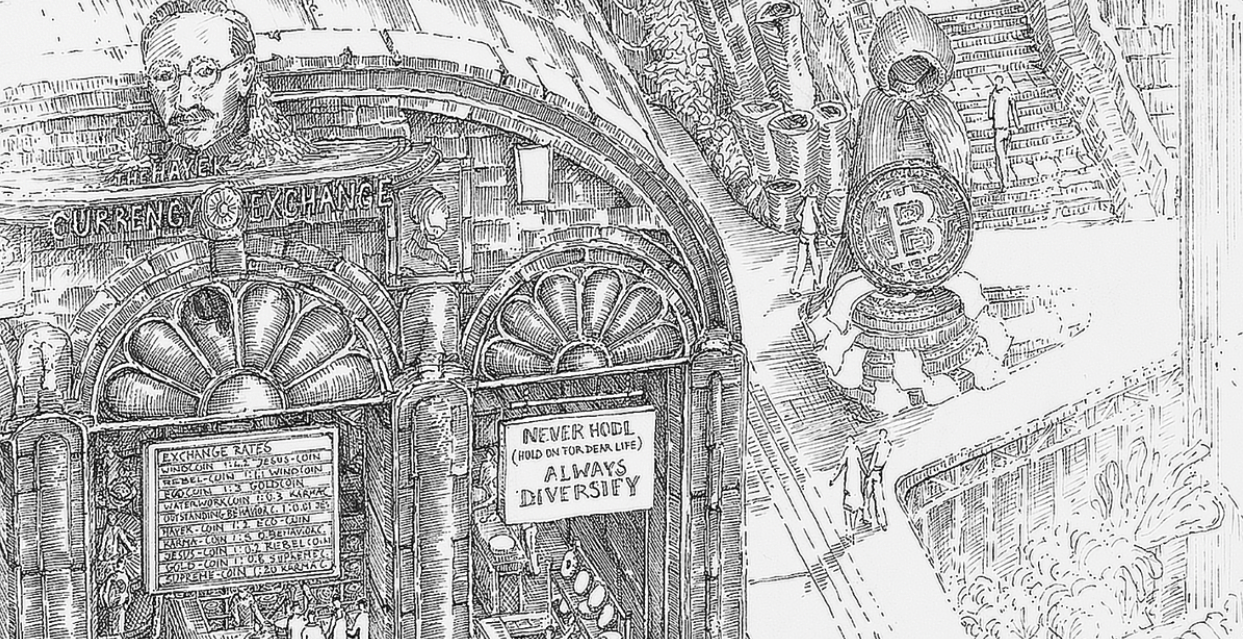
The Architecture of Money: Mapping Financial Power in the Age of Bitcoin
Bitcoin Magazine The Architecture of Money: Mapping Financial Power in the Age of Bitcoin Money determines where we live, what we...