Bitcoin Defies Middle East Turmoil, Climbs to $107.7K as ETF Inflows Hold Firm
Key Takeaways: Bitcoin rebounded from Friday’s dip, rising from $102,800 to $107,700 despite Middle East tensions. QCP Capital reported muted volatility and strong ETF inflows, suggesting no broad risk-off shift. Cardano...
Archive context
Older archive item. Useful for background and entity history, but not a fresh market-moving signal.

Key Takeaways:
- Bitcoin rebounded from Friday’s dip, rising from $102,800 to $107,700 despite Middle East tensions.
- QCP Capital reported muted volatility and strong ETF inflows, suggesting no broad risk-off shift.
- Cardano’s Charles Hoskinson proposed using $100 million in treasury funds to purchase BTC and stablecoins.
Bitcoin recovered after briefly dropping on Friday following Israel’s attack on Iran, trading from a low of $102,800 back to $107,700 on Monday.
A report by QCP Capital published on June 16 noted that the pullback was limited in scope, and the asset held above the $100,000 threshold. It compared the reaction to a sharper drop in April 2024, when a similar situation triggered a decline of over 8 percent.
Asia Colour – 16 June 25
1/ $BTC has held up impressively despite rising Middle East tensions. After dipping to 102.8k on Friday following Iran-Israel headlines, it has since recovered to 107k, mirroring rebounds in US equity futures and large-cap tokens.
Institutional flows remained steady during the episode. Spot Bitcoin ETFs continued to log weekly inflows, and entities such as Metaplanet and Strategy were reported to have added to their holdings over the weekend.
QCP said implied volatility in the Bitcoin options markets remained muted, with front-end levels staying under 40. The Chicago Board Options Exchange Volatility Index also remained near 20, indicating no broad shift into defensive positioning across risk assets.
Traders cited stable activity in U.S. Treasuries and Asian government bonds as evidence that risk-off sentiment had not fully set in.
While the risk of escalation remains, the report said current price behavior indicates the asset’s evolving response to geopolitical shocks. It noted that the price remains less than 6 percent below its all-time high.
Some market participants believe continued global uncertainty could sustain demand for Bitcoin in the medium term, particularly amid concern over sovereign debt exposure and currency risk.
Cardano Considers Treasury Shift Toward BTC and StablecoinsCardano founder Charles Hoskinson recently proposed converting $100 million worth of ADA from the protocol’s treasury into a mix of stablecoins and Bitcoin. The plan outlines the use of Bitcoin to support emerging BTC-DeFi applications developed on Cardano sidechains and partner networks.
Hoskinson said the funds could be deployed gradually using over-the-counter (OTC) and time-weighted execution strategies to avoid disrupting ADA’s market price. He stated that Cardano’s liquidity is sufficient to absorb the reallocation without causing volatility.
Hoskinson added that upcoming features like native token support and partner chains require treasury mechanisms that go beyond single-asset reserves. A formal proposal is expected ahead of the Rare Evo conference later this year.
Bitcoin is being used in more treasury and liquidity strategies across both centralized and decentralized systems. Some DeFi protocols have started allocating to BTC to counter the effects of native token dilution or to back multi-asset reserves.
Frequently Asked Questions (FAQs)How does low implied volatility in options markets affect Bitcoin’s price behavior?Low implied volatility typically indicates reduced expectations of sudden price swings, suggesting that traders do not foresee sharp reactions to ongoing geopolitical risks.
Why are some DeFi protocols introducing BTC into their treasuries?Incorporating BTC can provide a more stable reserve asset, diversify treasury holdings, and help offset inflationary pressure from excessive native token issuance.
What role do governance upgrades play in treasury diversification efforts?New governance models, including elected boards and portfolio mandates, help protocols manage multi-asset reserves transparently and reduce concentration risk in single tokens.
The post Bitcoin Defies Middle East Turmoil, Climbs to $107.7K as ETF Inflows Hold Firm appeared first on Cryptonews.
Why this matters
This bitcoin story adds another data point to the current market tape and is useful when read alongside nearby source coverage.
Original source
Read on CryptonewsRelated market context

Bitcoin ETFs Extend Winning Streak With Nearly $3B in Inflows
Bitcoin Magazine Bitcoin ETFs Extend Winning Streak With Nearly $3B in Inflows Bitcoin exchange-traded funds are on a winning stre...
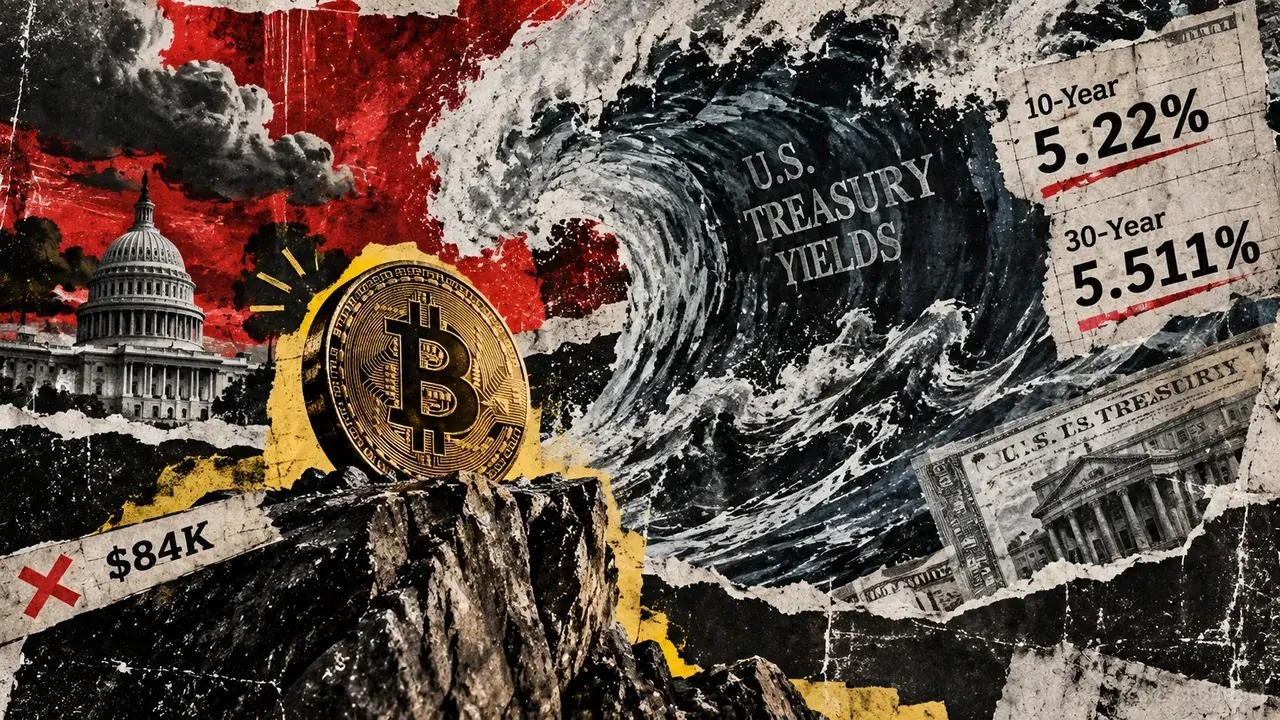
Bitcoin survives a 5.2% Treasury shock as traders slash $1.7 billion in leverage
Bitcoin is holding near $84,000 even as a historic US bond selloff pushes Treasury yields to decades-high levels. The benchmark 10...
Bitcoin Treasury Strategy Proposes Daily Dividends For Preferred Stocks
Bitcoin Magazine Bitcoin Treasury Strategy Proposes Daily Dividends For Preferred Stocks Bitcoin treasury company Strategy wants t...

CFTC Staff Let Futures Brokers Invest Customer Funds in Tokenized Assets, Keep Records Onchain
Futures brokers and clearinghouses regulated by the Commodity Futures Trading Commission can invest customer money in tokenized ve...

Bitcoin Falls Back Below $85K As Treasury Yields Jump Above 5%
TL;DR Bitcoin fell below $85,000 after stronger U.S. business data pushed Treasury yields higher. S&P Global’s flash U.S. Composit...

Ethereum (ETH) Price Prediction: Bulls and Bears Face Off as $3,000 Rally Meets Liquidation Risk
Ethereum price is entering a volatile phase after its latest recovery, with buyers trying to defend the recent breakout while sell...