Bitcoin Is Built To Last: How The Network Defends Against Attacks
Bitcoin is one of the most robust distributed systems in the history of mankind. For fifteen years it has ticked along block by block with only two disruptions in its first few years that were very quickly handled by res...
Archive context
Older archive item. Useful for background and entity history, but not a fresh market-moving signal.

Bitcoin is one of the most robust distributed systems in the history of mankind. For fifteen years it has ticked along block by block with only two disruptions in its first few years that were very quickly handled by responsive developers the minute they manifested themselves. Aside from that, it has ticked along producing a block roughly every ten minutes with no interruptions.
This reliability has set a golden standard of expectations for Bitcoin users, encouraging them to view it as a completely unstoppable system. In many peoples’ minds, Bitcoin has already won, and the world is just catching up with that realization. “Bitcoin is inevitable” as many would say.
This doesn’t mean that Bitcoin is literally unstoppable though, there are possible events that could cause massive damage or disruption to the network if they were to occur. We’re going to go through a few of these examples today and see how they would likely play out.
Government InterventionBitcoin represents a serious conundrum for governments worldwide in multiple ways. First, it functions as a system allowing global payments to flow from one user to another, irrespective of borders or financial controls.
But while governments can’t stop the overall Bitcoin system from continuing to function, they can introduce regulations to impact its participants. In order to really disrupt the Bitcoin network itself governments would have to go after the miners that actually add new blocks to the blockchain to keep the system progressing forward.
This was done before in 2021, when the Chinese government banned bitcoin mining. Almost 50% of the network hashrate went offline as Chinese miners began migrating to the rest of the world.
The network kept on ticking.
In the worst-case scenario, the Chinese government could have enforced confiscation of mining hardware. That would have left the CCP in control of all of those miners, which could have been put to use engaging in a 51% attack on the network. But that didn’t happen. Even if the confiscatory approach had been taken, rather than simply enforcing a mining ban, it would have been deeply unlikely to succeed in attacking the network given the complexity of coordination among collaborators.
For example, one of the places large amounts of hashrate migrated to was Iran. Lots of rumors circulated at the time of miners bribing Iranian military officials in order to get their machines past customs into the country.
If governments attempted to seize mining equipment and closed borders preventing equipment from being shipped internationally, the possibility of bribing government officials or illegally smuggling them out is very real given the financial incentive to do so. For such a seizure event to present an existential risk to the network itself, a government would need to be able to seize over 51% of the active network hashrate. All it would take is a small enough percentage to sneak through the borders to ensure that what was left to be seized did not surpass that 51% threshold and the network would remain safe.
As hashrate further decentralizes around the globe, the possibility of such an action creating a risk to Bitcoin itself continues to shrink. While it still remains a possibility, the more governments that would be required to cooperate to pull off such a move, the less likely such an event is. Bitcoin’s resilience shines through, as empirically demonstrated by the actions of the CCP in 2021.
Power Grid FailureBitcoin miners cannot function without electricity. They’re computers at the end of the day, so that’s an obvious reality. This presents a big risk to miners who depend on power generation and delivery infrastructure.
Many natural disasters can cause power failures and issues with the grid. Hurricanes, wildfires, extreme weather events like cold snaps can disrupt power infrastructure. A prime example of a of such events impacting hashrate was seen in Texas during winter storm Uri in 2021. The scale of these events, however, do not directly pose a systemic risk to the Bitcoin network. Texas losing power, even with ~30% of the network hashrate located within the state, would not bring down or destroy the Bitcoin network.
As shown in 2021 during the Chinese mining ban, even with ~50% of the network hashrate going offline in an incredibly short period of time, the network continued to function. Yes, the blocktime interval increased dramatically and induced a large spike in transaction fees to confirm transactions quickly, but the network itself continued functioning and processing transactions without interruption.
Even if we were to imagine a much larger scale event, such as a massive solar storm knocking out power for half of the entire planet, the other half would still have functioning power. The miners located in that half of the globe would continue mining, continue confirming transactions, and the network would march along functioning just fine for half of the planet. Even people on the half of the globe without power, as long as they have maintained a physical backup of their seed phrase, will still have access to their funds whenever power is restored or they can make their way to a place with a functioning grid.
Power would need to be taken out for essentially the entire planet to actually kill Bitcoin, otherwise, it will keep chugging away in a corner somewhere until power is brought back online and it can “regenerate” itself expanding back around the globe.
Internet DisruptionsWhile the internet is composed of decentralized protocols in a similar fashion to Bitcoin, the actual infrastructure underlying it is owned mostly by large multinational corporations and governments (again similar to Bitcoin infrastructure like miners). The ownership of this infrastructure is still relatively distributed among many players globally, but it is not the same degree of distribution as a highly decentralized system like a mesh network.
There are still rather large chokepoints and bottlenecks that if disrupted or attacked can cause a massive degradation of reliability and functionality. Almost everyone connects to the wider internet through an Internet Service Provider (ISP), this market is dominated in most of the world by a handful of large providers in any given region. There isn’t much choice between providers, and this represents a large chokepoint for people interacting with the internet. If an ISP filters or denies you access and there isn’t another provider to choose from, you’re in trouble.
Similarly, your ability to talk to someone on the other side of the world is due to larger “backbone” networks run by major corporations, and underwater fiber-optic cables along the ocean floor. These cables are highly centralized chokepoints for communications between different countries and continents. If the operators were to begin filtering information passing through them, or someone were to physically sever the cables themselves, it could cause massive disruption of global internet traffic.
So what could actually be done if either of these things happened? If an ISP started filtering Bitcoin traffic to users, people would have their nodes disconnected from the network. Broadcasting transactions might be impossible, depending on how harshly the ISP filters traffic. But the rest of the network would keep chugging along. Services like Blockstream’s satellite feed exist, and a bitcoin transaction is such a small piece of data that any momentary connection to an unfiltered network would be enough to broadcast your payments.
Even larger-scale interruptions of connections between countries or regions amount to a simple irritation in the grand scheme of things. Let’s say a country like Russia had its internet connection to the outside world completely severed. If Russian miners didn’t shut down, the blockchain would fork into two separate chains because miners inside and outside Russia would not receive each others’ blocks. Whenever that connection was repaired, whichever group of miners had mined a longer chain would simply “overwrite” the shorter one, erasing the transactions that took place on the other shorter chain.
There is also a high possibility such a chainsplit doesn’t even occur in such a situation. Blockstream’s satellite service offers a way for people even without the internet to continue receiving blocks in real time from the rest of the network. This, in combination with satellite uplinks (which are not as simple to block), or even radio relays, could allow Russian miners to continue mining a single blockchain with the rest of the network through an outage.
Yet again, Bitcoin’s resilience can find a way.
Wrapping UpBitcoin is not quite literally invincible, or unstoppable, but it is unbelievably resilient in the face of disruption or adversarial attack on the network. It was literally designed to function this way. The entire point of decentralized networks is to be robust in the face of threats and disruptions, and Bitcoin has succeeded amazingly in that design goal.
The world has, and will continue to see, incredibly massive destructive events. Whether that entails weather events or cosmic events, acts of intentional sabotage or warfare, or just plain old government regulation, Bitcoin has survived many of them already. It will most likely continue to survive everything thrown at it into the future.
It’s not invincible, but it is resilient. The type of event or disaster it would take to actually take Bitcoin offline permanently would be something of such a massive scale of destruction, that in the unlikely event it does occur, we will all have much bigger problems than Bitcoin ceasing to function.
Why this matters
This bitcoin story adds another data point to the current market tape and is useful when read alongside nearby source coverage.
Original source
Read on Bitcoin MagazineRelated market context

AI agents paying in crypto could create thousands of taxable events
The rise of AI-driven crypto payments could overwhelm tax systems, necessitating new compliance tools and reshaping digital asset...
The Quantum Issue: Quantum Isn’t Coming For Your Bitcoin
Bitcoin Magazine The Quantum Issue: Quantum Isn’t Coming For Your Bitcoin For as long as Bitcoin has existed, new forms of FUD (fe...

Dogecoin gets DeFi testnet as DogeOS bets miners will eventually secure its apps
DogeOS wants to turn DOGE into more than a payments and speculation asset, but its applications still rely on selected operators r...
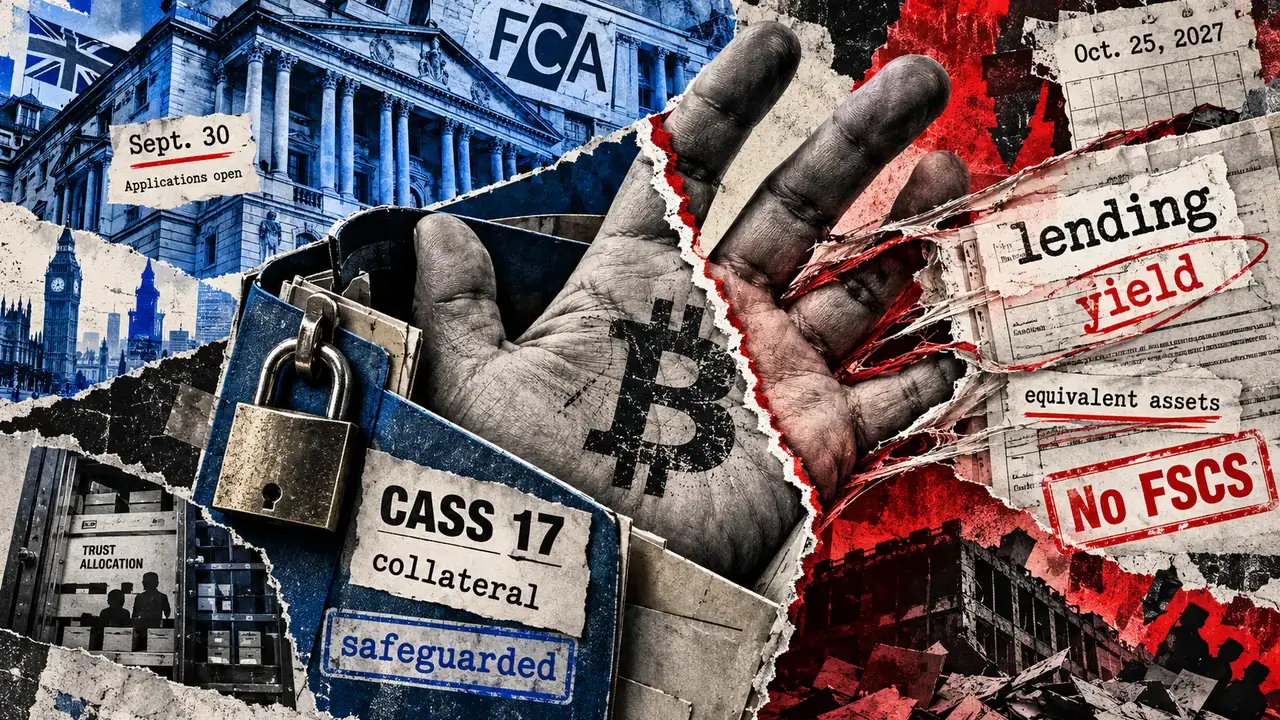
UK’s 2027 crypto rules let firms remove trust protection from Bitcoin lent for yield
UK crypto firms can now apply for authorization as of Sept. 30, bringing Bitcoin holders closer to a rulebook that will treat coin...

Solana’s monthly app revenue hits nine-month high of $180 million
Solana's revenue surge suggests a robust ecosystem growth, but declining market share indicates intensifying competition among blo...

Japan’s biggest payment network opens its doors for crypto via Binance Pay
Japanese payment provider PayPay added Binance Pay on Sept. 30, letting eligible overseas visitors pay from their crypto balances...