Bitcoin Is Not Dirty: It Is Radically Green
A common misconception, bitcoin is not a drain on the environment but an incentive for ever-increasing energy efficiency.Upon reading the opinion piece in the San Francisco Chronicle penned by Steve Westly, we are remind...
Archive context
Older archive item. Useful for background and entity history, but not a fresh market-moving signal.

A common misconception, bitcoin is not a drain on the environment but an incentive for ever-increasing energy efficiency.
Upon reading the opinion piece in the San Francisco Chronicle penned by Steve Westly, we are reminded of Brandolini’s Law, which we paraphrase here: "The amount of energy needed to refute misinformation is an order of magnitude larger than is needed to produce it.” In order to prevent wasting our own or our readers' time, we will rebut the claims made by Mr. Westly as succinctly as possible, relying upon the vast cannon of public data and writing that already exists about Bitcoin and energy. His claims are not new, they are grossly misleading, and they have been refuted ad infinitum.
Yes, Bitcoin miners have migrated from China to the U.S., without the Bitcoin network experiencing any disruption or downtime (a remarkable display of the network's resiliency to withstand attacks). But claims that Bitcoin miners are now straining U.S. grids, or that coal plants are being fired up to power miners, are simply unsubstantiated. Actual data from the Bitcoin Mining Council (a voluntary global forum that provides data transparency on the mining industry) from October 2021 estimates that the global power mix for Bitcoin miners is 57.5% sustainable energy sources - higher than any other industry or major grid.
As we illustrated in our own article, Bitcoin mining will transform the energy industry, greatly increase our ability to monetize renewable energy sources, regardless of their location or remoteness from load centers. CoinShares research explains in detail how opponents of Bitcoin mining on environmental grounds have it “exactly upside down” and that proof-of-work mining presents the “incredible opportunity for us to increase the share of intermittent renewable generation in our electricity grids." Or perhaps Nic Carter puts it best: “...Bitcoin mining is converging with the energy sector with amazing rapidity, yielding an explosion of innovation that will both decarbonize bitcoin in the medium term, and will dramatically benefit increasingly renewable grids.”
To mirror Mr. Westly’s five suggestions of what the U.S. can do about Bitcoin mining, we are also offering five things solar (and other renewables) can do with bitcoin mining. The unique characteristics of Bitcoin mining enables the following solutions, among others:
- Overbuilding of solar capacity at projects that financially were deemed to be too small/uneconomical or remote from grid capacity/load centers.
- Utilizing mining to serve as the buyer of last resort for surplus power when facing curtailment orders.
- Enabling solar owners to hedge against merchant risk (low/negative wholesale prices during generating hours).
- Providing an option to solar operators to mitigate basis risk (price spreads between the point of power injection versus load centers).
- Building resilient and economically feasible “solar plus storage” microgrids in developing nations leveraging Bitcoin mining as a variable economic load.
In referencing the Swedish financial regulators’ call to ban proof-of-work mining, Mr. Westly fails to mention that the state-backed Swedish power company, Vattenfall, immediately and completely rejected the proposed ban, instead arguing that miners are an effective tool for grid load management and absorbing surplus renewable energy. The recurring theme here is that those who understand the energy system recognize that “Bitcoin Is Key To An Abundant, Clean Energy Future." Those who dwell on primitive faux-environmentalism and “energy usage = bad” level thinking, can’t see the forest for the trees.
Mr. Westly’s claims that proof-of-stake blockchain consensus mechanisms are a panacea demonstrates a deep misunderstanding of Bitcoin. As eloquently explained by Gigi (@dergigi) in this Twitter thread, proof-of-work is the core innovation of Bitcoin, allowing us to operate a trustless digital money that is controlled by no one. Lyn Alden presents a robust thesis that proof-of-stake consensus mechanisms have a “larger amount of complexity, trust, and attack surfaces” and are prone to centralization. Proof-of-stake may have uses in non-critical applications, but it is unsuitable for Bitcoin’s radical mission of being a neutral, censorship-resistant global sound money. Bitcoin is energy-backed by design; you cannot bend, fake or cheat the laws of thermodynamics.
“Proof-of-work = trust physics to determine what happened.
Proof-of-stake = trust humans to determine what happened.”
Where Mr. Westly is not wrong is that policy makers will have decisions to make. Their choices will determine which jurisdictions shall leverage Bitcoin’s proof-of-work mining to increase the resiliency of their grids, lower carbon intensity, empower local economic development and harness new, previously uneconomic renewable energy sources. Based on the realities of our energy system and the facts about Bitcoin mining, the decision will be an easy one.
This is a guest post by Nima Tabatabai. Opinions expressed are entirely their own and do not necessarily reflect those of BTC Inc or Bitcoin Magazine.
Why this matters
This bitcoin story adds another data point to the current market tape and is useful when read alongside nearby source coverage.
Original source
Read on Bitcoin MagazineRelated market context
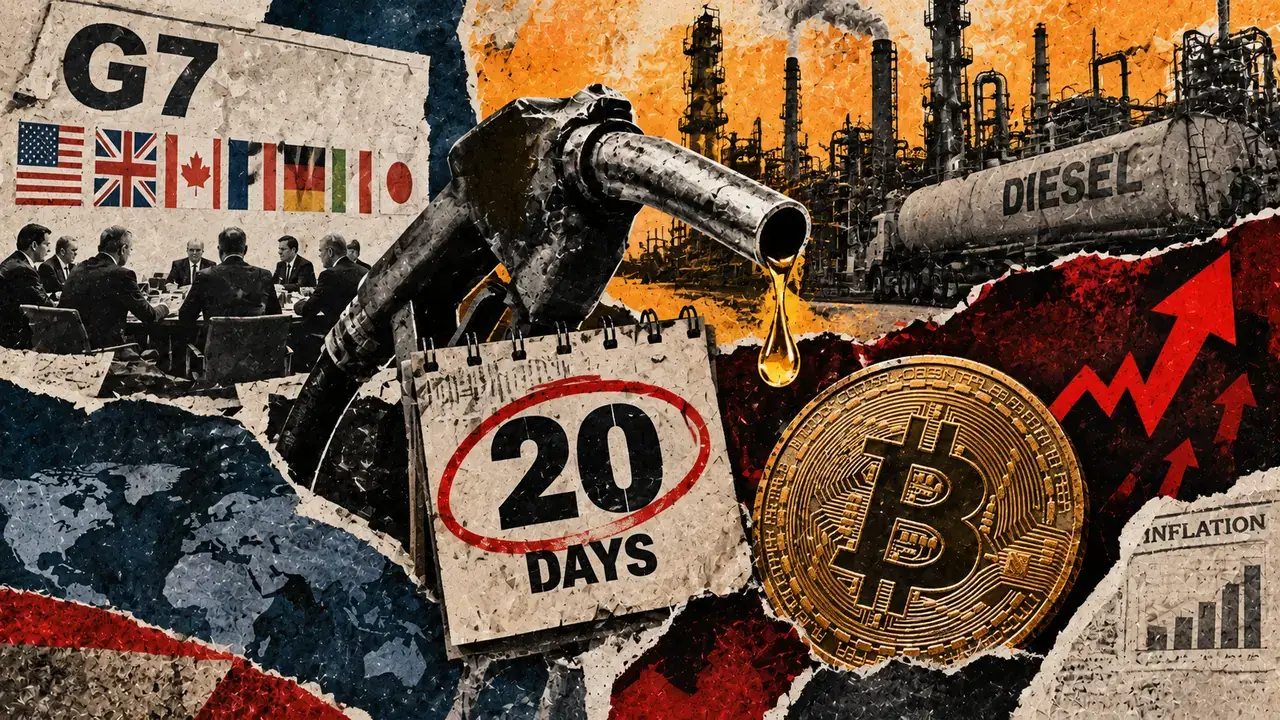
Bitcoin gets a 20-day window to see whether energy relief can move the Fed
The G7’s emergency diesel plan has created a near-term test of whether cheaper energy can ease pressure on Bitcoin. Leaders on Oct...

VanEck’s Matthew Sigel: Path to $500k BTC Runs Through Gold
Bitcoin Magazine VanEck’s Matthew Sigel: Path to $500k BTC Runs Through Gold Bitcoin miners with power contracts may own one of th...
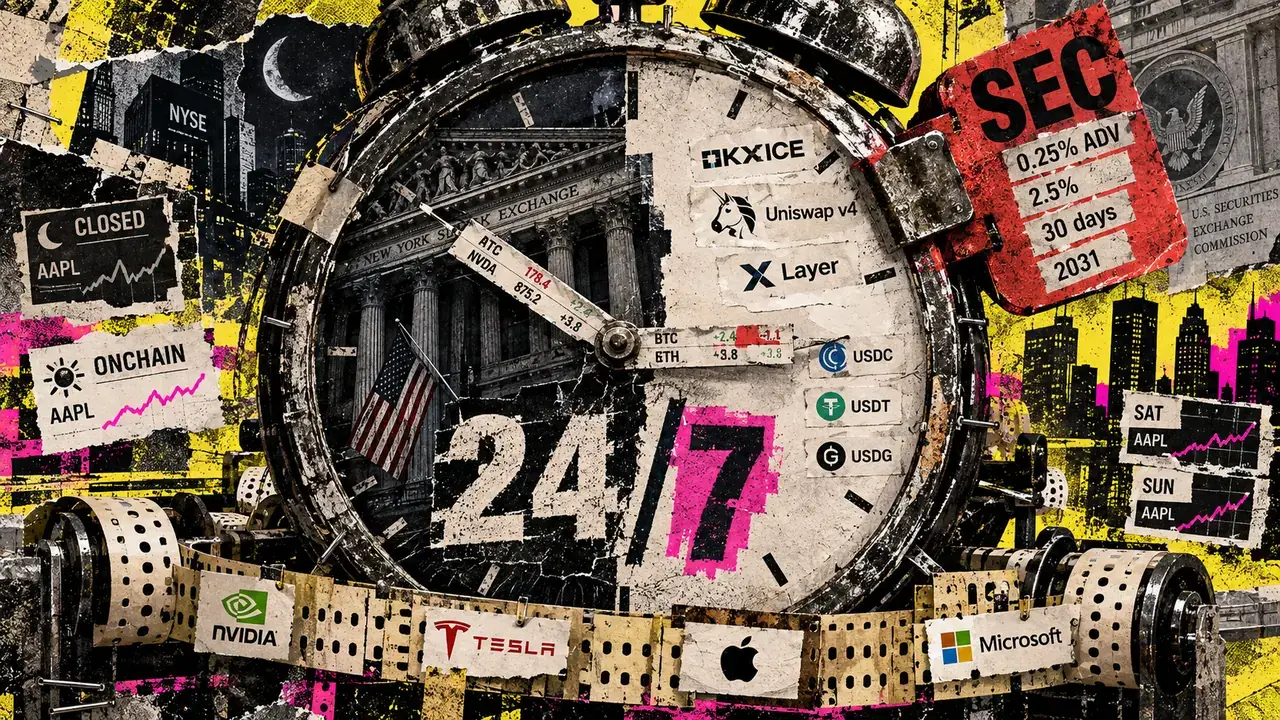
NYSE owner and OKX plan 24/7 tokenized stock trading using Uniswap
Intercontinental Exchange and OKX are preparing an always-open market where tokenized US stocks could keep repricing after Wall St...

HIVE Digital’s BUZZ HPC turns Bitcoin mining sites into Canadian AI infrastructure
HIVE's pivot to AI infrastructure could bolster Canada's tech ecosystem, ensuring data sovereignty and fostering innovation domest...

Binance will require Brazilian users to explain cross-border crypto transfers from Nov. 1
Brazil's new crypto transfer rules may increase regulatory compliance costs and impact cross-border crypto activity efficiency. Th...
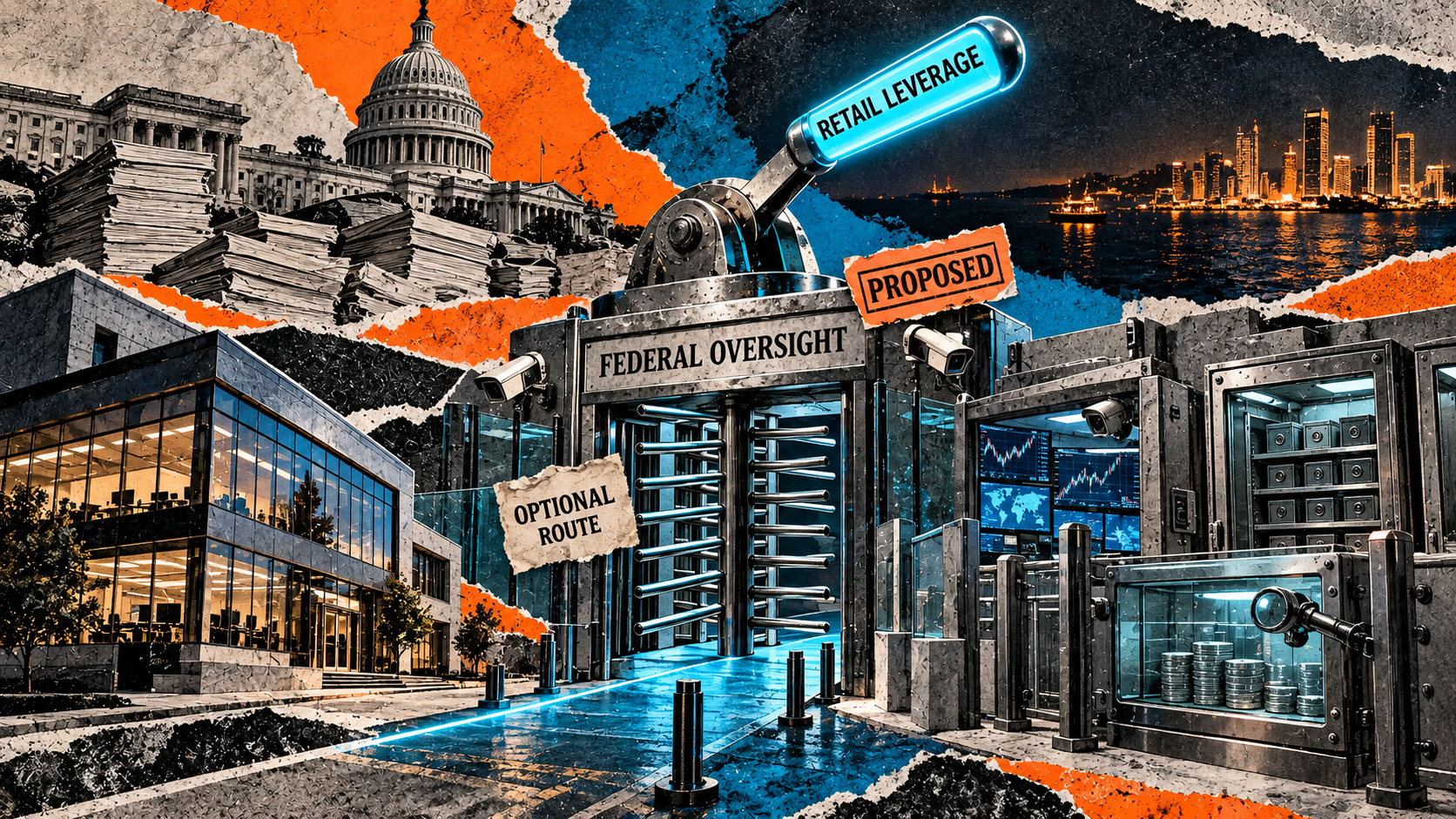
CFTC makes its biggest move yet to bring offshore crypto trading back to the US
The Commodity Futures Trading Commission (CFTC) is offering US crypto exchanges a federal route to retail leverage as Congress rem...