Bitcoin Is Peace For The 9/11 Generation: The Dollar Is Not Safe
The perpetual warfare of the last two decades will lose its source of funding as we transition from fiat money to Bitcoin.Bitcoin Is Peace For The 9/11 Generation, Part OneEndless Wars — Endless PrintingSunday, April 29,...
Archive context
Older archive item. Useful for background and entity history, but not a fresh market-moving signal.

The perpetual warfare of the last two decades will lose its source of funding as we transition from fiat money to Bitcoin.
Bitcoin Is Peace For The 9/11 Generation, Part OneEndless Wars — Endless PrintingSunday, April 29, 2001: for four months and 13 days, I was alive prior to the attacks on September 11. For practically my entire life, the United States has been embroiled in endless conflict.
After Afghanistan’s refusal to extradite Osama bin Laden, George W. Bush declared war on Al Qaeda, dubbed the “war on terrorism.” This was the next evolution in a series of wars on the abstract. That statement is not to take away from the tremendous grief and tragedy of the situation. Thousands of Americans lost their lives on 9/11, and thousands more would lose their lives in the decade-long wars to follow.
When the United States engages in war in its many forms, how do we finance it? The U.S. used to issue war bonds, and in times of strife the country would band together and purchase these bonds to help our brothers overseas — it was an act of patriotism. Issuing paper currency during the battle was far easier, especially considering how frequently we’d be going to war in the decades after The Great War. To finance war, the government increases the supply of U.S. dollars domestically and abroad, both devaluing its own debt and increasing the invisible monetary burden of inflation on its citizens.
However, this essay seeks to lay out the utility of going to war — why does the United States roll out its printing press at the first sign of trouble? Why are we seemingly eager to engage in a conflict, whether it’s a physical threat abroad or a metaphysical threat at home?
Bitcoin offers a solution. A fixed supply of money, with no internal control over new issuance in times of great need. Sound money fixes irresponsible spending, because it introduces a higher price tag to every decision that gets made. This new cost is that of scarcity — do we dare wager our finite supply of money on this new venture?
Bitcoin is difficult to seize. During war time, the government cannot barge into homes and demand families to forfeit their bitcoin, since bitcoin can be kept privately in a cold wallet using a private key, which can be memorized. Taxation isn’t so easy when you can store your wealth in your head — with seizure near impossible, a return to a fiat standard for those acclimated to a bitcoin standard would be improbable.
With sound money, programmatic issuance, and immutable protocol rules, those with the tanks are forced to make prescient decisions about when, where, and why to spend their money.
Bitcoin is sound money. The United States has no control over its issuance rules. The government is more than welcome to fire up some ASICs, mint new supply, and capture some transaction fees, but in times of great need, there is no way to magically create money to finance whatever efforts the government deems fit.
Since unfettered money printing is no longer an option, this puts a far greater cost on entering new wars. Whereas currently, the incentives are aligned with going to war, so new money issued means debasement of the national debt at the expense of the currency-holders’ real wealth; on a bitcoin standard however, the incentives are aligned to avoid war at all costs, opting instead to make prudent decisions that are in the interest of upholding security at home.
This infeasibility to engage in endless foreign conflict is why bitcoin represents peace for the 9/11 generation.
The Dollar Is Not SafeYour dollars get debased when wartime spending kicks in. When the United States government identifies a threat which they deem a matter of national security, the buck lies with them to lay out the best course of action.
According to “The Bitcoin Standard,” by the end of WWI, Germany and Austria had seen 48.9% and 68.9% currency depreciation in comparison to the Swiss franc — which was still on a gold standard.
In the fiat monetary system, the solution to every problem is to always create new money. Instead of strategizing prudently, the incentives are structured to benefit the central bank if more money is created instead.
Think about it:
At the time of writing, the United States government is burdened by approximately $30 trillion of debt. How do you suppose the United States is planning on paying that down? They won’t be austere — no politician would be elected on a platform that limits spending. They can’t have every citizen explicitly pay it off through taxes — no politician would be elected on a platform that taxes each citizen over $90,000.
They can devalue their debt in real terms by creating new money. Ultimately, the burden lies with the citizens — as their savings lose value to the invisible tax of inflation. The government penalizes people trying to opt out of this melting ice cube with capital gains and appreciation taxes. The return to a sound money standard is unlikely at the current moment, given that responsible decision-making from the United States government would be required.
So, at the governmental level, the problem of preventing your decaying wealth will not be solved. At an individual level, you can circumnavigate the devaluing of your wealth through savings technologies like Bitcoin. With a fixed 21 million supply, rest assured your savings cannot be diluted.
“You are welcome to keep your savings in USD, but when bad things happen, they will create more USD, diluting your share of total USD.” — Blockware Solutions Bitcoin Mining Analyst, Joe Burnett
With bitcoin, your ownership percentage of the asset will always remain constant, your share can never be diluted.
When bad things happen, the powers that be fire up the money printers, add to their balance sheet like there’s no tomorrow, and pass the flaming hot potato to the population — letting them deal with their imprudent spending. Anybody else getting Marie Antoinette, “let them eat cake” vibes?
In part two, we’ll explore some of the abstract wars the U.S. has engaged in over the last half-century, to build out the case as to why the dollar is not safe and how commodities like bitcoin represent peace for the war-torn and weary citizens of the United States.
You can find me on Twitter @JoeConsorti, thanks for reading.
This is a guest post by Joe Consorti. Opinions expressed are entirely their own and do not necessarily reflect those of BTC Inc or Bitcoin Magazine.
Why this matters
This bitcoin story adds another data point to the current market tape and is useful when read alongside nearby source coverage.
Original source
Read on Bitcoin MagazineRelated market context

Frank Holmes: They Will Print $100 Trillion – Why to Buy Bitcoin & Gold
Bitcoin Magazine Frank Holmes: They Will Print $100 Trillion – Why to Buy Bitcoin & Gold Bitcoin miners already have the power, th...

Lowest Fee Bitcoin ATMs Announces Launch of More Than 400 ATMs Nationwide
Las Vegas, NV, October 1st, 2026, Chainwire Lowest Fee Bitcoin ATMs announced the launch of more than 400 cryptocurrency ATMs acro...

XRP Price, $300M ETF Demand, and 45% Q3 Supply Overhang
XRP price rose more than 45% in Q3 as U.S. spot XRP ETFs attracted about $307.9 million, yet the token entered October near $1.50...
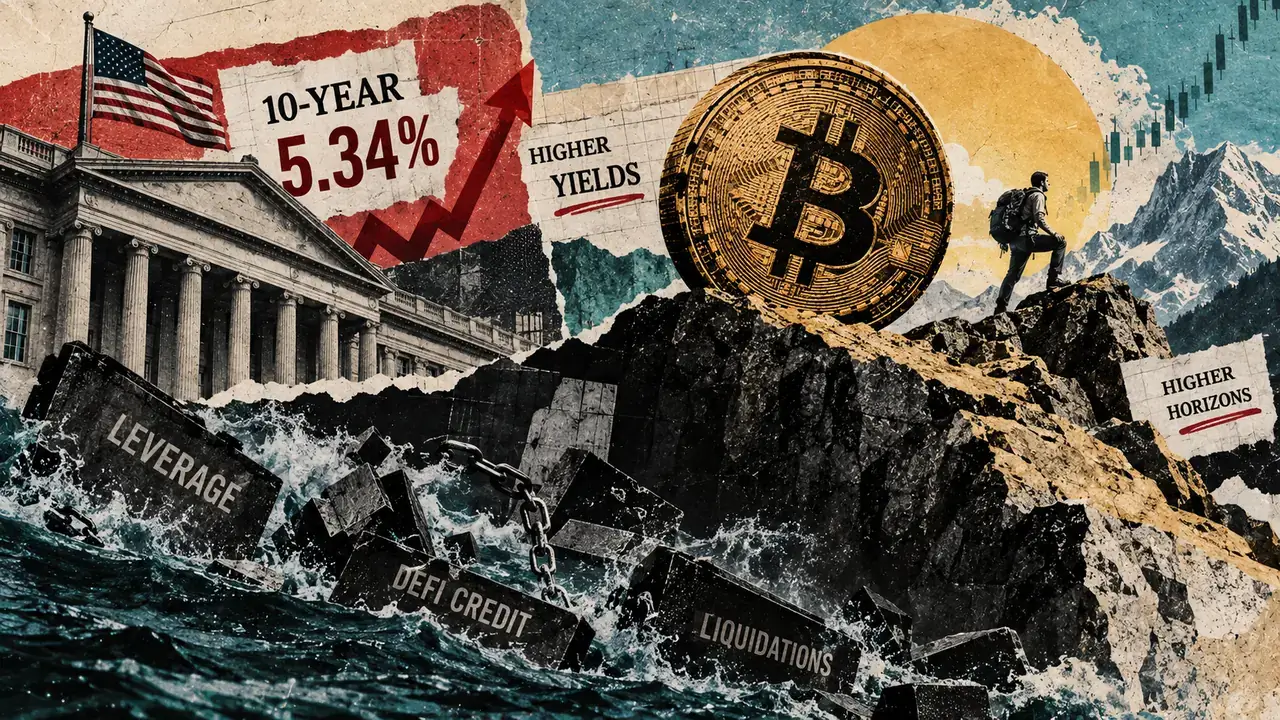
Bitcoin survived 5% yields but crypto’s cheap-money era did not
The US 10-year Treasury yield touched 5.34% on Oct. 1, its highest since 2002, capping a third quarter in which it climbed almost...
SEC Proposes Letting Advisers and Funds Hold Client Crypto When No Custodian Can
The Securities and Exchange Commission proposed rules on Thursday that would let registered investment advisers and regulated fund...

Tokenized Stocks, Investor Rights, and Their Crypto Role
Tokenized stocks could give crypto-native investors access to equity exposure through crypto platforms, but a token that tracks a...