Bitcoin Is The Purest AI Trade, Says Wall Street Veteran
Macro investor Jordi Visser has published a Substack essay arguing that Bitcoin is “the purest AI trade,” a claim he says has followed him “in nearly every one of my videos, Substack posts, and conversations with Anthony...
Archive context
Older archive item. Useful for background and entity history, but not a fresh market-moving signal.

Macro investor Jordi Visser has published a Substack essay arguing that Bitcoin is “the purest AI trade,” a claim he says has followed him “in nearly every one of my videos, Substack posts, and conversations with Anthony Pompliano.” The piece, released yesterday under the title You Don’t Find Bitcoin, Bitcoin Finds You: Why It’s the Purest AI Trade, sets out a personal and macro-economic narrative that Visser believes binds artificial-intelligence disruption to the rise of the world’s first decentralised digital asset.
Visser, who now heads AI Macro Nexus Research at 22V Research after three decades trading derivatives at Morgan Stanley, running a global-macro hedge fund, and ultimately serving as president and CIO of Weiss Multi-Strategy Advisers, frames the essay as a pre-emptive answer to critics who “don’t see it or understand it.”
“This statement wasn’t born from a single insight but rather a journey that unfolded across three distinct steps and four accelerating forces that helped me connect the dots between monetary policy, exponential innovation, and a world shifting faster than our corporate, financial, and government systems can handle,” he writes. The three steps, he explains, were “personal awakening, macro-economic context, and the recognition of Bitcoin as foundational infrastructure for the digital economy.”
Why Bitcoin Is The Ultimate AI TradeThe four forces Visser identifies as central to his thesis span the domains of monetary policy, technology, and sovereignty. The first, he writes, is “unprecedented fiscal and monetary intervention which I believe marked the final climax of the global government debt super-cycle and ultimately the dollar as the global reserve currency.” In his view, the pandemic-era explosion in government spending exposed the limits of fiat systems propped up by central bank liquidity.
The second force centers on structural deflation: “deflationary pressure from exponential technologies.” Visser sees AI and automation as not just economic disruptors but forces that drive prices downward across the board—pressuring legacy systems built on perpetual inflation and debt.
The third pillar of his argument is institutional erosion. “Accelerating institutional obsolescence through AI,” he warns, will hollow out bureaucracies and corporate incumbents that are too slow to adapt to exponential change. Finally, Visser cites “Bitcoin’s emergence as a sovereign digital asset—independent, decentralised, and not defined by any nation-state.” In contrast to fiat currencies reliant on state power and monetary intervention, Bitcoin exists as an autonomous, verifiable infrastructure layer for the digital economy.
Visser dates his “personal awakening” to early 2021, when the pandemic-era money print collided with a household epiphany: “Asset prices jumped and crypto prices were rising daily, and I was struck by the fact that my 13-year-old son … could explain the space in a way that I could not understand.”
That curiosity pushed him toward Michael Saylor’s corporate-treasury bet on Bitcoin and Paul Tudor Jones’s description of the asset as “the fastest horse in the race,” convincing him that “Bitcoin [was] a rational response to an irrational system looking for a new one.”
The second intellectual milestone came through Jeff Booth’s book The Price of Tomorrow, from which Visser lifts the line: “Innovation is always deflationary for the economy so the baseline for inflation is always negative.” Booth’s argument, he says, revealed “an Economic Trilemma” in which a debt-laden industrial economy can only survive by tapping government balance-sheets, even as a capital-light digital economy accelerates away. The result, he warns, is a fragile fiat system propped up by “artificially low rates, quantitative easing, and fiscal stimulus” that cannot be maintained indefinitely.
Visser’s third pivot came with Marc Andreessen’s 2014 essay Why Bitcoin Matters. Andreessen’s framing of the Bitcoin white paper as a monetary protocol—“on par with the creation of the internet itself”—convinced Visser to stop viewing Bitcoin as a challenger to sovereign currency and start seeing it as “the base-layer for a new, decentralised economic system.” Stablecoins, he concedes, may bridge fiat and crypto, but they remain “tethered to the very institutions they’re trying to outrun.”
The final, self-described “force” is AI itself: “For years, we’ve said software is eating the world. But now, AI is eating software and soon it will eat everything in its path.”
He argues that intelligent agents will erode the scarcity premia that support most legacy assets, leaving Bitcoin—algorithmically finite and independent of any issuer—as “sovereignty at digital scale.” In one of the essay’s bleakest forecasts he writes, “AI will destroy everything eventually—not maliciously, but systematically. And the economic system we’ve built on top of scarcity, debt, and centralisation is not equipped to survive it.”
Visser closes by channelling Saylor’s mantra—“You don’t find Bitcoin, Bitcoin finds you”—to explain why adoption is emerging first in the periphery: retail investors in emerging markets, smaller firms outcompeted by big-tech AI monopolies, and early-mover states such as El Salvador.
“This bottom-up foundation is setting the stage for a future top-down capital rotation as FOMO and greed eventually force more and more of the doubters in,” he concludes. “That’s why Bitcoin is, in many ways, the purest AI trade—an opt-out of a system being reshaped by intelligence no one fully controls.
At press time, BTC traded at $104,816.
Why this matters
This bitcoin story adds another data point to the current market tape and is useful when read alongside nearby source coverage.
Original source
Read on NewsBTCRelated market context
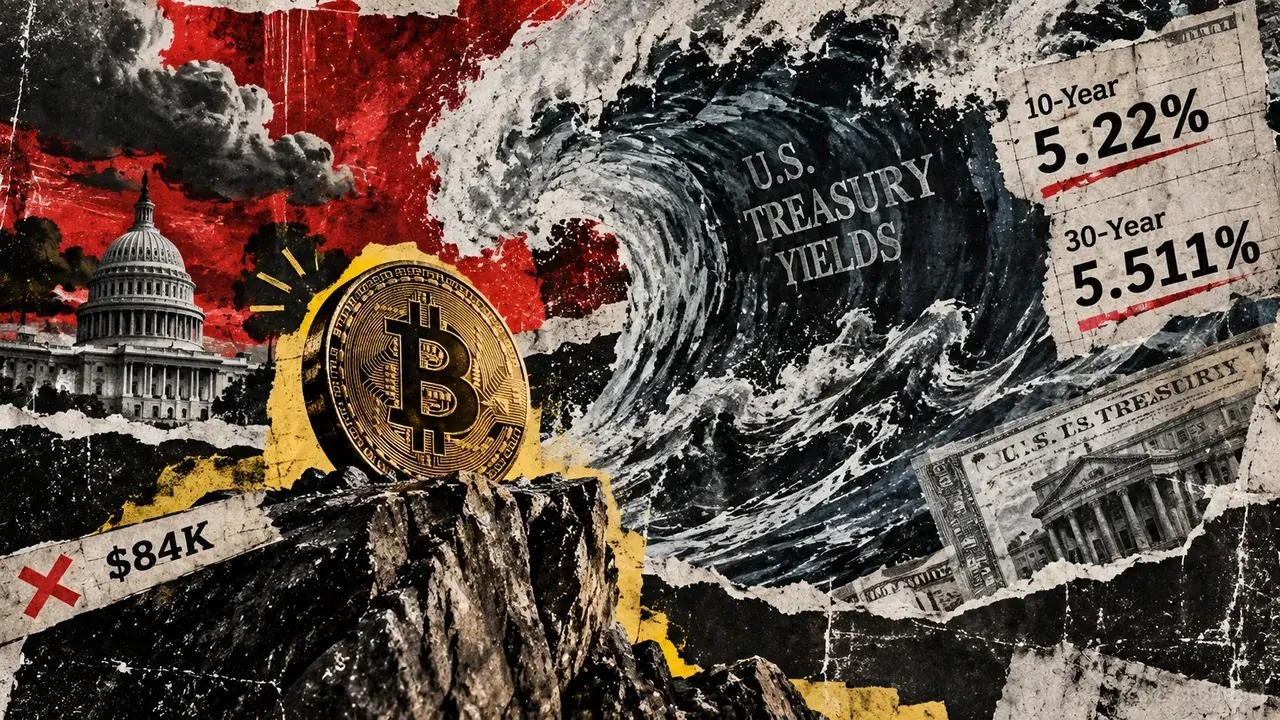
Bitcoin survives a 5.2% Treasury shock as traders slash $1.7 billion in leverage
Bitcoin is holding near $84,000 even as a historic US bond selloff pushes Treasury yields to decades-high levels. The benchmark 10...
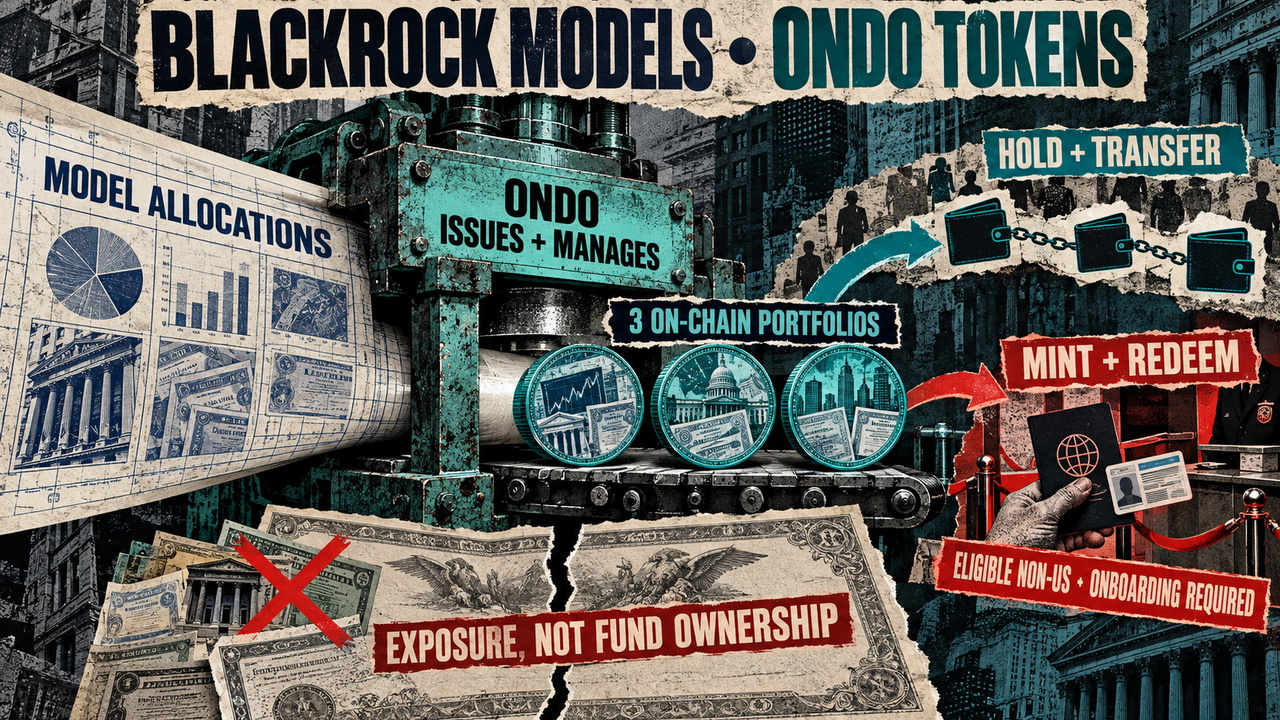
Ondo unlocks BlackRock portfolio strategies, but only non-US traders benefit
Ondo Finance launched three on-chain portfolio tokens on Sept. 24 using investment strategies BlackRock developed for the company....

86% of real world asset perp volume now trades onchain
The shift to onchain trading of real-world asset perps signifies a major decentralization trend, challenging traditional financial...

Who Bought Bitcoin’s Breakout? The Answer Will Decide Whether The Price Holds
In August, bitcoin’s rally was driven by spot bitcoin ETFs, which bought for nine straight trading days, and by short sellers who...
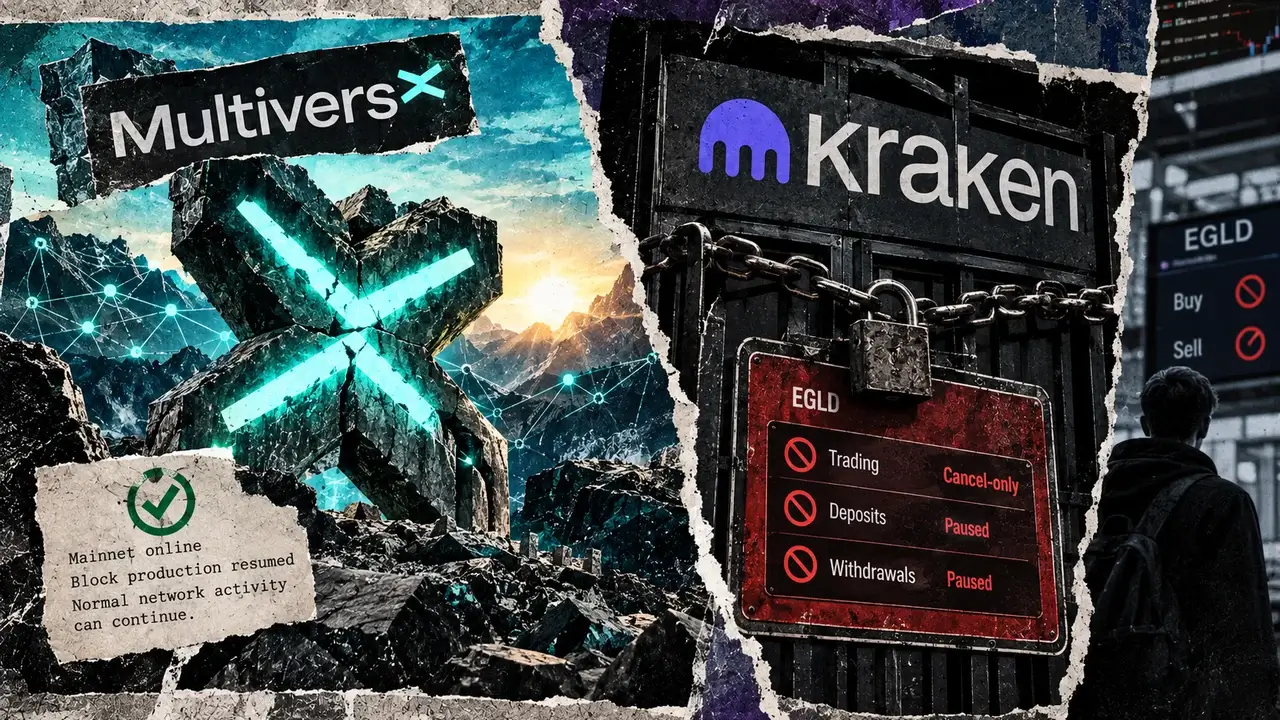
MultiversX restarts after exploit halt, but Kraken still bars new EGLD trades
MultiversX, a blockchain network, said its mainnet was back online Thursday, Sept. 24, about five days after an exploit-related ha...
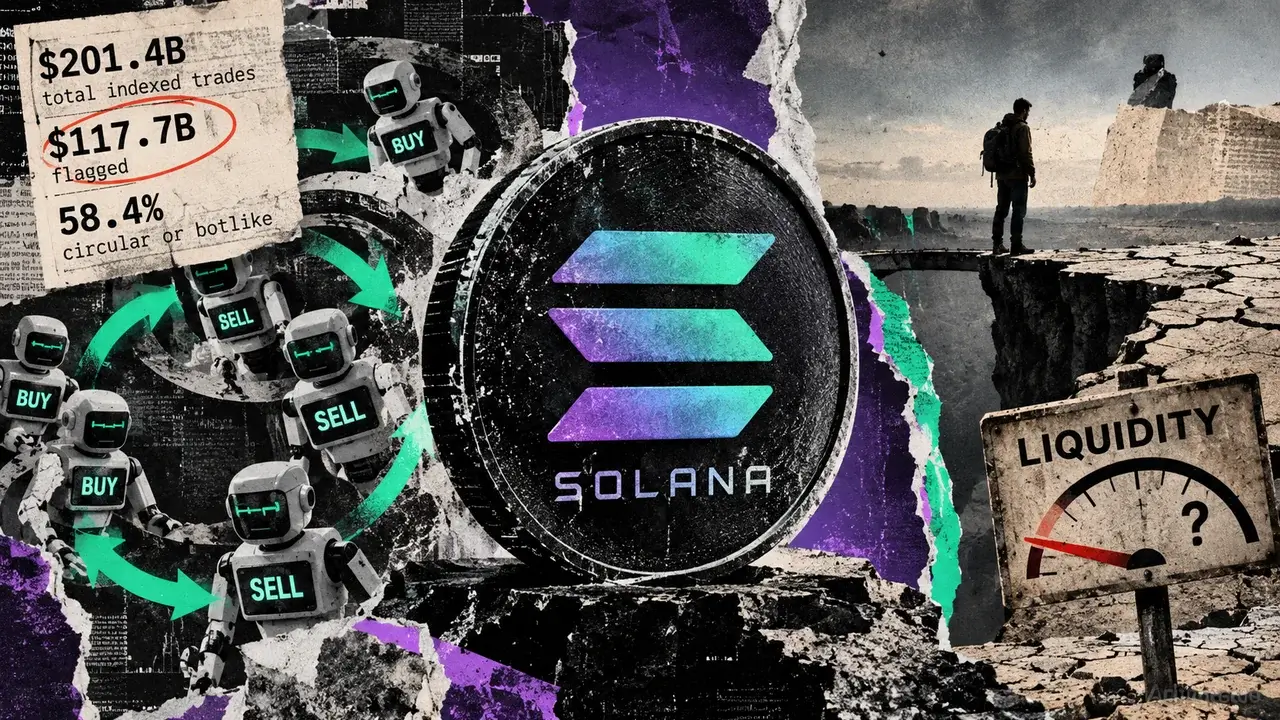
Solana DEX volume spike hides circular trades, and automated bots are blamed
Bitquery flagged $117.7 billion in Solana DEX trades in a 30-day sample, where repeated round trips supplied much of the recorded...