Bitcoin Layer 2: Sidechains
Bitcoin Magazine Bitcoin Layer 2: Sidechains The original concept of a Bitcoin sidechain was proposed by Adam Back, Matt Corallo, Luke Dashjr, Mark Friedenbach, Gregory Maxwell, Andrew Miller, Andrew Poelstra, Jorge Timó...
Archive context
Older archive item. Useful for background and entity history, but not a fresh market-moving signal.

Bitcoin Magazine
Bitcoin Layer 2: Sidechains
The original concept of a Bitcoin sidechain was proposed by Adam Back, Matt Corallo, Luke Dashjr, Mark Friedenbach, Gregory Maxwell, Andrew Miller, Andrew Poelstra, Jorge Timón, and Pieter Wuille, who all went on to found Blockstream, in 2014.
The idea was proposed to allow a more liberal development environment, where people could try new ideas and technologies on a sidechain without risking the security of the main Bitcoin blockchain.
Since then the design space of sidechains has grown rather large.
At the end of the day sidechains is a very broad term that encompasses a large range of very diverse and different systems. They can be as varied and arbitrary as the entire ecosystem of altcoins and other blockchains can be. That is after all what they are, other blockchain systems.
Regardless of the specific designs of any given sidechain, they have two primary components: a peg, and a consensus mechanism and rules. The peg functions as the vehicle for “locking” and “unlocking” coins on the mainchain to move them back and forth between Bitcoin’s base layer and the sidechain. The consensus mechanism and rules are how the sidechain itself functions, i.e. how new blocks are created, and the rules for what behaviors and transactions or contracts are allowed.
These are the necessary pieces for a sidechain.
The Original ProposalThe 2014 Blockstream design proposed the use of merge mining for a consensus mechanism, reusing the work from current Bitcoin miners by having sidechain blockheaders be committed indirectly in the mainchain blockheader, and Simplified Payment Verification proofs (SPV proofs) in order to operate the peg mechanism.
To facilitate merge mining, all sidechains would construct their blockheader as a “subheader” committed to in the coinbase transaction of a mainchain block. This would allow all miners to simultaneously mine the mainchain as well as whatever sidechains they choose to commit to. Any mainchain blockheader that meets a sidechain difficulty target, even if it does not meet the target for the mainchain, can be submitted to the sidechain network as a valid block.
Pegging required merkle proofs showing that certain transactions were included in a block. The proposed peg mechanism could work one of two ways, using symmetric SPV proofs, or asymmetric SPV proofs.
The symmetric scheme would require SPV proofs of both deposits and withdrawals, with a contest period. To deposit, users would need to send coins to a script on the mainchain that could only be spent by producing an SPV proof. After waiting for the contest period to elapse, the user could unlock coins on the sidechain with an SPV proof that they have deposited coins to the sidechain script on the mainchain. Any proof that a reorg with more work has occurred on the mainchain that undid the deposit transaction can be used to invalidate the claim transaction on the sidechain, and every sidechain user would have an incentive to produce that proof to prevent the peg from losing 1:1 backing.
Withdrawals would require the inverse, locking sidechain coins in a script requiring SPV proofs from the mainchain to unlock. After waiting for the contest period to elapse, the user can then unlock coins on the mainchain using an SPV proof that they locked coins on the sidechain.
The asymmetric variant does away with the need to produce SPV proofs of the mainchain for deposits by requiring sidechain nodes to also run and verify the mainchain by consensus. This would allow for faster and more secure deposits, but increase the validation costs of a sidechain.
While merge mining has been deployed for numerous sidechains, as well as completely independent altcoin networks, the SPV peg proposed in the original paper, and the needed consensus changes to Bitcoin, have never been implemented or deployed.
The Appendix – Federated Pegs & Other DesignsIn the Appendix A to the original paper, the authors proposed in lieu of (or until) the softfork necessary to implement their SPV peg design the use of a federated peg. The proposal was to use a multisig of functionaries to operate the peg, custodying users coins while used on the sidechain and enforcing the validity of withdrawals. This was done with the implementation of Liquid, which also used the functionaries to sign blocks for the sidechain with cryptographic keys, and Rootstock, which made use of merged mining for sidechain consensus.
Since the launch of these sidechains, there have been numerous other design proposals for different sidechain consensus mechanisms, as well as different sidechain peg mechanisms. While many of them have been deployed, not all of them have, and none of them have truly achieved any serious level of adoption.
Below are links to a previous article series I have written looking at the different aspects of other proposed sidechain designs. While this series is not entirely complete, it includes most of the biggest proposals.
- Spacechains (Spacechain Use Cases)
- Softchains
- Drivechains
- Federated Chains
- Trade Offs Of Above Designs
- Spiderchains
- Anduro
This post Bitcoin Layer 2: Sidechains first appeared on Bitcoin Magazine and is written by Shinobi.
Why this matters
This bitcoin story adds another data point to the current market tape and is useful when read alongside nearby source coverage.
Original source
Read on Bitcoin MagazineRelated market context
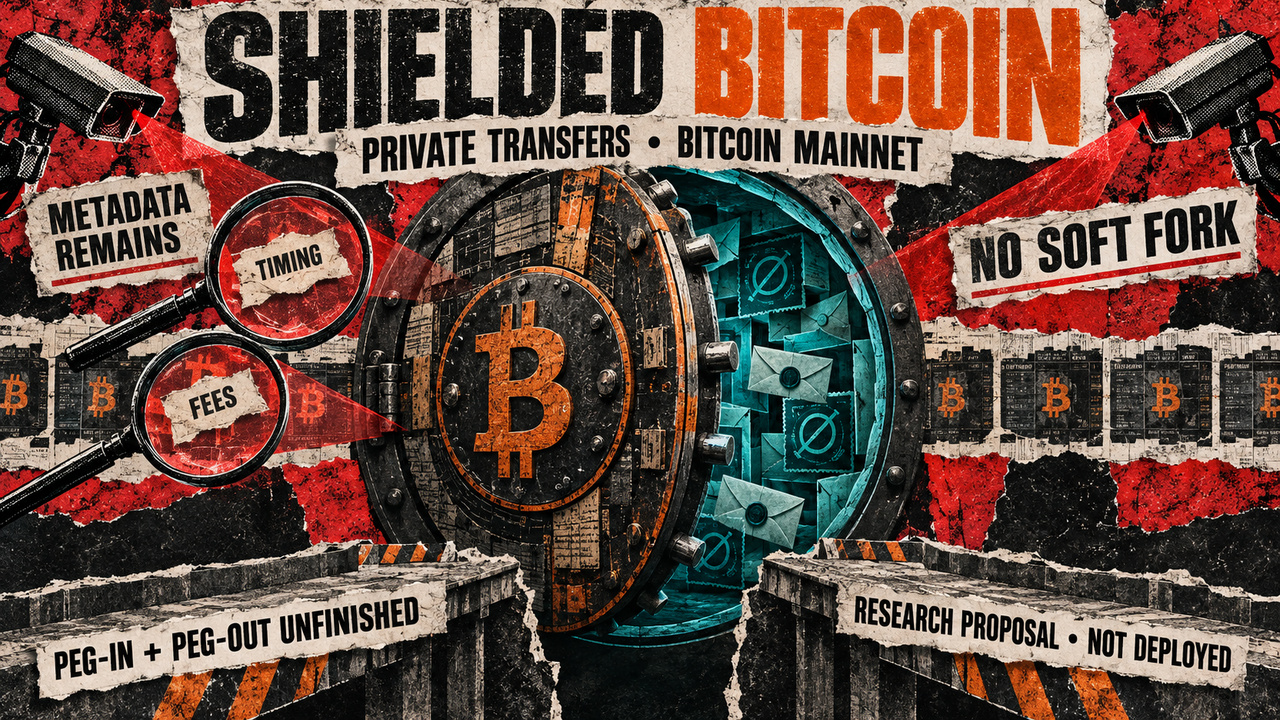
Bitcoin researchers target privacy coins with Zcash-style shielded transfers
Bitcoin researchers have proposed a system for private transfers directly on the network without requiring a soft fork or changes...
![[[alloc] init] Releases Shielded Bitcoin Proposal For Private Bitcoin Transactions](https://bitcoinmagazine.com/wp-content/uploads/2026/09/shielded2-scaled.jpeg)
[[alloc] init] Releases Shielded Bitcoin Proposal For Private Bitcoin Transactions
Bitcoin Magazine [[alloc] init] Releases Shielded Bitcoin Proposal For Private Bitcoin Transactions Shielded Bitcoin is a proposal...

SEC Commissioner Peirce advocates zero-knowledge proofs for KYC/AML compliance overhaul
Peirce's advocacy for zero-knowledge proofs could revolutionize privacy and security in financial compliance, reducing data breach...

AI Crypto Coins Revenue Gap Puts Token Value to the Test
The AI coin crypto sector sits at $24-25 billion, with a total crypto market of approximately $2.86 trillion. Anthropic reportedly...

SEC’s Peirce Urges Zero-Knowledge Proofs to Reduce KYC Data Collection
SEC Commissioner Hester Peirce urged federal regulators to move away from data-heavy know-your-customer and anti-money-laundering...
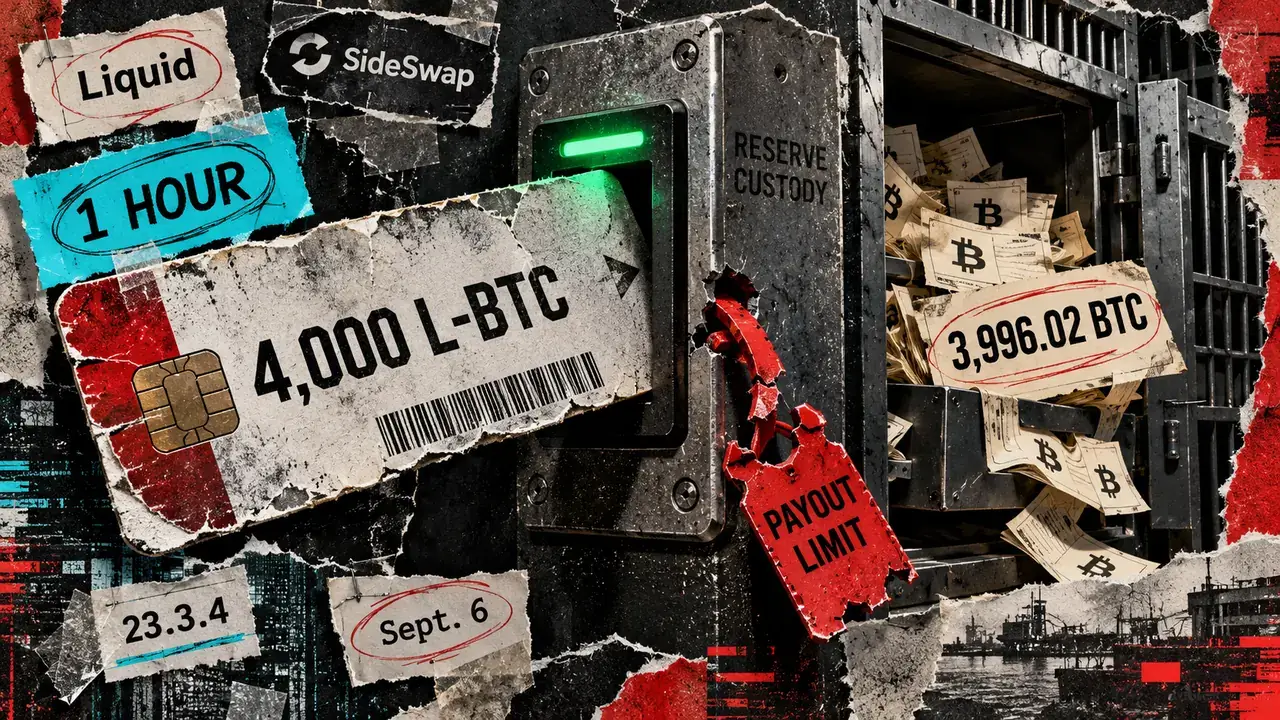
Alpen says AI identified Liquid’s $320M BTC exploit in an hour. Could a payout limit have stopped it?
On September 6, 2026, Liquid’s federation released roughly 3,996 BTC after its network accepted L-BTC that lacked Bitcoin backing....