Bitcoin Marks 8th Year of US Commodity Status
On September 17, 2015, the U.S. Commodity Futures Trading Commission (CFTC) officially declared Bitcoin a commodity, a distinction that eight years later continues to set it apart from other cryptocurrencies that have ye...
Archive context
Older archive item. Useful for background and entity history, but not a fresh market-moving signal.
On September 17, 2015, the U.S. Commodity Futures Trading Commission (CFTC) officially declared Bitcoin a commodity, a distinction that eight years later continues to set it apart from other cryptocurrencies that have yet to earn this status.
While regulatory uncertainty still looms over other more centralized, digital assets, the CFTC's classification of Bitcoin as a commodity established a regulatory framework for Bitcoin, one that allows it to be treated like other classical commodities including gold and precious metals.
In its ruling, the CFTC stated that Section 1a(9) of the CEA defines commodity to include "all services, rights, and interests in which contracts for future delivery are presently or in the future dealt in."
"The definition of a 'commodity' is broad... Bitcoin and other virtual currencies are encompassed in the definition and properly defined as commodities," the agency wrote at the time.
The U.S. Securities and Exchange Commission (SEC), under the leadership of Chairman Gary Gensler, has been actively scrutinizing various digital assets to determine whether they should be classified as securities, an ongoing evaluation that has created a complex and evolving landscape for altcoins.
In recent remarks, Chairman Gensler reiterated the SEC's commitment to maintaining a strong regulatory framework for cryptocurrencies. He emphasized that the distinction between commodities and securities depends on the specific characteristics of each digital asset.
Gensler acknowledged that while Bitcoin, due to its decentralized nature, qualifies as a commodity, other cryptocurrencies exhibit traits that might classify them as securities.
The determination hinges on factors like the degree of centralization, utility, and the presence of third-party entities. Gensler's remarks underscore the ongoing debate within regulatory circles about how to classify cryptocurrencies effectively.
Of much debate has been the Howey Test, the regulatory standard set in the 1900s that seeks to establish when a certain investment offers the promise of a financial return from the work of others.
Crucially, Bitcoin, with its use of proof-of-work as a consensus mechanism allows anyone in the world who can generate electricity to purchase or create a mining machine, whose calculations can enable that participant to claim the new cryptocurrency that it creates.
This distinction separates Bitcoin from the ambiguity surrounding other altcoins, and continues to be a major catalyst for Bitcoin's legitimacy and growth in the financial markets at a time when the regulatory status of other cryptocurrencies, at least in the United States, remains mired in uncertainty.
The 8th anniversary of Bitcoin's classification as a commodity is a reminder of the progress made in this regard, even as other cryptocurrencies await definitive regulatory guidance from the SEC.
Why this matters
This bitcoin story adds another data point to the current market tape and is useful when read alongside nearby source coverage.
Original source
Read on Bitcoin MagazineRelated market context
SEC Commissioner Hester Peirce exits after eight years as crypto’s most prominent regulatory ally
Peirce's departure may slow crypto regulation progress, impacting SEC's ability to swiftly implement clear digital asset guideline...
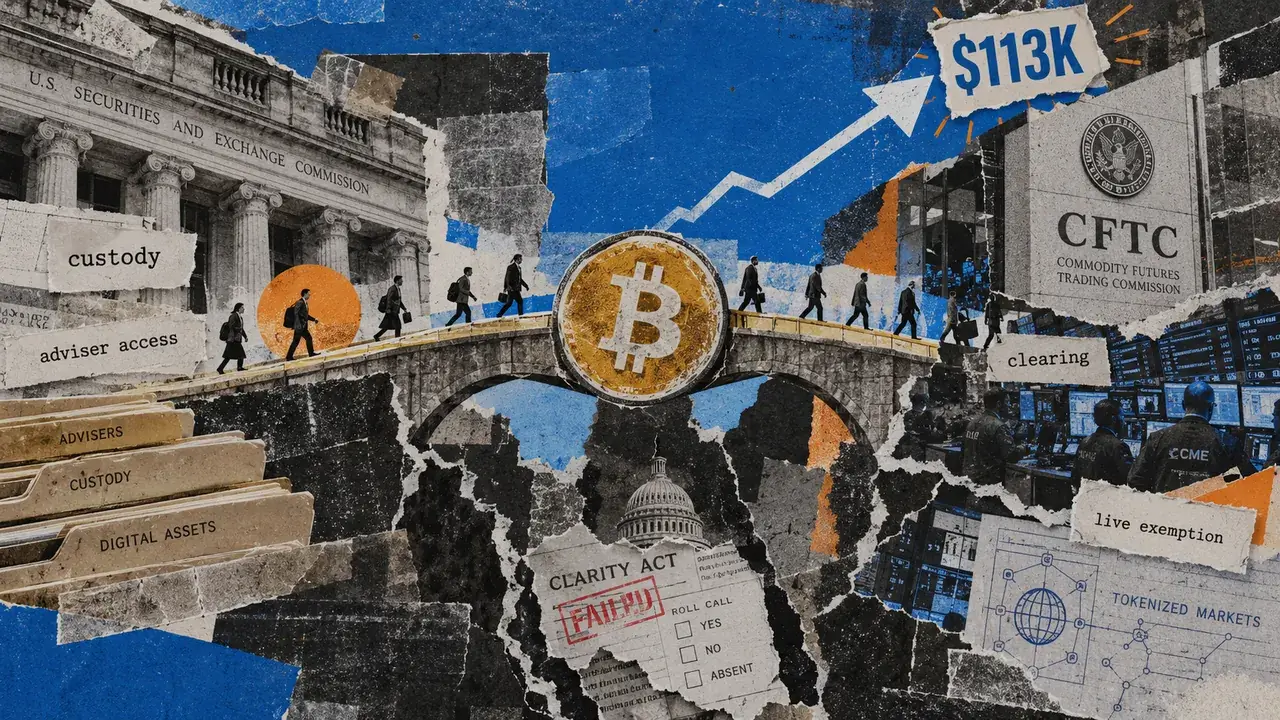
Bitcoin’s $113,000 case strengthens as US regulators push 9 crypto actions
The US Securities and Exchange Commission (SEC) proposed a custody framework on Oct. 1 that would let investment advisers and regu...

Polymath And CineCity Explore Regulated Tokenized Film Investment Platform
TL;DR Polymath and Chicago-based CineCity Studios are exploring a platform for financing independent film through regulated digita...
SEC Proposes New Rules On Crypto Custody
Bitcoin Magazine SEC Proposes New Rules On Crypto Custody The U.S. Securities and Exchange Commission has proposed new rules to up...

ICBA sues OCC over crypto trust charters, raising regulatory concerns
The lawsuit underscores the ongoing struggle for regulatory clarity in the crypto sector, potentially hindering institutional adop...

Stablecoin issuers have replaced 40% of China’s lost US Treasury demand
Stablecoin issuers are emerging as a new source of demand for US government debt as foreign official holdings lose ground. Tether...