Bitcoin Mirrors The 1930 Stock Market Crash
According to Bloomberg Intelligence’s senior macro strategist, Mike McGlone, the rapid rise of Bitcoin over the past decade bears an unsettling resemblance to the stock market bubble of 1929. McGlone points out that the...
Archive context
Older archive item. Useful for background and entity history, but not a fresh market-moving signal.

According to Bloomberg Intelligence’s senior macro strategist, Mike McGlone, the rapid rise of Bitcoin over the past decade bears an unsettling resemblance to the stock market bubble of 1929.
McGlone points out that the current high-interest rate environment is reminiscent of the conditions that caused the stock market to crash in 1930.
In support of his claim, the analyst presents a chart that illustrates how the US discount rate reached its peak in 1929, just before the 100-week moving average of the Dow Jones Industrial Average (DJIA) dropped.
The US discount rate is addressedThe US discount rate is the interest rate at which banks borrow from the Federal Reserve.
The chart also shows a steep increase in the Fed’s interest rate over the last year, while Bitcoin’s 100-week moving average has been on a downward trend.
Bitcoin, one of the most successful assets in history and a leading indicator, is likened to the stock market in 1930.
Roger Babson, a statistician, and entrepreneur, cautioned about elevated equity prices before economist Irving Fisher declared a ‘permanently high plateau’ in 1929. The Fed’s stance aligns more closely with Babson’s warning.
According to Bloomberg analyst McGlone, the birth of Bitcoin is reminiscent of the technological advancements that occurred around a century ago, such as electricity, cars, air travel, and telephones.
Both the parabolic rise of Bitcoin and the emergence of revolutionary technologies in the 1920s took place when the Federal Reserve kept interest rates low.
What is interesting about this is the similarities between Bitcoin and the stock market as it neared its peak in 1929. Both experienced revolutionary technological advancements, parabolic price moves, excessive liquidity, and speculation.
However, a significant difference is that in 4Q29, the Fed Bank of New York started lowering rates as equity prices plunged.
We suggest that you check out the complete article posted by the Daily Hodl in order to learn more details.
Why this matters
This bitcoin story adds another data point to the current market tape and is useful when read alongside nearby source coverage.
Original source
Read on CryptoGazetteRelated market context
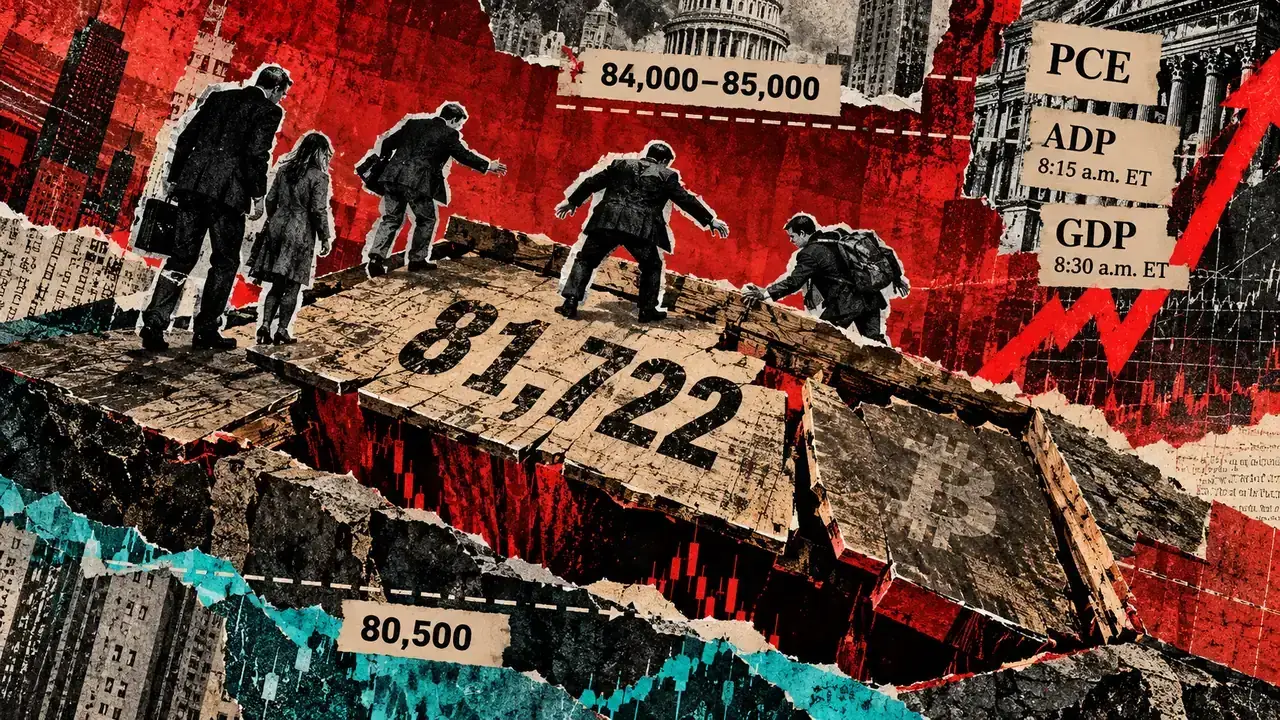
Bitcoin could put the average ETF buyer back in losses this week
Bitcoin registered an intraday low of $82,775.94 on Sept. 29 before rebounding above $83,000, close to a price that could change t...

Japan Telecom Giant KDDI Integrates Crypto Wallet Into au PAY Mobile App
In a major development confirmed on SEPTEMBER 30, 2026, Confirmed announcement/filing for Japan Telecom Giant KDDI Integrates Cryp...

MSCI Rule Puts Strategy at Risk, Says Bitcoin Policy Institute Paper
A private index committee that never touches investor cash can still trigger billions of dollars in stock trades. A new Bitcoin Po...

David Lawant: Bitcoin Entering New “Bullish Regime” According to Options Market
Bitcoin Magazine David Lawant: Bitcoin Entering New “Bullish Regime” According to Options Market Bitcoin futures open interest is...

Allium powers Bloomberg’s new RWAS function for stablecoin tracking
The integration of Allium's RWAS function into Bloomberg terminals enhances institutional access to reliable stablecoin data, supp...

Anthropic tokenized pre-IPO volume hits $643M, but liquidity test looms
Anthropic’s planned IPO could force a fast-growing crypto derivatives market to reconcile its synthetic valuation with Wall Street...