Bitcoin Network Experiences Slight Dip in Difficulty After Record High
Bitcoin’s difficulty decreased 0.49% on Feb. 12, 2023, following a sustained all-time high of 39.35 trillion over the previous two weeks (2,016 blocks). The decrease in difficulty offers a brief respite for bitcoin miner...
Archive context
Older archive item. Useful for background and entity history, but not a fresh market-moving signal.
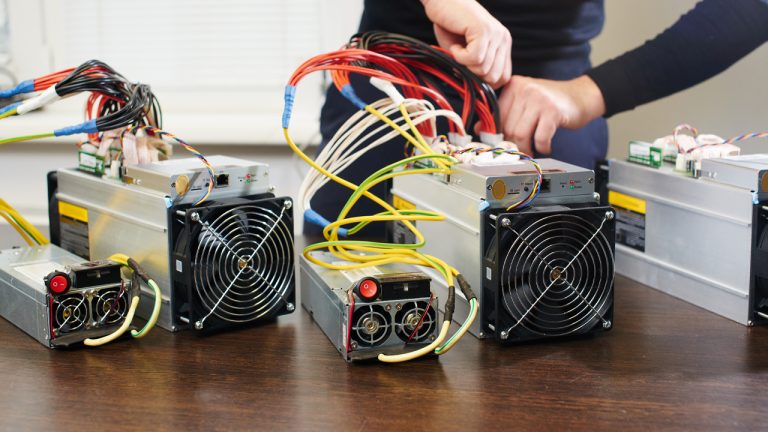
Bitcoin’s difficulty decreased 0.49% on Feb. 12, 2023, following a sustained all-time high of 39.35 trillion over the previous two weeks (2,016 blocks). The decrease in difficulty offers a brief respite for bitcoin miners, after the network recorded a 14.94% increase in the last month.
Bitcoin Difficulty Drops 0.49% Lower; Top Five Mining Pools Continue to Command Majority of Global Hashrate
At the time of writing, Bitcoin’s hashrate is coasting along at 289.14 exahash per second (EH/s) after a 0.49% decrease in difficulty at block height 776,160. The network difficulty has been operating at approximately 39,350,942,467,772 hashes for the past 2,016 blocks, or two weeks. With the recent 0.49% decrease in difficulty, the network’s difficulty will now be set at 39.16 trillion hashes for the next two weeks.
Since the latest difficulty change, block times — the intervals between mined blocks — have been 10 minutes, 7 seconds to roughly 11 minutes, 14 seconds in length. Bitcoin’s next difficulty retarget is scheduled for around Feb. 26, 2023. The average hashrate over the last 2,016 blocks was approximately 280.6 exahash per second (EH/s), and the average block time for those blocks was 10 minutes, 2 seconds.
During the past three days, Foundry USA has been the top mining pool with 33.26% of the global hashrate, or approximately 95.89 exahash per second (EH/s) of hashpower. Foundry is followed by Antpool with 15.97% of the global hashrate and Binance Pool with 15.54% of computational power. F2pool (14.22%) and Viabtc (9.41%) are next, respectively. There are approximately 12 known mining pools today, and the top five control 88.4% of the global hashrate.
According to macromicro.me statistics, the cost of producing bitcoin (BTC) remains higher than its current spot market value. Macromicro.me calculates its estimates based on data on electricity consumption and daily bitcoin issuance provided by Cambridge University. Currently, the average cost of mining a single bitcoin is around $24,119, while its spot market value is approximately $21,901 per unit.
What impact will the recent decrease in difficulty have on the future of Bitcoin mining and the distribution of hashpower among mining pools over the next two weeks? Share your thoughts in the comments below.
Why this matters
This bitcoin story adds another data point to the current market tape and is useful when read alongside nearby source coverage.
Original source
Read on Bitcoin NewsRelated market context

Bitcoin Is Busier Than Ever, but Bitcoin Mining Isn’t Getting Paid More
Bitcoin is processing more transactions than ever before on an annual basis, but the growing activity is doing little to improve o...
Solayer Pay Adds Five Blockchain Networks For Direct Stablecoin Card Deposits
TL;DR: Solayer Pay says its card app now accepts supported stablecoin deposits from Solana, Ethereum, Arbitrum, BNB Chain and Base...

China targets national blockchain network completion by 2030
China's blockchain network plan could enhance digital integration, boost economic activities, and strengthen cybersecurity by 2030...

Blockchain Association Presses Congress on Crypto Taxes as Clarity Act Stalls
Bitcoin Magazine Blockchain Association Presses Congress on Crypto Taxes as Clarity Act Stalls The Blockchain Association sent a l...

China Sets 2030 Target for National Blockchain Network
The plan prioritizes trade and finance in the Yangtze River Delta and industrial applications in Chengdu-Chongqing, alongside cont...

Blockchain Association Urges Congress to Pass Crypto Tax Rules, Lays Out 10 Principles
The Blockchain Association asked congressional leaders on Thursday to pass bipartisan digital asset tax legislation, setting out 1...