Bitcoin Reserves And The Incentives Of Civil Asset Forfeiture
Bitcoin Magazine Bitcoin Reserves And The Incentives Of Civil Asset Forfeiture Yesterday, President Trump announced the long awaited Strategic “Bitcoin” Reserve on Truth Social, and many in the space are pissed. First, t...
Archive context
Older archive item. Useful for background and entity history, but not a fresh market-moving signal.

Bitcoin Magazine
Bitcoin Reserves And The Incentives Of Civil Asset Forfeiture
Yesterday, President Trump announced the long awaited Strategic “Bitcoin” Reserve on Truth Social, and many in the space are pissed.
First, the Reserve appears to be far from Bitcoin only. “They’re doing DEI for Charles Hoskinson,” former CoinDesk Chief Insights Columnist David Z. Morris wrote on X – Hoskinson’s Cardano (ADA) was announced to be included in the Reserve. “Cut cancer research to buy Cardano,“ another user posted.
Others take issue with possible investment interests surrounding the Trump administration: Trump’s announcement is “a new level of corruption,” wrote communications strategist Derek Martin, detailing David Sack’s investment in Bitwise. “You get exit liquidity and you get exit liquidity everybody gets exit liquidity” posted Bitcoin Policy Institute fellow Troy Cross alongside a picture of Oprah. (Sacks has since stated that he has sold all of his cryptocurrency holdings).
What all of these criticisms have in common is that they completely miss the point. Whether the Reserve is composed of additional coins, or may serve nefarious interests of the administration, is of little actual consequence for those holding Bitcoin.
What is very much of consequence, is the question of how said Reserve would be funded. On the one hand, many are speculating that the US may divert taxpayer funds to purchase cryptocurrency – a proposal that inevitably would have to go through Congress – which seems unlikely, as Trump is rumoured to make a new announcement on ‘investments’ today.
Another, much more likely approach, as already outlined in Trump’s Executive Order to “Strengthen American Leadership in Digital Financial Technology”, is that the Reserve would be “derived from cryptocurrencies lawfully seized by the Federal Government through its law enforcement efforts.”
That’s fine, you’ll say, because I’ve obtained all of my bitcoin legally and have never, nor will I ever, engage in criminal activity. And that’s precisely where you are wrong.
Bitcoin that is “lawfully seized by the Federal Government” does not just include bitcoin derived through criminal prosecutions. Bitcoin can additionally be lawfully seized through a process called Civil Asset Forfeiture: a funny little game that the Government plays in which it doesn’t have to accuse you of a crime, but can instead accuse the thing itself of a crime.
As Cato Institute has outlined in a post calling for the reform of Civil Asset Forfeiture law, New York police routinely seize cars used in a DUI, and in Florida, police regularly seize cash excess of $100 suspected to be used to purchase illegal substances. In the most striking example, Cato highlights a case from Philadelphia, in which police tried to seize a grandmother’s house and car because, without her knowledge, her son sold less than $200 worth of marijuana from the house. In Philadelphia alone, civil asset forfeiture was so astonishingly abused, that the City seized over 1,000 homes, over 3,000 vehicles, and over $44 Million in cash over an 11-year period.
The problem with civil asset forfeiture is that it reverses the burden of proof. Instead of being guilty until proven innocent, it is up to the asset’s owner to prove that the property seized wasn’t used – or wasn’t intended to be used – in a crime. The cost of such litigation is what makes civil asset forfeiture close to impossible to fight.
While the Government could have – and has – applied civil asset forfeiture to cryptocurrencies, which usually stand out in court documents by their titles alone, such as United States v. Binance Account 188746, it never really had a strategic interest in applying it more broadly. The Bitcoin would be seized and forfeited to the Government, but the Government would have to end up selling it for dollars anyway.
If we take Trump’s Executive Order at face value, this may now change, giving the Government an incentive to apply civil asset forfeiture to bitcoin more broadly.
This is a problem, as we can likely trace a lot of bitcoin back to having touched a sanctions evasion, a darknet market, or other alleged illicit activity. The question then becomes: how many hops back do we go? How many UTXOs do we unravel to find it legitimate that bitcoin coming out of potentially illicit activity is seized on behalf of the Government to help build its Strategic Reserve?
The other problem is that, if the Government accuses the bitcoin you hold of having been involved in the facilitation of crime, you may have obtained said bitcoin fully legally, had nothing to do with the alleged criminal activity, and don’t even need to have been aware of it – the Government may still, fully legally, take your bitcoin away from you.
Taking Trump’s Executive Order at face, it seems that cheering on the Strategic Bitcoin Reserve may not be the smartest move until it is clarified that civil asset forfeiture will not be employed to further the Reserve. After all, it is a concept that should be reformed, and not encouraged.
This is a guest post by L0la L33tz. Opinions expressed are entirely their own and do not necessarily reflect those of BTC Inc or Bitcoin Magazine.
This post Bitcoin Reserves And The Incentives Of Civil Asset Forfeiture first appeared on Bitcoin Magazine and is written by L0La L33Tz.
Why this matters
This bitcoin story adds another data point to the current market tape and is useful when read alongside nearby source coverage.
Original source
Read on Bitcoin MagazineRelated market context
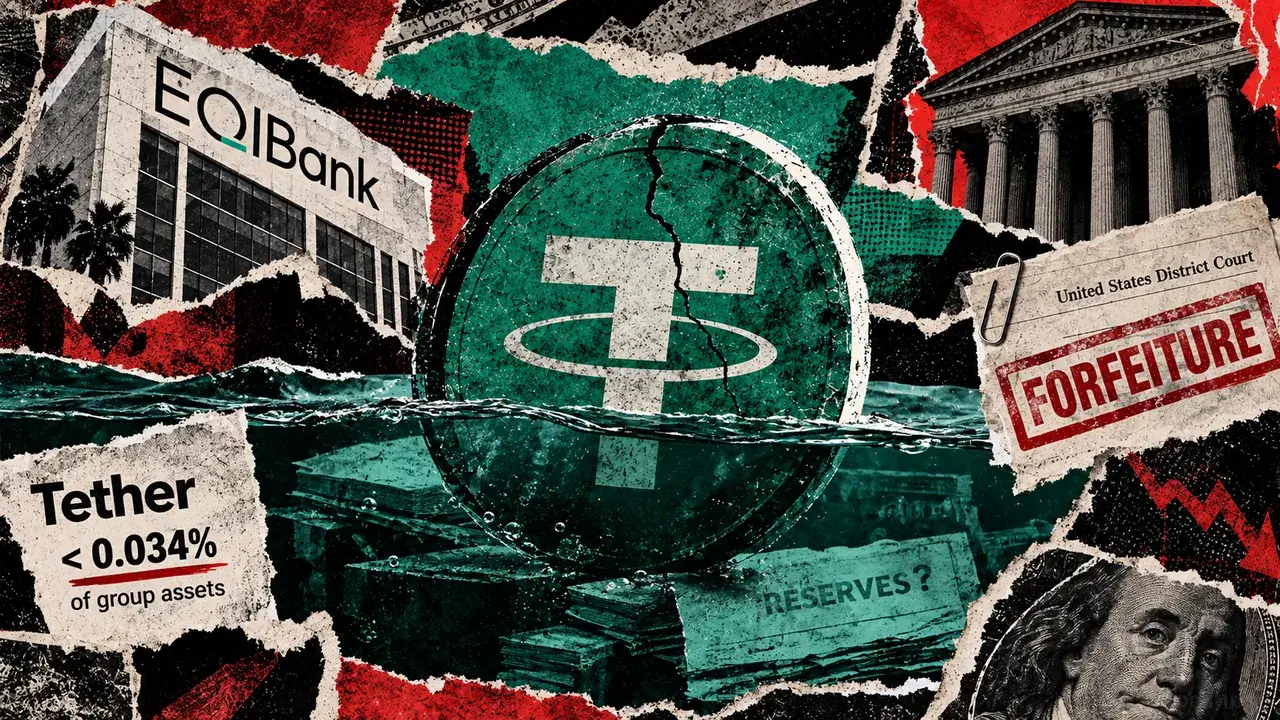
An $84 million US asset seizure just sparked a massive question for Tether
Tether has disclosed exposure to EQIBank as the bank fights a US seizure involving payment processor Capstone Limited, raising a q...

Bitcoin Price Prediction: BTC Risks $80,000 After Trump Rejects Iran Ceasefire Offer
Bitcoin sits at roughly $83,000, down 1.6% over the past 24 hours, after President Trump rejected Iran’s seven-day ceasefire propo...

Bitcoin, NASDAQ futures fall as Trump hints at more Iran strikes
Geopolitical tensions heighten market volatility, prompting risk aversion and impacting both traditional and digital asset investm...

Fed October Decision Polymarket Odds: October Rate Hike Sits at 64%
Bitcoin and the wider cryptocurrency market are facing a renewed macroeconomic headwind as traders increasingly anticipate another...
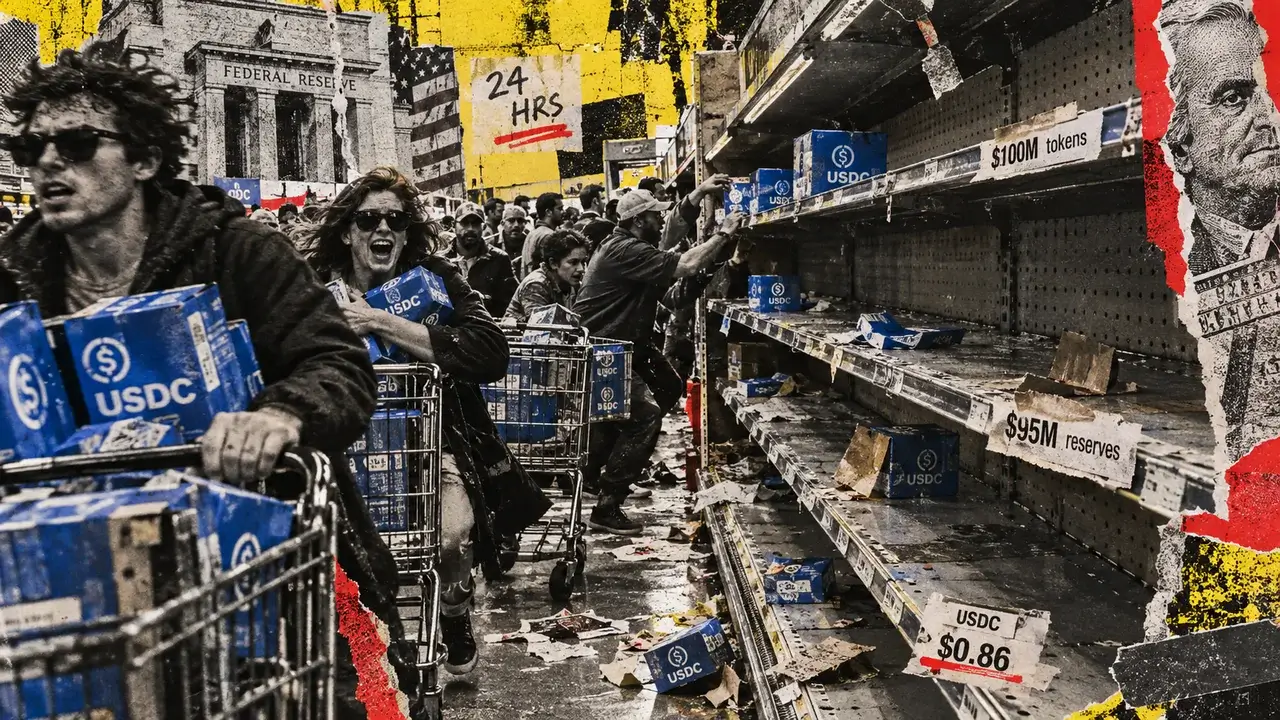
Fed proposed stablecoin rule could trigger a 48-hour liquidation run
The Federal Reserve's proposed rules for the payment stablecoin issuers it supervises include a crisis clock measured in hours. An...
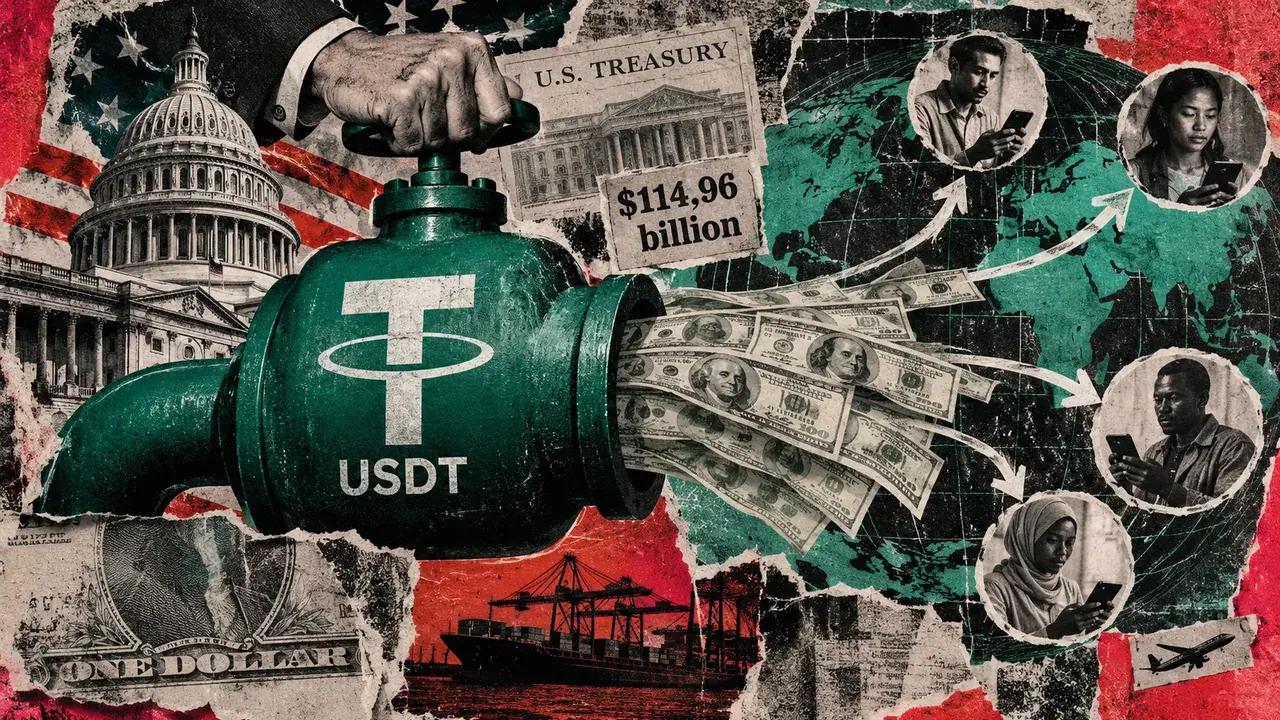
Washington has $114 billion reasons to want Tether around
Not that long ago, Washington fined Tether for misleading people about the dollars behind its tokens. Today, the company's insatia...