Bitcoin Stockpiles On Exchanges Hit Lowest Point Since 2019
Long-term holders now control roughly 14.5 million BTC — coins that have not moved in over five months and show little sign of heading back to market anytime soon. Coins Keep Moving Off Platforms That deep freeze in hold...
Archive context
Older archive item. Useful for background and entity history, but not a fresh market-moving signal.

Long-term holders now control roughly 14.5 million BTC — coins that have not moved in over five months and show little sign of heading back to market anytime soon.
Coins Keep Moving Off PlatformsThat deep freeze in holder behavior is part of a larger pattern reshaping how Bitcoin is stored and traded.
Exchange reserves across all centralized platforms have dropped to approximately 2.75 million BTC as of March 12, according to data from CryptoQuant.
That marks the lowest level recorded since 2019 and represents a loss of nearly half a million coins from exchange wallets over roughly two years.
The pullback has been driven by three main forces: retail and institutional holders moving coins into private cold storage, spot Bitcoin ETFs steadily absorbing supply since their US launch in late 2023, and publicly traded companies building large treasury positions.
On a single day in recent weeks, withdrawals from exchanges hit 32,000 BTC. Net flows turned negative and stayed there.
Corporate Buyers Add Pressure to Shrinking SupplyStrategy, formerly known as MicroStrategy, has continued stacking coins at scale. Reports indicate that publicly listed companies collectively took in close to 350,000 BTC over a recent stretch, pulling a significant chunk of circulating supply away from trading venues.
Spot Bitcoin ETFs added to the draw, pulling in close to $570 million net in a single week.
When fewer coins sit on exchanges ready to be sold, even modest waves of buying can move prices sharply. There simply is not enough supply on the order books to absorb demand without price shifting.
That dynamic, sometimes called a supply squeeze, has historically preceded stronger price runs — though timing those moves is far from predictable.
Price Holds Steady After February DropBitcoin spent much of February under pressure, sliding to the low $60,000s before recovering. The coin has since climbed back and been trading in a band between $67,000 and $71,000, hovering near $69,000 to $70,000 as of this report.
A break above $72,000 could trigger forced buybacks from traders betting on lower prices, which would add upward momentum.
Miners are watching closely. Their breakeven cost on electricity alone sits near $64,000 to $65,000, meaning a sustained drop below that level could force some operators to sell reserves to cover costs.
Daily trading volume has remained above $50 billion, which analysts read as steady participation rather than speculative frenzy.
Whether the tightening supply eventually pulls prices higher depends on whether fresh demand arrives fast enough to match conviction among current holders — most of whom, based on their behavior, appear in no rush to sell.
Featured image from Unsplash, chart from TradingView
Why this matters
Bitcoin is showing up inside the Institutional Adoption theme, so this story is worth tracking for follow-through rather than treating it as a one-off headline.
Original source
Read on NewsBTCRelated market context

Strategy and Strive Announce $182.7 Million Bitcoin Buy as Price Surges Past $86,000
Bitcoin Magazine Strategy and Strive Announce $182.7 Million Bitcoin Buy as Price Surges Past $86,000 Bitcoin treasuries kicked of...

Strategy and Strive buy $183 million in Bitcoin as $85,000 rally revives treasury trade
Bitcoin treasury companies Strategy and Strive bought about $183 million of BTC last week as the cryptocurrency’s rebound helped c...

USDT on TRON Becomes Most Used Onchain Payment Option on CoinsBee as Stablecoin Spending Grows
CoinsBee payment data shows USDT on TRON recorded nearly twice as many payments as Bitcoin over the past 90 days, while its share...

This blockchain just voted to shut itself down for a Solana-powered AI pivot
ZetaChain's on-chain governance has approved retiring the network’s standalone blockchain and moving ZETA to Solana as the project...
‘A little more orange’: Strategy buys 950 bitcoin for $76 million, bringing total holdings to 846,000 BTC
Strategy's total holdings account for around 4% of the 21 million bitcoin supply cap — worth roughly $72 billion.
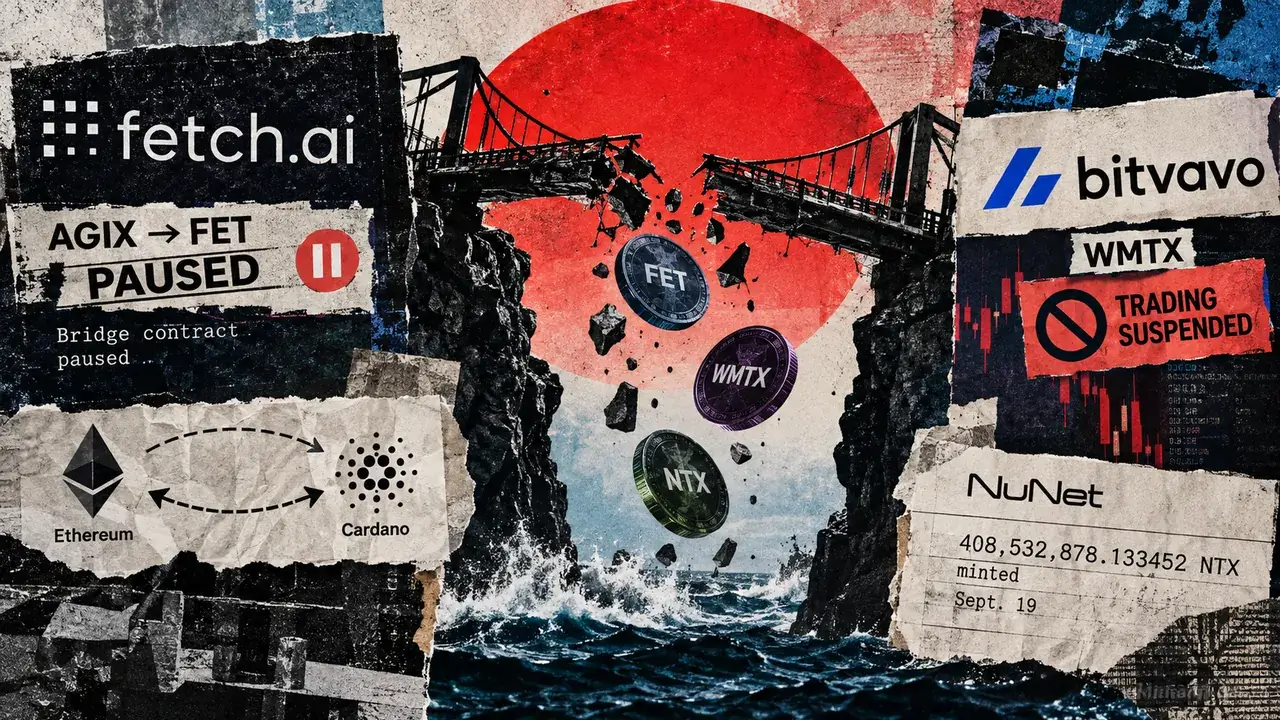
One wallet links $1.55 million FetchAI theft to massive 408.5 million NTX mint
A coordinated attack drained 8.7 million FET and used a compromised NuNet minter key to create 408.5 million NTX. The Sept. 19 att...