Bitcoin Testnet Experiences Disruption Due to Griefing Attack
A recent griefing attack on the Bitcoin testnet has caused significant disruption, leading to the generation of three years’ worth of blocks in just one week. Griefing attacks involve intentionally spamming transactions...
Archive context
Older archive item. Useful for background and entity history, but not a fresh market-moving signal.

A recent griefing attack on the Bitcoin testnet has caused significant disruption, leading to the generation of three years’ worth of blocks in just one week. Griefing attacks involve intentionally spamming transactions on a network, increasing its workload, and disrupting its normal operations. Jameson Lopp, co-founder and Chief Security Officer of Casa, publicly claimed responsibility for the attack, generating over 165,000 blocks within the past week.
Lopp explained that the purpose of the attack was to advocate for a reset of Bitcoin’s test network, ensuring that testnet coins have no value and developers can test their software without incurring costs. He also highlighted a bug in the testnet’s consensus code that allows for the creation of massive block amounts in a short time, urging developers to address this vulnerability.
Hashrate and difficulty data on the Bitcoin network testnet indicated a spike to 2,315 TH/s on April 19 before returning to 346 TH/s on April 28. The attack caused interruptions in node syncing, making it impossible to reach the tip due to the high volume of new blocks.
Leo Weese, technical content lead at Lightning Labs, observed the disruption, expressing concerns about the future of permission-less testing networks. While the Bitcoin testnet didn’t suffer significant harm, it did disrupt the testing efforts of open-source Bitcoin application builders.
Despite Lopp’s characterization of the incident as a “free stress test,” it faced backlash from the crypto community. Francis Pouliot, co-founder of Bull Bitcoin, emphasized the impact on legitimate testing efforts, highlighting the wasted time and resources of developers.
While the Bitcoin testnet withstood the attack, the incident underscores the challenges of maintaining open and accessible testing environments in the crypto space amidst malicious activities.
Featured Image: Freepik
Why this matters
This bitcoin story adds another data point to the current market tape and is useful when read alongside nearby source coverage.
Original source
Read on CryptoCurrencyNewsRelated market context

Ethereum prepares Glamsterdam testnet upgrade, targeting higher L1 throughput and efficiency
The Glamsterdam upgrade could significantly enhance Ethereum's scalability and efficiency, potentially reshaping its network dynam...

Anthropic tokenized pre-IPO volume hits $643M, but liquidity test looms
Anthropic’s planned IPO could force a fast-growing crypto derivatives market to reconcile its synthetic valuation with Wall Street...
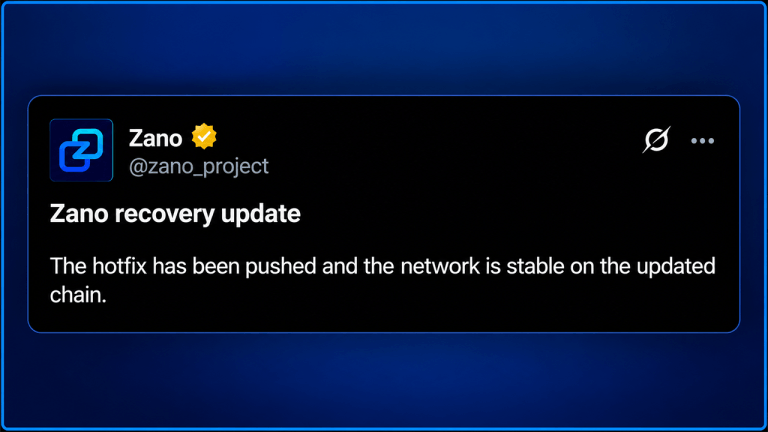
Zano Network Stabilizes After 30-Day Blockchain Rewind
The Zano team announced on Tuesday that a hot fix has been applied and the “network is stable on the updated chain” following the...

Aztec Labs launches Nyx privacy wallet on upgraded Aztec Network
Aztec Labs' Nyx wallet and network upgrade could significantly enhance privacy and efficiency in DeFi, influencing Ethereum's priv...

Quantum Security Startup Project Eleven Acquires Riva Labs, Adding Post-Quantum Wallet Tech
Project Eleven, a startup preparing crypto networks for the arrival of powerful quantum computers, has acquired Riva Labs, a crypt...

SEC Staff Narrow Token Buyback Guidance to Networks With ‘No Central Party’
SEC staff tightened their new guidance on crypto token buybacks on Monday, three days after first publishing it, limiting its reac...