Bitcoin’s Worst Week Of 2026 Is Happening Right Now — QCP Explains Why The Bottom Isn’t In Yet
Bitcoin entered June under significant pressure, trading down approximately 11.6% on the week heading into June 8 and struggling to reclaim key momentum levels — caught between crypto-specific deleveraging and a macro en...
Archive context
Older archive item. Useful for background and entity history, but not a fresh market-moving signal.

Bitcoin entered June under significant pressure, trading down approximately 11.6% on the week heading into June 8 and struggling to reclaim key momentum levels — caught between crypto-specific deleveraging and a macro environment where oil, real yields, and policy uncertainty are all moving in the wrong direction simultaneously, according to QCP Capital’s latest Market Colour update.
The catalyst that accelerated the selloff came from an unexpected source. Strategy’s disclosure that it sold 32 Bitcoin in late May to fund preferred dividend payments — a sale immaterial in size but significant in symbolism — was enough to challenge the “never sell” narrative that has made the company a structural demand anchor for Bitcoin since 2020, per QCP’s analysis. “In markets, symbolism rarely pays dividends, but it can certainly move prices,” the firm noted in the June 3 report.
Two Forces Hitting At OnceQCP frames the current price action as a double compression — Bitcoin being squeezed from both directions simultaneously.
On the crypto-specific side, the Strategy headline triggered a wave of deleveraging from holders who had priced in unconditional accumulation from the world’s largest corporate Bitcoin buyer. On the macro side, oil pushed higher as Middle East hostilities flared and US-Iran talks stalled — keeping the Hormuz risk premium that has weighed on markets since February firmly in place.
Stronger-than-expected US job openings data simultaneously reduced confidence in near-term Federal Reserve rate cuts, reinforcing what QCP describes as the higher-for-longer rates backdrop. For a high-beta asset like Bitcoin, QCP notes, that is “not a particularly friendly seating arrangement.”
Options Markets Signal Caution Over CapitulationThe options market is confirming the defensive tone without yet flashing outright panic. Thirty-day at-the-money implied volatility repriced sharply higher to approximately 41.4 — up more than four volatility points on the day and seven on the week — as realized volatility caught up to implied levels, per QCP’s analysis. The surface continues to show persistent demand for downside protection, with the front-end term structure mildly inverted and risk reversals deeply negative.
QCP’s characterization of the vol market is pointed: the message is “less ‘buy the dip’ and more ‘please insure the dip before discussing it.'” Implied volatility is no longer obviously cheap, which means the cost of hedging downside exposure has risen materially alongside the price decline — a dynamic that discourages fresh long positioning from risk-managed institutional players.
The Offset That Hasn’t Been EnoughThe broader cross-asset picture offers a partial explanation for why Bitcoin hasn’t found stronger support. Equities have remained resilient on AI-linked earnings, supported by hyperscaler and semiconductor strength — but that strength is increasingly concentrating speculative capital in mega-cap tech and a pipeline of high-profile upcoming IPOs, per QCP.
The same dynamic Arthur Hayes flagged when exiting his HYPE and NEAR positions — three mega AI IPOs absorbing institutional risk capital between now and early Q3 — appears to be playing out in real time, with equities doing heavy lifting for risk appetite broadly while Bitcoin absorbs the macro headwinds without the AI growth story to cushion them.
QCP’s overall framing is telling: Bitcoin is caught between its structural long-term adoption narrative and a near-term tape that offers little support. Not quite panic. Not quite bargain hunting. The market is waiting for something to shift — and until clearer signals emerge on Iran, the Fed, or the AI IPO pipeline, the path of least resistance remains lower.
As of this writing, Bitcoin trades at around $62,562, attempting to stabilize at the lower boundary of its Power Law corridor — a level that has historically preceded rebounds but has yet to generate meaningful buying conviction in the current environment.
Cover image from Grok, BTCUSD chart from Tradingview
Why this matters
Bitcoin is showing up inside the Institutional Adoption theme, so this story is worth tracking for follow-through rather than treating it as a one-off headline.
Original source
Read on NewsBTCRelated market context

Bitcoin Price Prediction: Can BTC USD Hold $82K Ahead of Next Week’s CPI Drop?
Bitcoin price prediction notes a brief recovery on Saturday, October 10, but the market remains poised for a weekly loss as rising...

Hyperliquid surpasses $1B revenue, $1B used for HYPE buybacks
Hyperliquid's strategic buybacks enhance HYPE's market value, reflecting strong financial health and boosting investor confidence...

Robinhood Adds BTC To Balance Sheet, ‘Bunker Mode’ Kicks Off, And More – Weekly Recap
This week’s stories spanned corporate adoption, government crypto flows, security risks and macro concerns. Robinhood added $25 mi...
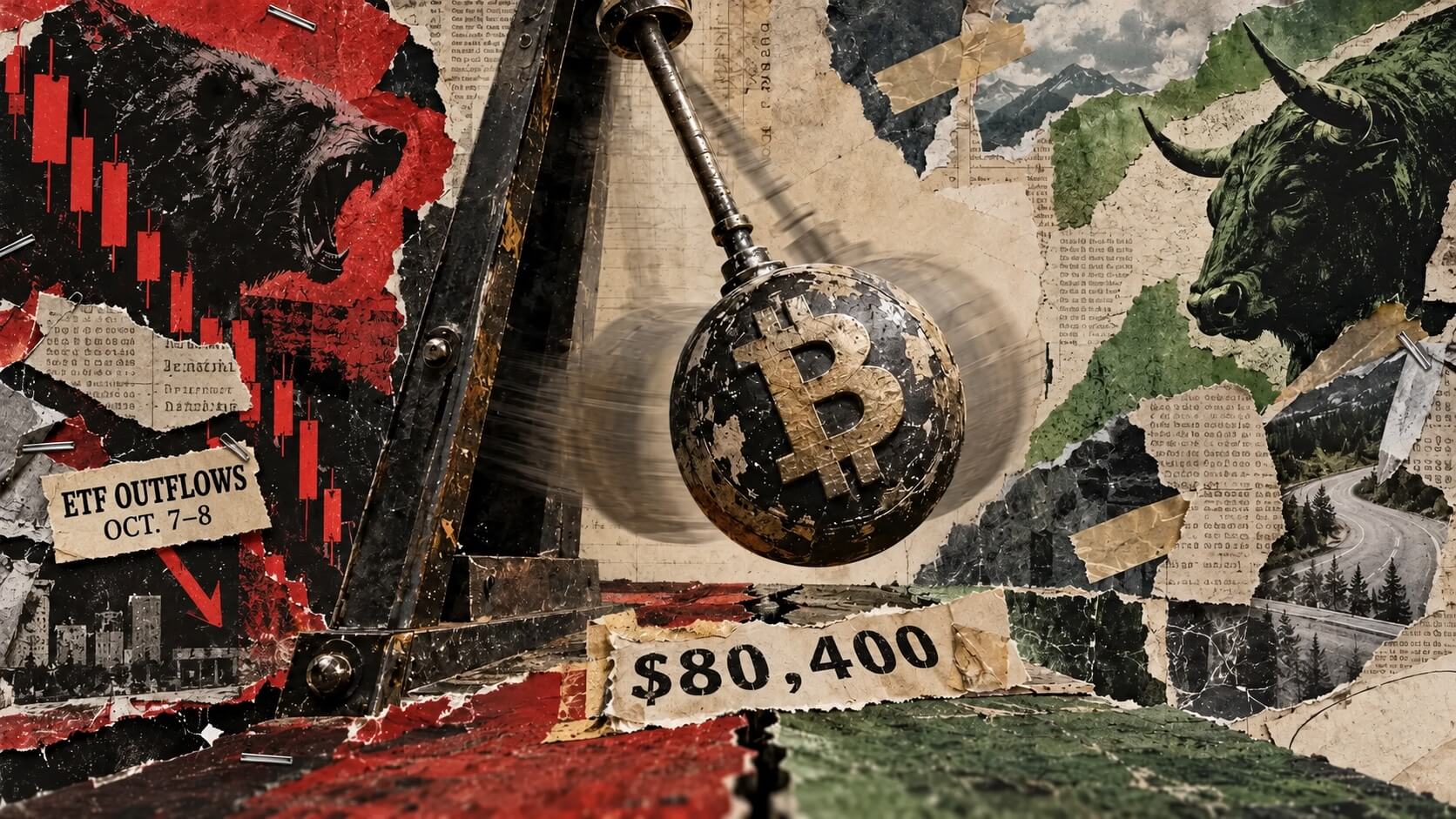
Bitcoin’s weekend rebound faces an $80,400 test after nearly $730 million in ETF outflows
Bitcoin traded near $82,900 in PerpFinder’s Oct. 10, 09:36 UTC snapshot, with traders watching whether the weekend rebound brings...

What Is Crypto Spot Trading?
For example, a token can be up 70% and still be a terrible trade if you have no idea when to take profits. Likewise, a 30% dip can...
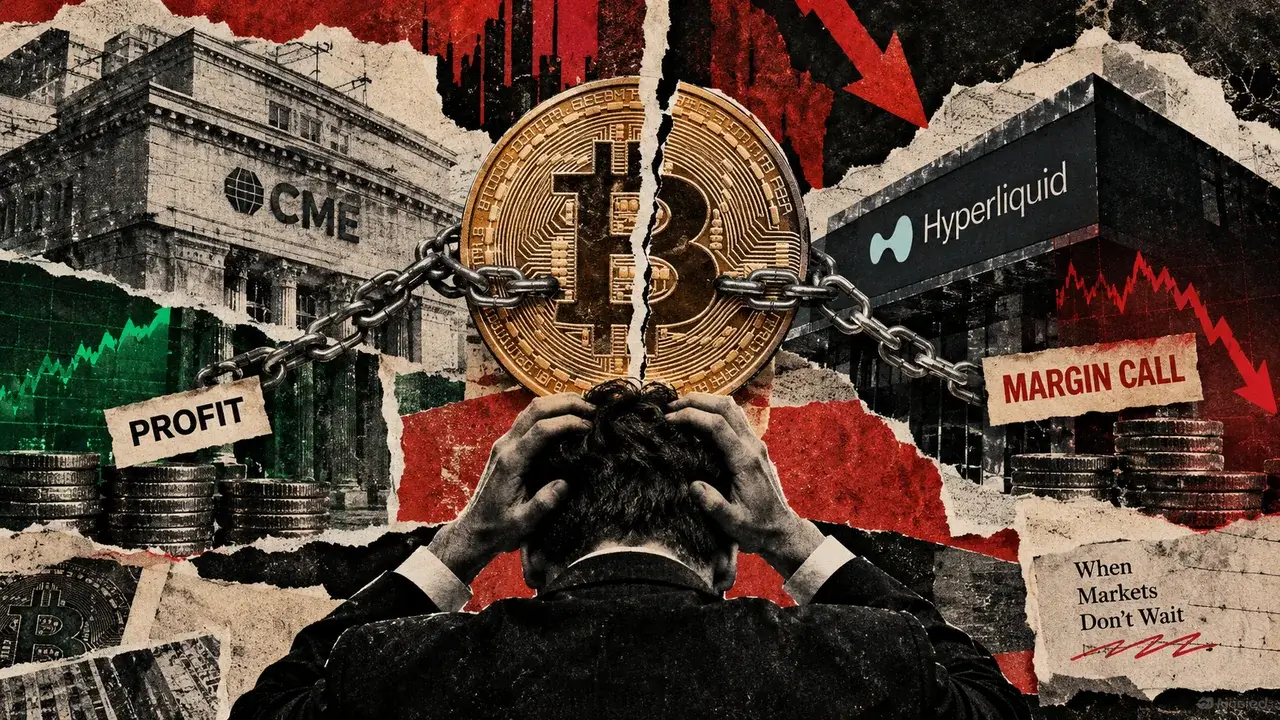
Bitcoin hedge funds face a liquidation trap when their collateral is split across markets
Here's a hypothetical situation: a hedge fund is making money, but one of its exchanges is about to liquidate its position anyway....