Bithumb $43 Billion Bitcoin Blunder Triggers Political Backlash In South Korea
South Korean lawmakers are ramping up pressure on financial regulators after a system failure at Bithumb, the country’s largest cryptocurrency exchange, led to the accidental distribution of more than $43 billion worth o...
Archive context
Older archive item. Useful for background and entity history, but not a fresh market-moving signal.

South Korean lawmakers are ramping up pressure on financial regulators after a system failure at Bithumb, the country’s largest cryptocurrency exchange, led to the accidental distribution of more than $43 billion worth of Bitcoin (BTC) earlier this month.
The February 6 incident has triggered political scrutiny of both the exchange itself and the agencies responsible for overseeing the virtual asset market.
Behind The Bithumb Massive Bitcoin MishapAccording to local reporting by The Korea Times, members of the National Assembly are questioning how such a massive error could slip through despite repeated regulatory inspections.
Rep. Kang Min-guk of the main opposition People Power Party disclosed that the country’s Financial Services Commission (FSC) reviewed Bithumb three times between 2022 and 2025.
Over the same period, the Financial Supervisory Service (FSS) conducted three separate inspections. Yet regulators failed to detect what has now been described as a critical structural weakness in the exchange’s system.
Kang argued that existing oversight mechanisms were inadequate. He pointed out that safeguards were insufficient to prevent a situation in which a single employee could initiate massive coin transfers. Kang said:
The episode is not merely a technical mishap but a case that lays bare deeper structural weaknesses in the virtual asset market, including complacent supervision and gaps in regulation.
Instead of crediting users with Bitcoin worth 2,000 won — approximately $1.38 — the system mistakenly credited 2,000 Bitcoin per user. In total, 620,000 Bitcoin were incorrectly distributed.
Rep. Han Chang-min of the minor Social Democratic Party also criticized regulators, questioning whether supervisory authorities had meaningfully evaluated the exchange’s internal systems. “Authorities appeared to be shifting responsibility onto Bithumb despite their supervisory role,” Han said.
Broader Crypto OversightIn response to the incident, the FSS extended the deadline for its formal investigation from Feb. 13 to the end of the month, citing the need for additional time.
An eight-member inspection team is now intensifying its review, focusing on possible violations related to investor protection and anti-money laundering (AML) compliance.
Particular attention is being given to the system architecture that allowed coins not actually held by the exchange to be credited to users. Regulators have not ruled out the possibility that further erroneous distributions could be uncovered.
Separately, financial authorities have reportedly formed an emergency response team in coordination with the Digital Asset eXchange Alliance (DAXA), a self-regulatory body representing domestic exchanges.
The team has begun inspections of asset verification and internal control systems at four other platforms — Upbit, Coinone, Korbit, and GOPAX. Any deficiencies are expected to be incorporated into DAXA’s self-regulatory guidelines and could influence the next phase of cryptocurrency legislation in South Korea.
At the time of writing, Bitcoin was trading at $67,763, marking a 2% decline over the past seven days and showing minimal change since Thursday’s trading session.
Featured image from OpenArt, chart from TradingView.com
Why this matters
Bitcoin is showing up inside the Regulation theme, so this story is worth tracking for follow-through rather than treating it as a one-off headline.
Original source
Read on NewsBTCRelated market context

Ripple Powers Absa Digital Asset Custody Launch for Africa’s $205B Crypto Market
Key Takeaways: Ripple brings its custody technology to Absa Digital Asset Custody, which Absa Corporate and Investment Banking lau...

ECB Launches Pontes For Central-Bank Settlement Of Tokenized Assets
TL;DR The European Central Bank has launched Pontes, a wholesale settlement service for tokenized financial assets. Pontes settles...
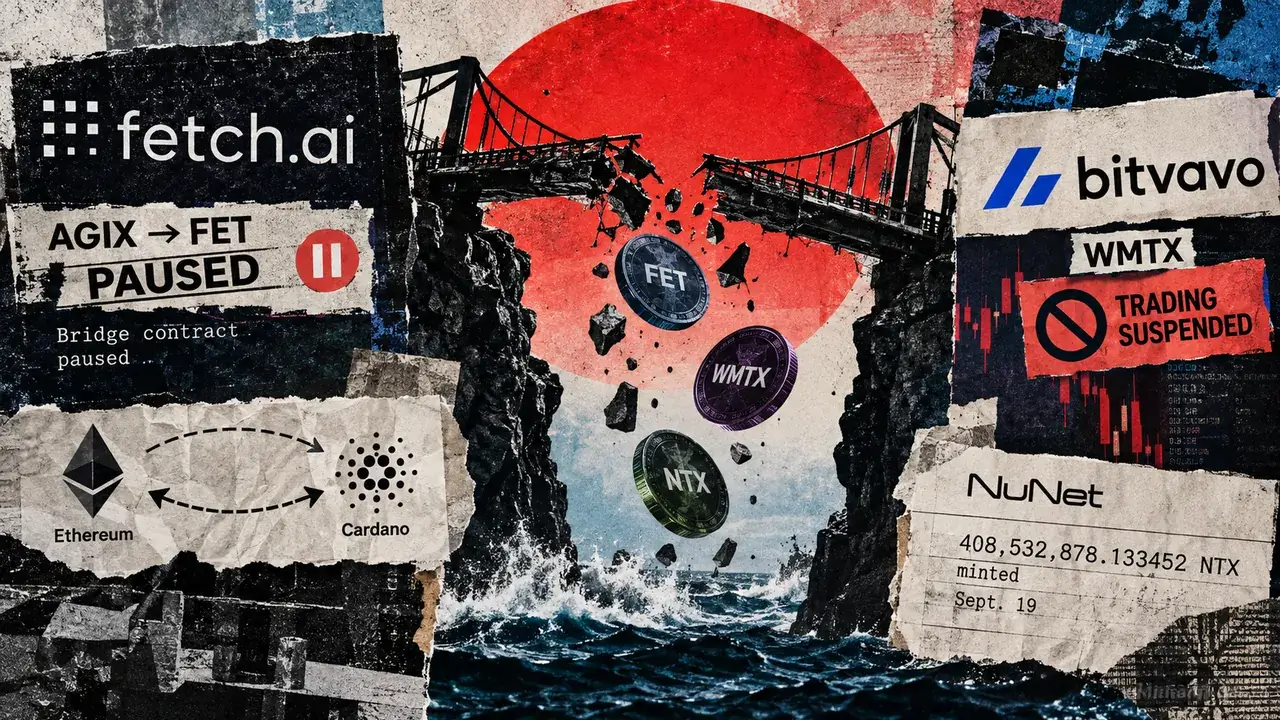
One wallet links $1.55 million FetchAI theft to massive 408.5 million NTX mint
A coordinated attack drained 8.7 million FET and used a compromised NuNet minter key to create 408.5 million NTX. The Sept. 19 att...

Coinbase Opens $2.2B IPO Door to US Retail Traders in Crypto Exchange Expansion
Key Takeaways: Individual U.S. retail investors are now able to participate in IPO allocations on Coinbase, beginning for Oura. An...

ShredPay Joins Jack Henry Network To Bring Stablecoin Infrastructure To Banks
TL;DR ShredPay has joined the Jack Henry Fintech Integration Network. The integration can connect ShredPay’s stablecoin and digita...

Federal prosecutors investigate Binance for potential Iran sanctions violations
This investigation underscores the ongoing challenges and scrutiny faced by cryptocurrency exchanges in enforcing compliance and p...