Can Saylor Convince MicroSoft To Buy Bitcoin?
It’s a bold suggestion, but this isn’t Saylor’s first rodeo. He’s been banging the Bitcoin drum louder than a festival DJ since MicroStrategy famously went all-in, converting its treasury into BTC. Depending on your pers...
Archive context
Older archive item. Useful for background and entity history, but not a fresh market-moving signal.

It’s a bold suggestion, but this isn’t Saylor’s first rodeo. He’s been banging the Bitcoin drum louder than a festival DJ since MicroStrategy famously went all-in, converting its treasury into BTC. Depending on your perspective, this move was either a masterstroke or the tech-world equivalent of betting your house on a horse named “Digital Gold.” So far, Saylor’s wager seems to be paying off—at least on days when Bitcoin’s price isn’t mimicking a roller coaster at Six Flags.
In a recent X Spaces discussion hosted by VanEck, Michael Saylor dropped an intriguing tidbit: he’s gearing up to pitch Microsoft’s board on why they should add Bitcoin to their balance sheet. The twist? He’ll have just three minutes to make his case.
The Elevator PitchSaylor plans to cut straight to the heart of his argument: Bitcoin could make Microsoft a “more stable and less risky stock.” Despite having previously sought a private audience with Microsoft CEO Satya Nadella to broach the subject, Saylor’s pitch is now set to go directly to the company’s board of directors.
“The activist who submitted this proposal asked me to present it, and I agreed. I’ll provide the three-minute presentation — that’s all you’re allowed — to the board of directors,” Saylor said during the discussion.
This high-stakes pitch coincides with a shareholder motion spearheaded by the National Center for Public Policy Research (NCPPR), set for a vote in December. The motion urges Microsoft to evaluate the potential benefits of investing in Bitcoin, pointing to MicroStrategy’s own Bitcoin playbook as a case study for success.
Unsurprisingly, Microsoft’s board has already recommended shareholders vote against the proposal. Their reasoning? The company claims it already monitors “a wide range of investable assets,” implying they’ve considered Bitcoin but haven’t found it compelling enough to act.
But is that a winning strategy? Keeping tabs on assets without committing is like sitting on the sidelines while others lap you on the track. Case in point: MicroStrategy. The business intelligence firm’s aggressive Bitcoin acquisition strategy has yielded returns that outpaced Microsoft’s stock performance by more than 300% this year. And they’ve done it with just a fraction of Microsoft’s resources, workforce, and influence.
Source: X
A Risky Bet, or the Future of Treasury Management?Saylor’s three-minute spotlight will emphasize how Bitcoin’s scarcity and resilience could hedge against inflation and currency devaluation, boosting Microsoft’s appeal to investors seeking long-term value. While it’s easy to dismiss his pitch as overly bullish, the numbers from MicroStrategy’s Bitcoin experiment speak for themselves. The question is whether Microsoft, with its trillion-dollar market cap and conservative reputation, is willing to gamble on a similar strategy.
If Saylor’s case doesn’t sway the board, it won’t be for lack of evidence. The only question is whether Microsoft can afford to ignore a potential financial revolution when others are cashing in on first-mover advantage.
The Case for Microsoft Diving InSaylor’s argument isn’t just FOMO. He positions Bitcoin as the ultimate hedge against the devaluation of fiat currencies. With inflation doing its best to steal the spotlight from central banks, Bitcoin’s capped supply of 21 million coins offers what traditional assets can’t: absolute scarcity. If you believe his thesis, Microsoft’s massive cash reserves are essentially melting ice cubes, losing purchasing power by the day.
For Microsoft, a Bitcoin play could be framed as visionary. Imagine Nadella and Co. riding into the future on Bitcoin’s lightning network while other companies cling to spreadsheets full of USD balances that might buy less and less each year. In this narrative, Microsoft wouldn’t just buy Bitcoin—they’d be solidifying their position as digital pioneers.
In the video below, Saylor explains his thinking in detail. It’s convincing.
The Risks: Volatility, Regulation, and PROf course, any move into Bitcoin would come with risks, and they’re not small ones. Bitcoin’s infamous volatility could make Microsoft’s earnings calls sound like crypto Reddit threads during a market crash. Regulators, always lurking like overzealous hall monitors, might also decide to make an example out of any corporation diving too deep into Bitcoin.
And let’s not forget the optics. Microsoft has spent years crafting an image as a stable, forward-thinking behemoth. Tying its fortunes to what many still consider a “speculative asset” could provoke skepticism, if not outright ridicule. It’s one thing for a mid-cap company like MicroStrategy to roll the dice; it’s another for a trillion-dollar titan to do the same.
Is Bitcoin the Next Azure?The real question here isn’t whether Microsoft can buy Bitcoin—it’s whether they should. On one hand, the company has the financial muscle to absorb any short-term pain from Bitcoin’s volatility. On the other, its existing dominance in cloud computing, AI, and enterprise software means it doesn’t exactly need Bitcoin to remain relevant.
But what if Bitcoin isn’t just another investment? What if it’s the next step in the digitization of value, akin to what Azure did for cloud computing? Saylor’s vision might sound hyperbolic, but he’s not wrong to suggest that the first major tech player to embrace Bitcoin could reap outsized rewards in terms of reputation and financial gain.
The VerdictMicrosoft’s board should think carefully before taking financial advice from someone who turned his company into a Bitcoin maxi meme. But here’s the kicker: if Bitcoin is indeed the future of finance, Microsoft’s early adoption would look genius in hindsight. Saylor’s pitch might feel like a sales job, but at its core, it’s a call to align with a potentially transformative shift in global finance.
So, will Microsoft bite? If they do, expect shockwaves across both Wall Street and the crypto world. If they don’t, well, there’s always next quarter’s board meeting—and you can bet Saylor will still be calling.
Why this matters
This bitcoin story adds another data point to the current market tape and is useful when read alongside nearby source coverage.
Original source
Read on Brave New CoinRelated market context

OpenWorld Begins Nasdaq Trading As VerifyMe Deal Creates Public Tokenization Company
TL;DR OpenWorld and VerifyMe have completed their business combination, with the combined company trading on Nasdaq under OPNW fro...

Lowest Fee Bitcoin ATMs Announces Launch of More Than 400 ATMs Nationwide
Las Vegas, NV, October 1st, 2026, Chainwire Lowest Fee Bitcoin ATMs announced the launch of more than 400 cryptocurrency ATMs acro...

Michael Saylor Eyes $160B Bitcoin Credit Opportunity Beyond Strategy and Strive
Key Takeaways: Michael Saylor says Bitcoin issuers can scale hand-in-hand but not compete. From its mere 0.1% of the world’s major...
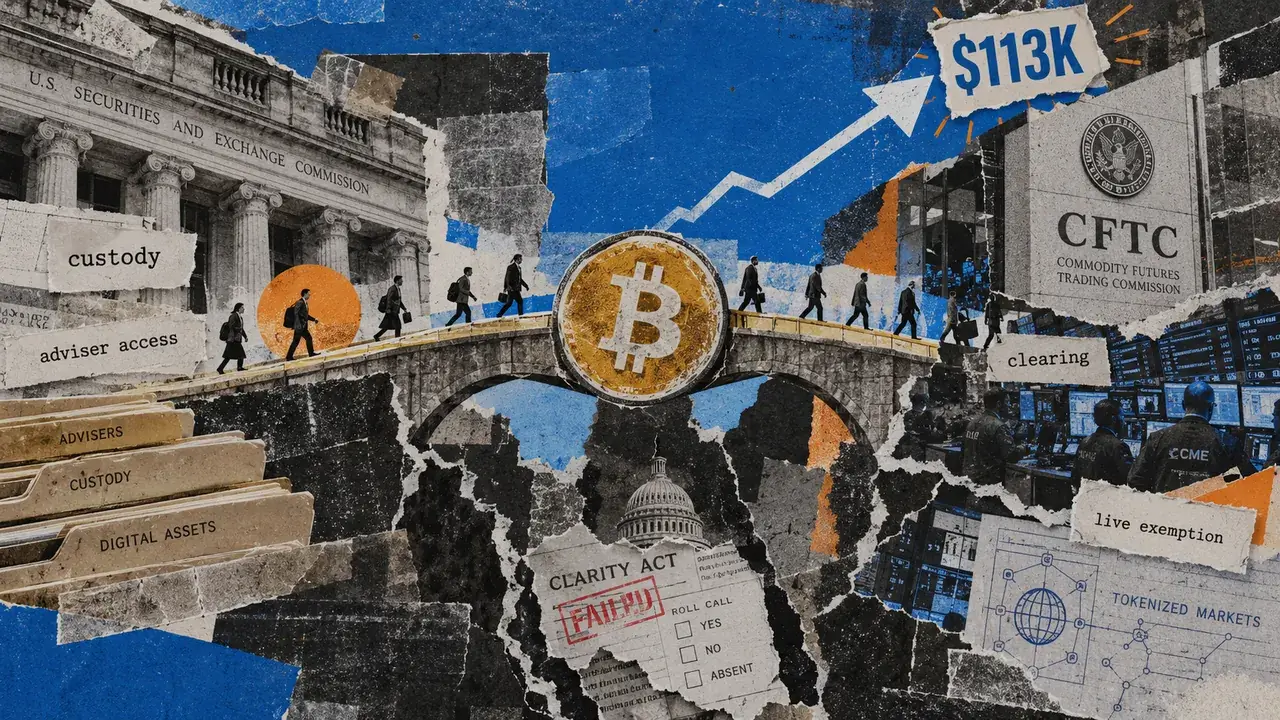
Bitcoin’s $113,000 case strengthens as US regulators push 9 crypto actions
The US Securities and Exchange Commission (SEC) proposed a custody framework on Oct. 1 that would let investment advisers and regu...

Ethereum Layer 2 Blast Is Shutting Down, Saying Costs Now Exceed What the Chain Earns
Blast, the Ethereum layer 2 network created by Blur founder Tieshun “Pacman” Roquerre, is shutting down, its team announced on X o...

Visa Says Business Payments Now Drive 17% Of Stablecoin-Linked Card Volume
TL;DR Visa says roughly 17% of its stablecoin-linked card volume in fiscal 2026 year-to-date came from business and commercial car...