Central African Republic’s Bitcoin Adoption: The Real Work Must Start Now
The Central African Republic (CAR)’s surprise bitcoin adoption decision once again shows that the top cryptocurrency can be an alternative to fiat currency. However, the African country still needs to invest heavily in i...
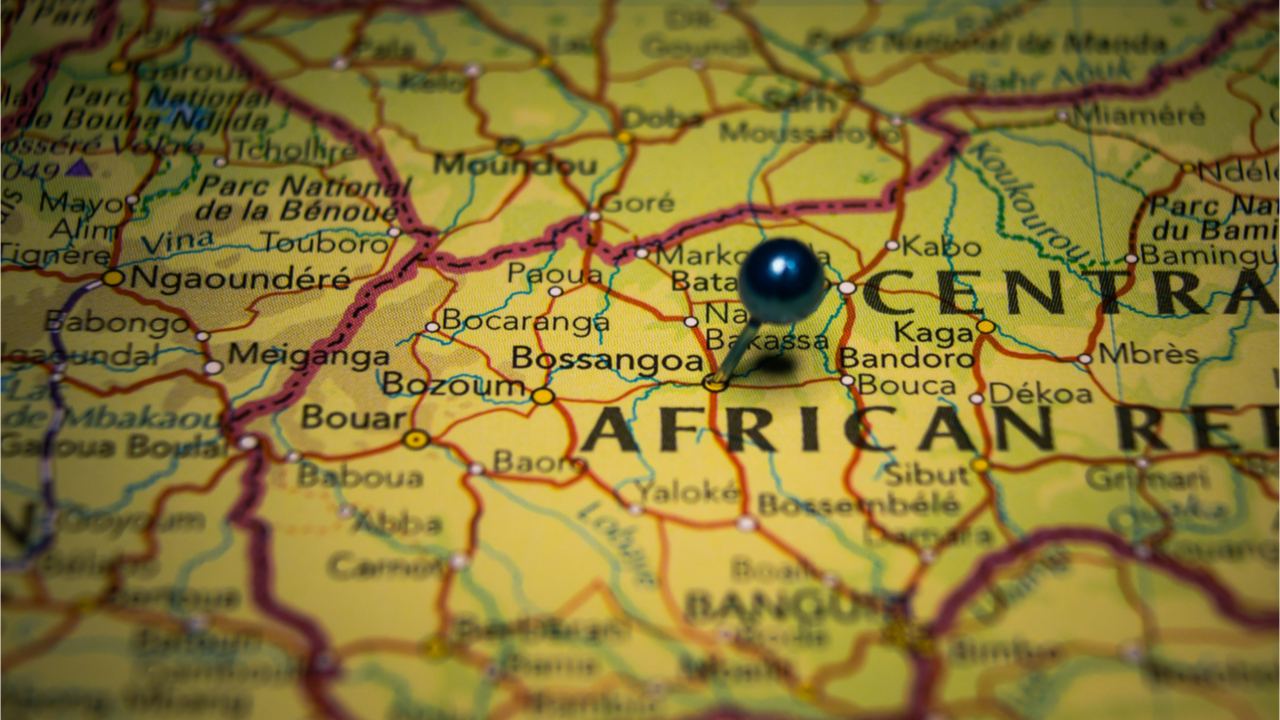
The Central African Republic (CAR)’s surprise bitcoin adoption decision once again shows that the top cryptocurrency can be an alternative to fiat currency. However, the African country still needs to invest heavily in its telecommunications infrastructure. The CAR also needs to prioritize education that helps the population to familiarize itself with cryptocurrency basics.
The CAR’s Expensive Internet
There is little doubt Central Africa Republic’s decision to designate bitcoin (BTC) as legal tender has surprised many. Few people expected CAR — one of Africa’s most impoverished countries and one whose economy has been ravaged by a civil war — to be the first to adopt bitcoin.
For critics still trying to understand why another nation has joined El Salvador in making bitcoin legal tender, the CAR’s move is perplexing. To begin with, they cannot understand how a country with such a low internet penetration rate — less than 12% — has chosen the top cryptocurrency as its transacting currency.
The Central Africa Republic’s reported infrastructure deficit and the fact that mobile connections are only available to 30% of the population seemingly renders the case for adopting bitcoin less convincing. Also, according to a 2018 ICT Profile of the CAR, the country’s then “uncertain institutional situation” was said to be constraining investment in broadband networks and access to cross-border submarine cables.
As a result of this and many other factors, the Central African Republic, according to the ICT profile, has had to rely on expensive satellite connections for most of its international internet bandwidth and this translates to high internet prices. Expensive internet is one of the many barriers that impede adoption efforts.
Despite these seemingly insurmountable challenges, proponents of bitcoin and supporters of an alternative financial system are adamant the Central African Republic’s decision proves digital currencies have a role to play. This is particularly true for countries that are cut off from the global financial system.
For followers of Friedrich Hayek, a famous Austrian economist and proponent of private money, the adoption of bitcoin by El Salvador and now the Central African Republic proves he was right — there is indeed a place for private money.
Despite the strong opposition from institutions like the International Monetary Fund (IMF), some believe more countries will still make bitcoin legal tender. In fact, reports that some 44 countries were represented at El Salvador’s recent bitcoin exhibition suggest more countries might follow in the footsteps of these two countries.
While it is logical to assume that the CAR plans to invest heavily in the development of the telecommunication infrastructure, the mere increase in the sum of funds earmarked for this is no guarantee this will also lead to changed attitudes towards bitcoin.
The CAR must therefore ensure it has funds reserved for efforts that are aimed at boosting the population’s understanding of bitcoin and how to buy bitcoin for the first time. Indeed, education is still key to eradicating ignorance, not just in the Central African Republic but across much of the developing world.
A majority of the CAR’s more than 5 million inhabitants must become acquainted with the basics such as a bitcoin wallet, recovery phrases or a wallet’s public address. When that is achieved, the chances of the CAR succeeding in becoming a country where bitcoin functions as legal tender and a transactional currency will be greatly enhanced.
On top of educating its population, the CAR needs to work with players in the crypto space like cryptocurrency exchanges, payment processors, and wallet providers. Just like the first country to adopt bitcoin El Salvador, which has since sought the services of a cryptocurrency exchange, the African country also needs to partner with a reputable player in the industry.
If the Central African Republic decides to follow the recommendations suggested in this article, it could well achieve its goal of seeing bitcoin become the country’s reference currency much sooner. The same is true for any other country that wants to make bitcoin an alternative legal tender.
What are your thoughts on this story? Tell us what you think in the comments section below.
Original source
Read on Bitcoin NewsRelated market context

Metamask Deepens Its Latam Footprint With Major Crypto Card Expansion Across 13 Countries
The wallet announced an expansion of its crypto-powered credit card in Latam, opening the doors for citizens in 13 countries to le...

Curaçao set to become smallest country in World Cup history, and crypto is all over the tournament
Curaao's World Cup debut highlights the increasing intersection of sports and crypto, offering new avenues for fan engagement and...

Curaçao becomes smallest country to qualify for FIFA World Cup, and crypto is all over the tournament
Curaao's World Cup debut highlights small nations' potential on global stages, while crypto's integration signals evolving sports...

SpaceX sees rapid ETF adoption as holders surge from 4 to 40 on first trading day
SpaceX's rapid ETF adoption highlights the growing investor confidence in the space economy, setting high expectations for sustain...

Reuters Currency Headlines Hint at Macro Shift for Bitcoin and Crypto Markets
Reuters currency market headlines hint at macroeconomic pressures affecting Bitcoin and crypto. Analysis of fiat moves and regulat...

FIFA’s attendance controversy highlights why blockchain ticketing advocates say the sport needs an upgrade
Blockchain ticketing could enhance transparency and trust in sports events, potentially revolutionizing the ticketing industry and...