Coinbase Quantum Report Warns Millions Of Bitcoin Could Face Future Security Risks
TL;DR Coinbase’s Quantum Advisory Council published a report on post-quantum migration and abandoned coins. The report estimates that millions of Bitcoin may eventually be exposed through legacy address formats and addre...
Archive context
Older archive item. Useful for background and entity history, but not a fresh market-moving signal.

- Coinbase’s Quantum Advisory Council published a report on post-quantum migration and abandoned coins.
- The report estimates that millions of Bitcoin may eventually be exposed through legacy address formats and address reuse.
- The risk is future-oriented; the report does not say quantum computers can break Bitcoin today.
Coinbase’s Quantum Advisory Council has published a report examining how Bitcoin could approach a future post-quantum migration, including the problem of coins tied to exposed public keys, legacy P2PK addresses, and reused addresses.
The report estimates that roughly 7 million Bitcoin could face some form of future quantum exposure, including about 1.7 million BTC in legacy P2PK addresses and around 5 million BTC tied to address reuse.
The concern is not that Bitcoin is currently broken. The report is focused on long-term planning for a world in which sufficiently powerful quantum computers may one day threaten today’s public-key cryptography.
What Coinbase Says Could Be DoneThe report discusses possible mitigations, including migration deadlines, tools based on zero-knowledge proofs such as BIP-361, and mechanisms like an “Hourglass” withdrawal rate limiter. These ideas are designed to help the network think about a transition without creating unnecessary panic.
Any migration would be complicated. Bitcoin’s security model depends on broad consensus, careful engineering, and strong social coordination. Freezing or restricting coins would be controversial, especially when abandoned coins and inactive wallets are involved.
Why This MattersFor investors, the report matters because it frames quantum risk as a governance and migration challenge rather than a near-term market threat. That is a more useful lens than alarmist claims that quantum computers are about to break Bitcoin.
The debate also touches on old coins, lost coins, and whether inactive holders should be treated differently if a future cryptographic migration becomes necessary.
What To Watch NextThe next things to watch are community responses to the report, any BIP-361 development, and whether other major infrastructure firms publish their own post-quantum plans.
The article must avoid stating that quantum computers can break Bitcoin today or that any migration has already been approved.
Market ContextThe broader market context is important because traders are no longer reacting only to token-specific news. Institutional flows, filings, regulated derivatives, custody terms, and policy changes now feed directly into how Bitcoin and large-cap crypto assets are priced. That makes primary-source developments useful even when they do not immediately produce a sharp price move.
For NewsBTC, the practical question is whether the development changes liquidity, risk appetite, compliance pathways, or institutional confidence. Those are the signals that can influence market structure over time, especially when they come from official filings, regulator notices, exchange announcements, or widely followed data sources.
The editorial takeaway is deliberately measured: the source confirms a real development, but the market impact depends on follow-through. That is why the article should separate verified facts from possible implications, giving traders enough context to understand the signal without turning it into a prediction.
From an editorial standpoint, this makes the story worth covering as part of the day’s broader crypto operating environment rather than as a standalone hype cycle. The strongest version of the piece should stay close to the verified source, explain the practical risk or opportunity, and leave room for follow-up once more official data, filings, or project statements are available.
This report is based on information from the Coinbase Quantum Advisory Council report.
Why this matters
Bitcoin is showing up inside the Institutional Adoption theme, so this story is worth tracking for follow-through rather than treating it as a one-off headline.
Original source
Read on NewsBTCRelated market context

AI Could Weaken Ethereum Security as Cryptographic Risks Grow, Vitalik Buterin Warns
Buterin urged developers to prepare for potential AI vulnerabilities in both conventional and quantum-resistant cryptography, whil...

Hyperliquid surpasses $1B revenue, $1B used for HYPE buybacks
Hyperliquid's strategic buybacks enhance HYPE's market value, reflecting strong financial health and boosting investor confidence...

Vitalik Warns AI Math Could Threaten Crypto Keys Before Quantum Computing Arrives
Key Takeaways: Vitalik Buterin states that the rise of today’s cryptography is outpaced by AI-accelerated mathematics. In addition...

Samsung Wallet Brings USDC to 82M Galaxy Devices With Coinbase, Solana and Sui Support
Key Takeaways: Samsung Wallet will support 82 million U.S. Galaxy to add transfers on USDC. Coinbase will keep USDC in their Coinb...
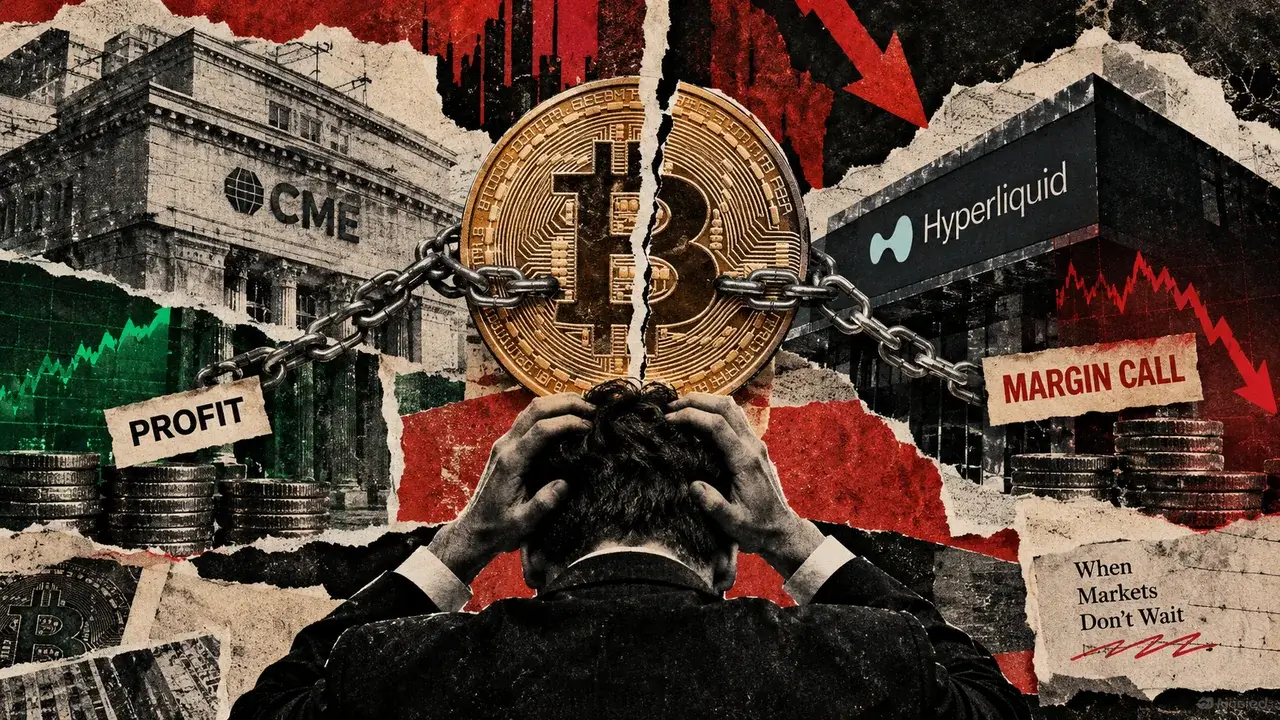
Bitcoin hedge funds face a liquidation trap when their collateral is split across markets
Here's a hypothetical situation: a hedge fund is making money, but one of its exchanges is about to liquidate its position anyway....

Luxor’s reported 6–13% annualized Bitcoin yield depends on mining delivery
Luxor, a Bitcoin mining derivatives provider, reported a 6–13% annualized Bitcoin financing spread in its September lookback, publ...