CoinCorner Launches Lloyd’s-Insured Multisig Bitcoin Vault with AnchorWatch
Bitcoin Magazine CoinCorner Launches Lloyd’s-Insured Multisig Bitcoin Vault with AnchorWatch British bitcoin exchange CoinCorner has debuted a multisig BTC custody service that splits control of customer keys between the...
Watchlist
Archive context. The story has cross-source confirmation.
Bitcoin Magazine
CoinCorner Launches Lloyd’s-Insured Multisig Bitcoin Vault with AnchorWatch
British bitcoin exchange CoinCorner has debuted a multisig BTC custody service that splits control of customer keys between the Isle of Man exchange and its US partner AnchorWatch — with holdings insured by Lloyd’s of London.
The service charges 1.5% a year and is pitched at owners who want cold-storage security without managing hardware themselves, the Isle of Man-based company announced Tuesday.
Its new service comes following the Coldcard wallet hack — where bitcoin holders using a single signature wallet lost funds after hackers were able to exploit the popular products due to a firmware bug in the devices that lead to a weak seed generation. About $115 million was lost in the theft.
“Vault offers a simple non-technical setup for customers, and partnering with AnchorWatch means we can offer fully insured, multi-signature custody with the simplicity our customers expect from CoinCorner,” CoinCorner CEO Danny Scott said in a statement.
Customers can open a Vault and deposit whatever amount they choose, but the bitcoin doesn’t move into the insured wallet immediately, CoinCorner said.
Rather, transfers typically happen on the first working day of the following month, and holdings are verifiable on-chain via a wallet address CoinCorner provides.
Top-ups are allowed anytime, the companies said, Customers define their own identity verification rules before funds can move.
CoinCorner added that it is the first service of its kind globally.
Multisig has long been the security-conscious Bitcoin holder’s answer to single-key risk but has also been dismissed as too fiddly for anyone but the technically committed: setting one up traditionally means assembling several hardware devices, generating and backing up multiple private keys and keeping track of which key sits where.
CoinCorner and AnchorWatch are aiming to simplify things. Vault handles key distribution on the customer’s behalf, leaving them with the security properties of multisig without the setup that has kept most people away from it.
This post CoinCorner Launches Lloyd’s-Insured Multisig Bitcoin Vault with AnchorWatch first appeared on Bitcoin Magazine and is written by Mathew Di Salvo.
Why this matters
Bitcoin is showing up inside the Security Incidents theme, so this story is worth tracking for follow-through rather than treating it as a one-off headline.
Original source
Read on Bitcoin MagazineRelated market context

AnchorWatch Opens Bitcoin Custody Service With Lloyd’s-Backed Insurance Option
TL;DR: AnchorWatch has opened its Nevada-chartered Bitcoin custody service, pairing a choice of key-control structures with option...

S&P Global Ratings launches Vault Risk Assessment to address DeFi risks
The introduction of VRA by S&P Global Ratings could enhance transparency and risk management in the rapidly growing DeFi sector. T...

Starknet Foundation Launches Bramble Wallet With STRK20 Shielding
The Chrome-only wallet combines private balances, Ledger signing and multisig accounts, with a recovery phrase for backup.... Read...

Starknet Foundation launches Bramble, a self-custody wallet built around privacy
Bramble's launch could enhance user autonomy and privacy in crypto transactions, potentially influencing broader adoption of self-...

Germany’s Sparkasse Bank begins crypto services rollout for 50M customers
Sparkasse's crypto service rollout could significantly boost digital asset adoption in Germany, potentially impacting Ethereum's m...
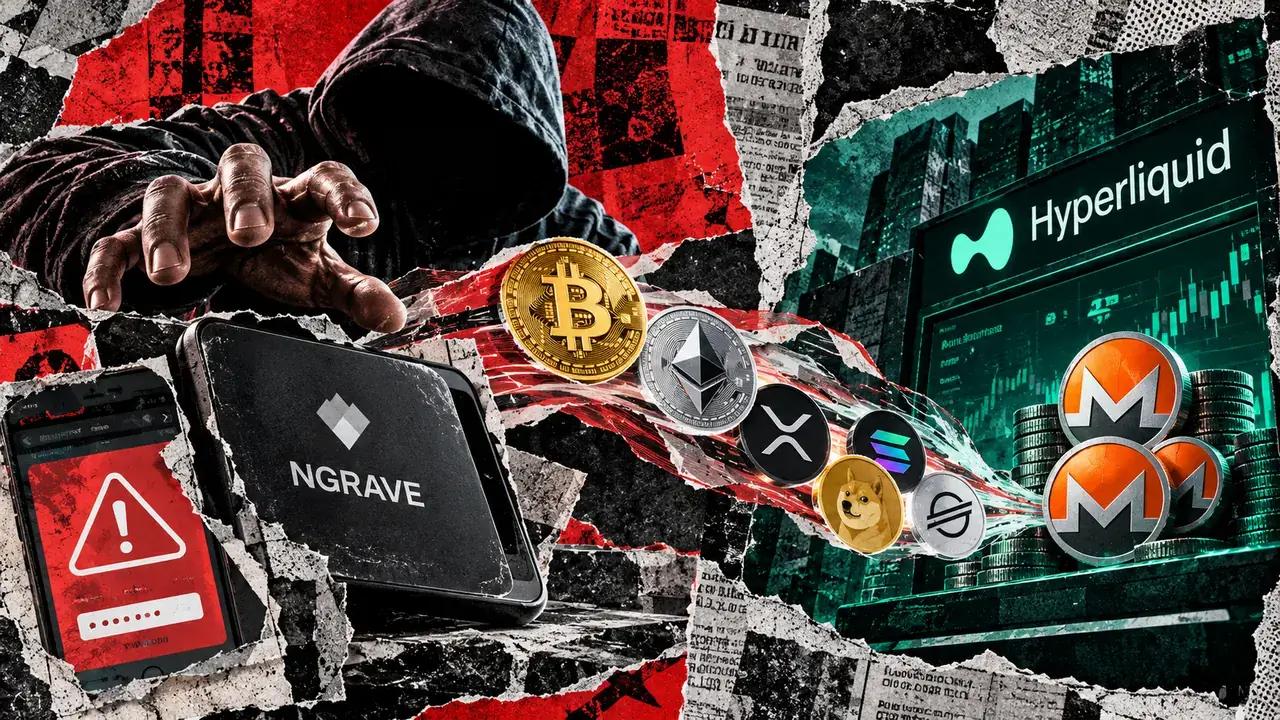
Crypto wallet security crisis deepens as NGRAVE users face $2.65 million phishing attack
Bitquery follows funds into XMR1 purchases on Hyperliquid, but cannot confirm every wallet belonged to an NGRAVE user. Read the fu...