COLDCARD Hack Explodes to 2,055 BTC Losses, Hitting 7,700+ Wallets in $130M Bitcoin Blow
Key Takeaways: Estimated damages from the COLDCARD hack have also risen to 2,055 BTC, or approximately $130 million. Over 7,700 Bitcoin addresses are seemingly impacted. This will reignite fresh worries regarding the sec...
Archive context
Older archive item. Useful for background and entity history, but not a fresh market-moving signal.
Key Takeaways:
- Estimated damages from the COLDCARD hack have also risen to 2,055 BTC, or approximately $130 million.
- Over 7,700 Bitcoin addresses are seemingly impacted.
- This will reignite fresh worries regarding the security of hardware wallets and risks of self custody.
User Score
8.7
Follow us on Google NewsThe scale of the COLDCARD security damage keeps expanding, with new blockchain data demonstrating the losses are even greater than initially reported. New research has revealed thousands more have been affected by the hard wallet incident, making it one of the largest in recent years.
Read More: COLDCARD Bug Puts Hundreds of Hardware Wallets at Risk
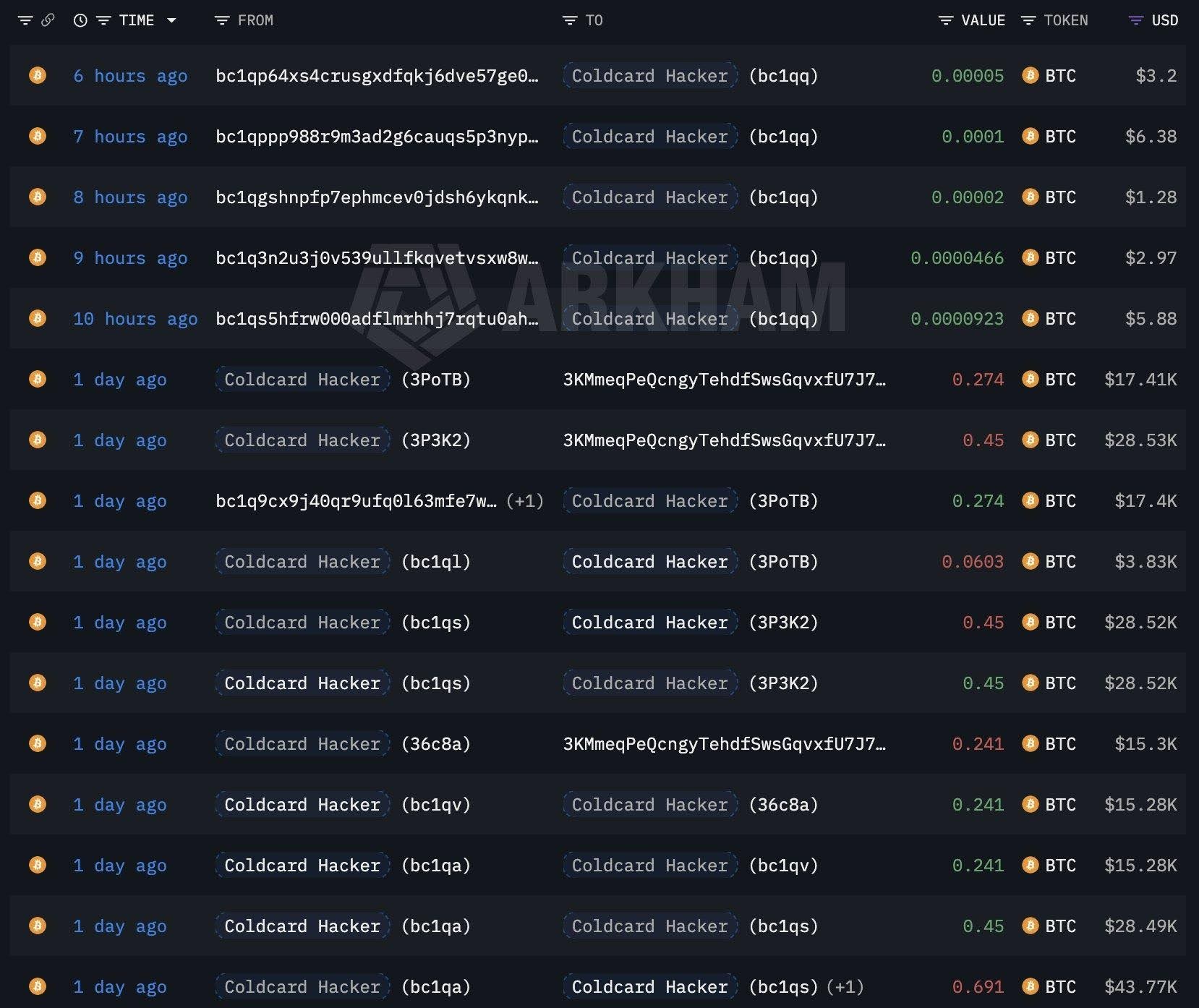
Estimated Losses Surge Past $130 MillionAccording to data from Galaxy Research, shared publicly by blockchain analytics platform Lookonchain, the total damage linked to the COLDCARD exploit has reached 2,055 BTC, valued at roughly $130 million at current market prices.
This is insane!
According to @glxyresearch, the total losses from the #Coldcard hack may have reached 2,055 $BTC($130M).
More than 7,700 victim addresses have been affected. pic.twitter.com/GizWlDbYpz
— Lookonchain (@lookonchain) August 4, 2026
Based on the latest estimate, there are over 7,700 affected Bitcoin addresses. The previous reports included fewer compromised wallets and lower losses, suggesting that investigators are still finding more affected wallets as they continue to analyze the blockchain.
The updated statistics underscore the extent and significance of the theft, which continues to grow and impact the broader Bitcoin community.
On-Chain Analysis Reveals Broader ExposureThe new data has been assembled by tracking the transaction on the blockchain and not from the open disclosures of the impacted users themselves. This research has continued on to track derogatory funding and search for addresses involved in the exploit.
Hardware Wallet Security Faces Renewed ScrutinyCOLDCARD has long been considered one of the top hardware wallets for Bitcoin users looking for the most control over their funds. But the recent event has sparked the debate about the security of self-custody devices again.
Unlike centralized exchange hacks, the attacks on hardware wallets can target individual users, especially if there are weaknesses in its firmware or wallet creation technology. Repeatedly, security experts have stated that continuing to keep firmware updated and adhere to recommendations from the manufacturer is still very important in reducing risk.
Read More: Supra Labs CEO’s X Account Hacked for Fake Token Scam
Self-Custody Debate IntensifiesWith several high-profile exchange failures in recent years, Bitcoin investors have increasingly turned towards self-custody which comes at a time when the auction is underway.
Confidence Tested Despite Bitcoin’s Core PrinciplesSelf-custody gives counterparty risk away, but it also means that the security is up to the wallet owner and device manufacturer. The COLDCARD incident has once again made us aware that hardware, firmware, and operations security are essential to ensuring digital asset security.
With ongoing investigation of on-chain activity, users and wallet providers will likely experience even more pressure to improve security measures and mitigate possible risks for larger exploits in the future.
The post COLDCARD Hack Explodes to 2,055 BTC Losses, Hitting 7,700+ Wallets in $130M Bitcoin Blow appeared first on CryptoNinjas.
Why this matters
Bitcoin is showing up inside the Security Incidents theme, so this story is worth tracking for follow-through rather than treating it as a one-off headline.
Original source
Read on CryptoNinjasRelated market context
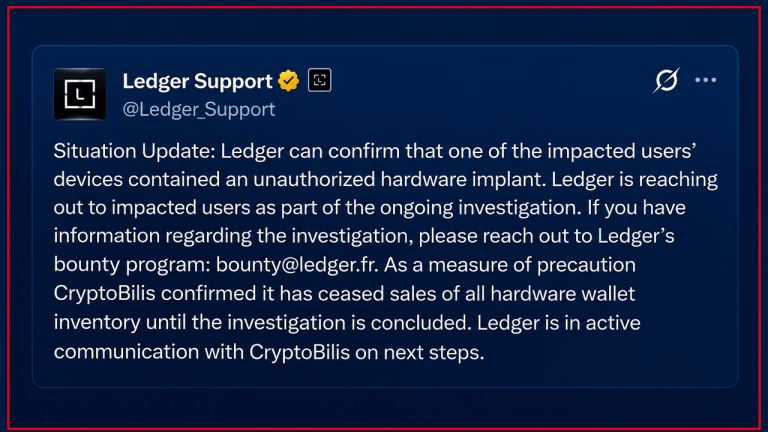
Ledger Confirms Hidden Hardware Implant in Affected User’s Wallet
Ledger confirmed Saturday, Oct. 10, 2026, that a hardware wallet belonging to one affected customer contained an unauthorized impl...

New iPhone spyware can hunt for crypto wallets and extract their data every 15 seconds
Researchers found a new iPhone spyware variant that can remotely extract cryptocurrency wallet data and sensitive credentials from...
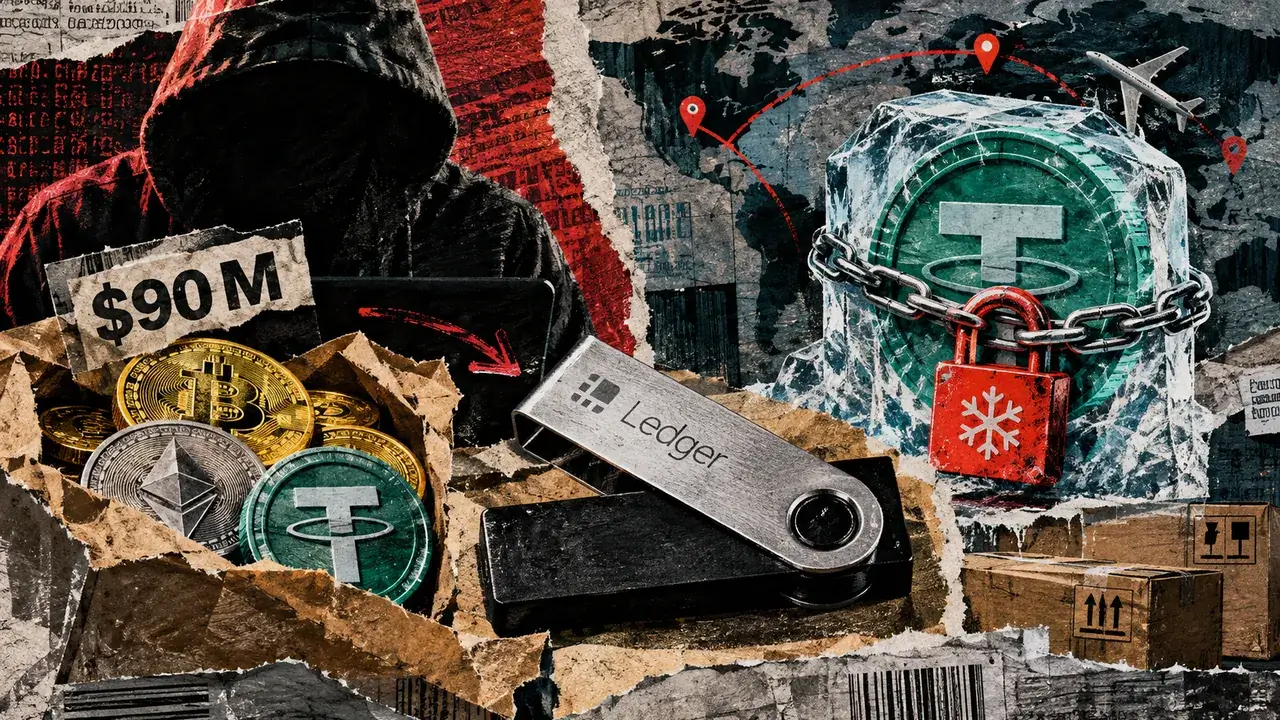
Ledger hack scare nears $90 million as Tether moves to freeze stolen USDT
Suspected Ledger wallet thefts are approaching $90 million as Tether freezes USDT stablecoin linked to the incident, according to...

AI Could Weaken Ethereum Security as Cryptographic Risks Grow, Vitalik Buterin Warns
Buterin urged developers to prepare for potential AI vulnerabilities in both conventional and quantum-resistant cryptography, whil...

Wallet linked to 2016 Bitfinex hack transferred 12,267 BTC valued at $1.01 billion to new addresses
The transfer of BTC linked to the 2016 hack may signal future market volatility and strategic shifts, impacting Bitcoin's price st...

U.S. Government Sends $1 Billion in Seized Bitfinex Bitcoin to Unlabeled Wallets
A wallet holding bitcoin stolen in the 2016 Bitfinex hack sent 12,267 BTC, worth about $1.01 billion, to new addresses on Thursday...