Crypto ‘decoupling’ story ends as stocks follow Bitcoin’s rally
Key takeaways:Despite weak US manufacturing data, Federal Reserve liquidity plans and strong corporate earnings keep equities and crypto afloat.The total crypto market capitalization rose 8.5% since March.Cryptocurrency...
Archive context
Older archive item. Useful for background and entity history, but not a fresh market-moving signal.

Key takeaways:
Despite weak US manufacturing data, Federal Reserve liquidity plans and strong corporate earnings keep equities and crypto afloat.
The total crypto market capitalization rose 8.5% since March.
Cryptocurrency traders have frequently zoomed in on the need for crypto to show a clear “decoupling” from the stock market, and over the past 10 days, the intraday movements of Bitcoin (BTC) and major altcoins have closely tracked those of the S&P 500, even as trade war developments have dominated market sentiment.
S&P 500 futures (left) vs. Total crypto cap, USD (right). Source: TradingView/CointelegraphA decoupling would validate digital assets as an independent class and address growing concerns about a potential global economic recession. This ongoing correlation has led market participants to question whether the cryptocurrency market is destined to follow the stock market’s lead indefinitely, and what conditions would be necessary for a genuine decoupling to occur.
Stock market shows strength despite trade tensionsThe S&P 500 reached its peak on Feb. 19 and has since struggled to reclaim the 5,800 level, a support that had held for four months. Despite persistent pressure from US trade disputes with Canada and Mexico, as well as the imposition of new tariffs affecting nearly every major economic region, equities have demonstrated notable resilience.
Chinese state media recently reported that the United States has quietly initiated trade negotiations. Although China officially maintains a 125% retaliatory tariff on US imports, it has granted waivers for sectors such as ethane, semiconductors, and certain pharmaceuticals. The United States, in turn, has partially exempted automakers from new tariffs. These actions suggest that both sides are gradually making concessions.
There is a reasonable possibility that the S&P 500 established a bottom at 4,835 on April 7, with further gains from the current 5,635 level remaining plausible. The stock market has responded positively to robust first-quarter earnings, as companies adapt to tariffs by relocating production outside China or expanding operations within the United States.
For instance, Microsoft reported a 13.2% year-over-year increase in revenue, with higher margins and strong demand for artificial intelligence. Meta also delivered earnings and revenue that exceeded market expectations on April 30. These results have alleviated concerns about a potential AI bubble or the risk that the trade war could force companies to reduce investment.
The market’s focus shifts to the Federal ReserveRather than concentrating on the recent decline in US PMI manufacturing data which reached a five-month low in April, market participants are closely monitoring the Federal Reserve’s next policy moves. Following a year of balance sheet reduction, the Fed is now considering asset purchases to help ease selling pressure.
An increase in liquidity is typically favorable for risk-oriented assets. Therefore, even if a full decoupling does not occur, cryptocurrencies could still benefit from a more supportive macroeconomic environment.
S&P 500 futures (left) vs. Total crypto cap, USD (right). Source: TradingView/CointelegraphDespite the short-term correlation, the cryptocurrency market has outperformed equities in recent months. Since March, the total crypto market capitalization has risen by 8.5%, while the S&P 500 has declined by 5.3%.
Over a six-month period, this divergence becomes even more pronounced: the total crypto market cap is up 29%, while the S&P 500 is down 2%. It is therefore inaccurate to suggest that these markets move in perfect synchrony, particularly when viewed over longer timeframes.
Related: Bitcoin to $1M by 2029 fueled by ETF and gov’t demand — Bitwise exec
It is still premature to declare a definitive bottom for the S&P 500 or to conclude that the trade war has been resolved. An economic recession would likely have negative implications for both markets. However, the current strength in equities indicates reduced risk aversion among investors. For the time being, the elevated correlation between cryptocurrencies and stocks may represent the most favorable scenario.
This article is for general information purposes and is not intended to be and should not be taken as legal or investment advice. The views, thoughts, and opinions expressed here are the author’s alone and do not necessarily reflect or represent the views and opinions of Cointelegraph.
Why this matters
This bitcoin story adds another data point to the current market tape and is useful when read alongside nearby source coverage.
Original source
Read on CointelegraphRelated market context

Apple And Nvidia Tokenized Stocks Can Now Back USDC Loans On Aave
TL;DR Aave V4 on Base has launched an Equities Hub accepting seven Coinbase tokenized U.S. stocks as collateral. Eligible non-U.S....

Strive preferred stock trades enough to buy 1,400 Bitcoin worth $117M
Strive's innovative use of perpetual preferred stock for Bitcoin acquisition could reshape corporate treasury strategies, minimizi...

Strategy surpasses Palantir in trading volume, becomes 20th most-traded stock in US
Strategy Inc.'s rise in trading volume highlights the market's increasing volatility and the significant impact of Bitcoin's fluct...
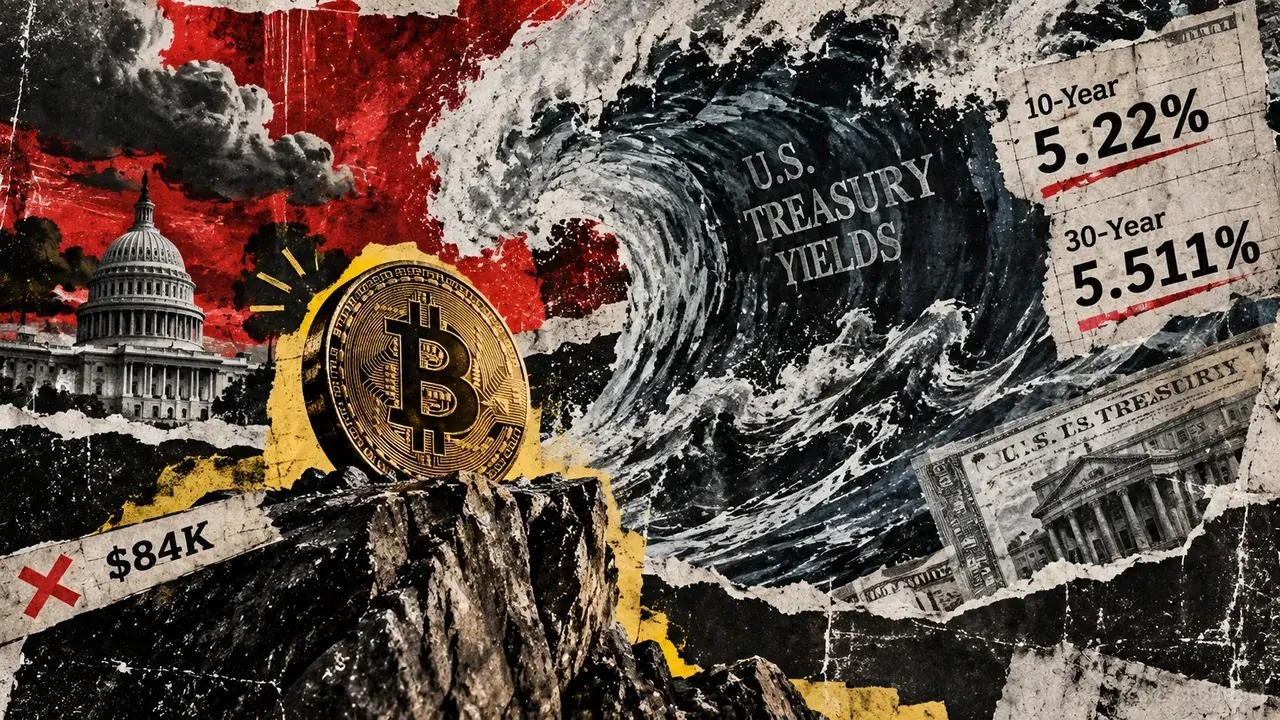
Bitcoin survives a 5.2% Treasury shock as traders slash $1.7 billion in leverage
Bitcoin is holding near $84,000 even as a historic US bond selloff pushes Treasury yields to decades-high levels. The benchmark 10...

Ethena Starts Backing USDe With Tokenized Stocks on Binance, Its First Equity Basis Venue
Ethena Labs will start backing its USDe synthetic dollar with tokenized U.S. stocks, naming Binance as the first venue for extendi...
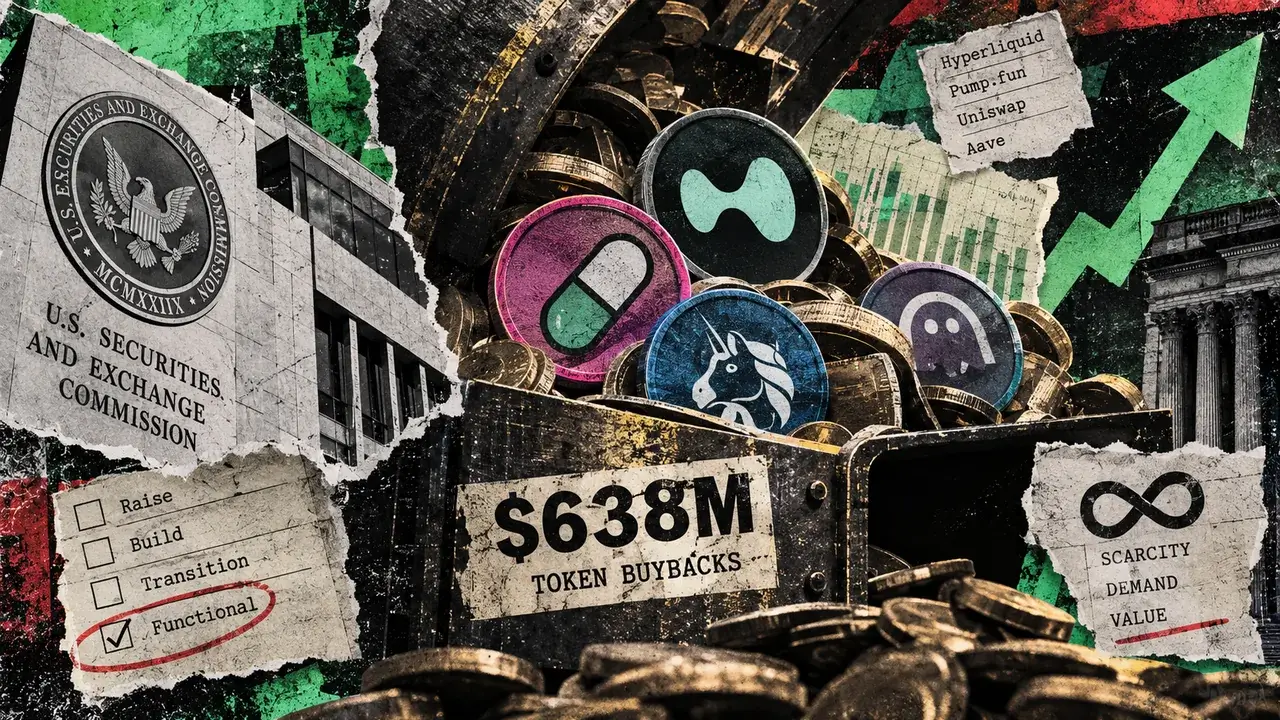
SEC clears regulatory hurdle as crypto token buybacks hit record $638 million
Crypto projects spent about $638 million with token buybacks through late August 2026, according to Allium Labs data. That is alre...