Crypto institutions are chasing a 3% return on Bitcoin, but the entire payout machine collapses if miners stop burning cash
A 3% return on Bitcoin can look like a single number on an allocation sheet, even when the economic bargain underneath it is completely different. Stacks said its first institutional Bitcoin Staking bond went live on Sep...
Archive context
Older archive item. Useful for background and entity history, but not a fresh market-moving signal.

A 3% return on Bitcoin can look like a single number on an allocation sheet, even when the economic bargain underneath it is completely different.
Stacks said its first institutional Bitcoin Staking bond went live on Sept. 10 with roughly 250 BTC committed by 21Shares, digital-asset manager HashKey Cloud, Bitcoin-focused investor UTXO Management and Sypher Capital.
The six-month Genesis Bond targets about 3% annualized yield paid in BTC, with the first weekly rewards expected on Sept. 17.
The launch packages a miner-funded BTC reward stream for institutions whose first screens are custody, lockup, and sustainability. The advertised APY shows what an investor hopes to receive, while the funding source reveals what the investor is being paid to risk.
How the Stacks bond turns miner payments into yieldStacks says new bonding periods should open roughly monthly as the initial system gathers data, with a later protocol phase intended to replace the whitelist with permissionless allocation.
The Bitcoin committed by 21Shares, HashKey Cloud and UTXO Management sit under each participant's keys in a standard timelock script on Bitcoin's base layer. Sypher Capital used StackingDAO, a Stacks yield protocol that handles the operational bonding process through a liquid-staking implementation.
The implementation changes the operational surface, as direct participants rely on the Bitcoin timelock and the Stacks reward process. A pooled route also introduces the contracts and operator processes used to represent and manage the position.
Stacks' mechanism explainer says participants pair BTC with STX worth about 5% of the Bitcoin position, and describes the STX as staking capacity that secures the allocation and claim on rewards.
The bond runs for six months. Stacks estimates that its roughly 3% annualized target translates into about 1.44% over one term, distributed weekly.
A participant may withdraw BTC before the term ends and forfeit yield not yet distributed, while the paired STX remains locked for the full term.
Stacks also says the direct bond has no protocol condition that can slash the time-locked BTC. The position still carries liquidity, operational, protocol, STX-market, and reward-sustainability risks, all of which matter to an investment committee even when Bitcoin stays on its own chain.
Under Stacks' Proof of Transfer system, miners spend BTC for the right to produce Stacks blocks and receive STX block rewards. That BTC enters a reward pool, and Bitcoin Staking gives bonded BTC a priority claim on the flow.
Bitcoin's proof-of-work consensus remains unchanged. The Genesis Bond is a Stacks mechanism built around BTC, where Stacks miners are the economic payers, and their participation supports the reward pool.
Stacks says Proof of Transfer has distributed more than 4,200 BTC since January 2021. The new bond turns that existing flow into a time-bound product designed around institutional custody and diligence.
Its roughly 250 BTC first cohort gives participants live experience with onboarding, keys, weekly distributions, and exit mechanics, while leaving the system with a limited operating history at scale.
The first expected distribution on Sept. 17 will provide an early operational checkpoint. Sustained performance across more bonding periods and changing network conditions will determine how much weight institutions eventually place on the target rate.
What an equal APY can be paying forA return number becomes useful only after an allocator identifies the payer and the path by which revenue reaches the portfolio.
Yield engine What funds the return Core exposure Stacks Genesis Bond BTC spent by Stacks miners through Proof of Transfer Reward-flow and protocol dependence, BTC and STX lockups, and implementation risk Custodial lending Interest paid by borrowers through a platform Counterparty, collateral, withdrawal and liquidation exposure Smart-contract lending Interest paid through onchain lending markets Contract, liquidity and automated-liquidation exposure Covered calls Premiums paid by option buyers Retained downside and surrendered upside above the strike Cash-and-carry basis Convergence between spot or ETF prices and futures Financing, execution, margin and basis risk Bitcoin-backed security Networks paying for economic security Protocol risk and, in some designs, principal loss through slashing Infographic compares five crypto yield strategies offering 3% returns, identifying who pays each yield and the distinct risks investors assume.In a custodial structure, a platform pools or deploys customer crypto, borrowers provide collateral and pay interest, and the lender depends on contractual counterparties and the platform's controls.
A regulatory record describing crypto-lending models distinguishes those arrangements from noncustodial protocols, where smart contracts, collateral ratios, and automated liquidations create technical and liquidity exposure without the same legal debtor-creditor structure.
Covered-call income begins with volatility demand. A call seller collects premiums while granting another market participant the gains above a specified price.
The Global X Bitcoin Covered Call ETF prospectus says its strategy limits participation in gains while leaving investors exposed to losses in the Bitcoin-linked position. The investor receives cash income by reshaping Bitcoin's payoff, retaining downside while selling some upside.
A cash-and-carry trade harvests a pricing spread. The investor buys spot Bitcoin or an ETF and shorts futures when the futures price is higher, seeking to capture the basis as the two prices converge.
Realized performance also reflects financing, execution, margin management, and convergence reliability.
Bitcoin-backed security introduces a different bargain. Babylon's Bitcoin staking paper describes BTC being committed to help secure proof-of-stake chains, with protocol violators exposed to slashing.
In that design, yield compensates holders for supplying punishable economic security. Stacks instead says its direct Genesis Bond protects BTC principal from slashing while placing risk around reward delivery, lockups, and the surrounding protocol.
These mechanisms can all produce a BTC-denominated return while responding to a different economic cycle.
Lending revenue follows credit demand and collateral performance; covered-call premiums follow volatility and the market's appetite for upside exposure; basis returns follow derivatives pricing and funding conditions; and security rewards depend on networks paying for protection.
Stacks' reward pool depends on BTC miners' spend and the economics that keep them participating.
A shared denomination makes those returns easy to rank and easy to misunderstand. A credit event, volatility surge, derivatives deleveraging, or decline in network activity will affect each strategy differently.
Related Reading Bitcoin is being packaged for income investors, but the yield comes with a trade-off The institutional question moves beyond 3%Bitcoin held in custody produces no native cash flow for a passive holder. At institutional scale, a low-single-digit return can still be economically meaningful, which shifts the allocation problem from whether yield exists to whether its risks fit the mandate.
A Bitcoin timelock avoids the bridge and borrower exposure embedded in some alternatives, yet the committee must still evaluate the term, early-exit conditions, STX commitment, operational dependencies, and reward source. A pooled implementation can alter that analysis even when its headline APY resembles the direct bond.
Stacks says this bond design lacks BTC slashing, while some security protocols make slashing central to the service being sold.
Lending can transmit borrower or platform failure, covered calls preserve Bitcoin's downside and cap part of its upside, and basis trades introduce margin and financing constraints. The yield is compensation for a specific path of exposure.
An allocator has to ask whether the payer will remain willing and able to fund the return when market conditions turn. Miner spending, borrowing demand, option premiums, and futures basis can each contract, but for different reasons and on different timelines.
Ethereum validators stake ETH directly to secure Ethereum's proof-of-stake consensus, but Bitcoin uses proof-of-work, so passive BTC holders have no equivalent base-protocol staking rate. Products such as the Genesis Bond build return streams around Bitcoin without changing that fact.
Custody-preserving, low-complexity structures may occupy one end, followed by credit, derivatives, slashable security, and multilayer smart contract strategies. The ordering will depend on legal terms and implementation, and any label such as “risk-free-ish” would overstate what these products can promise.
Stacks' first bond's identifiable reward source and direct custody design address two questions institutions care about, while its small cohort and short operating record leave scaling and durability to be demonstrated.
If productive Bitcoin becomes a standard institutional objective, committees may eventually choose a reference return and demand additional spread for added complexity. Markets will construct the benchmark from competing claims on credit, volatility, derivatives pricing, network activity, and economic security.
The durable question is who funds the yield, how long that funding can last, and what breaks when the conditions supporting it reverse.
The post Crypto institutions are chasing a 3% return on Bitcoin, but the entire payout machine collapses if miners stop burning cash appeared first on CryptoSlate.
Why this matters
Bitcoin is showing up inside the Institutional Adoption theme, so this story is worth tracking for follow-through rather than treating it as a one-off headline.
Original source
Read on CryptoSlateRelated market context

Abstract, Igloo Inc.’s Ethereum layer-2, to shut down December 15
The shutdown of Abstract highlights the challenges of sustaining niche blockchain projects amid financial losses and limited adopt...

Google Gemini AI Predicts Chainlink (LINK) to Hit $300 by 2027
Google Gemini AI predicts that, assuming a full-blown crypto bull market returns and is turbocharged by a landmark catalyst, LINK...

3 countries control 66% of Bitcoin mining, but 1 rival is gaining
Bitcoin's estimated US mining footprint shrank as Russia's grew, with little change in top-three country concentration. Hashrate I...
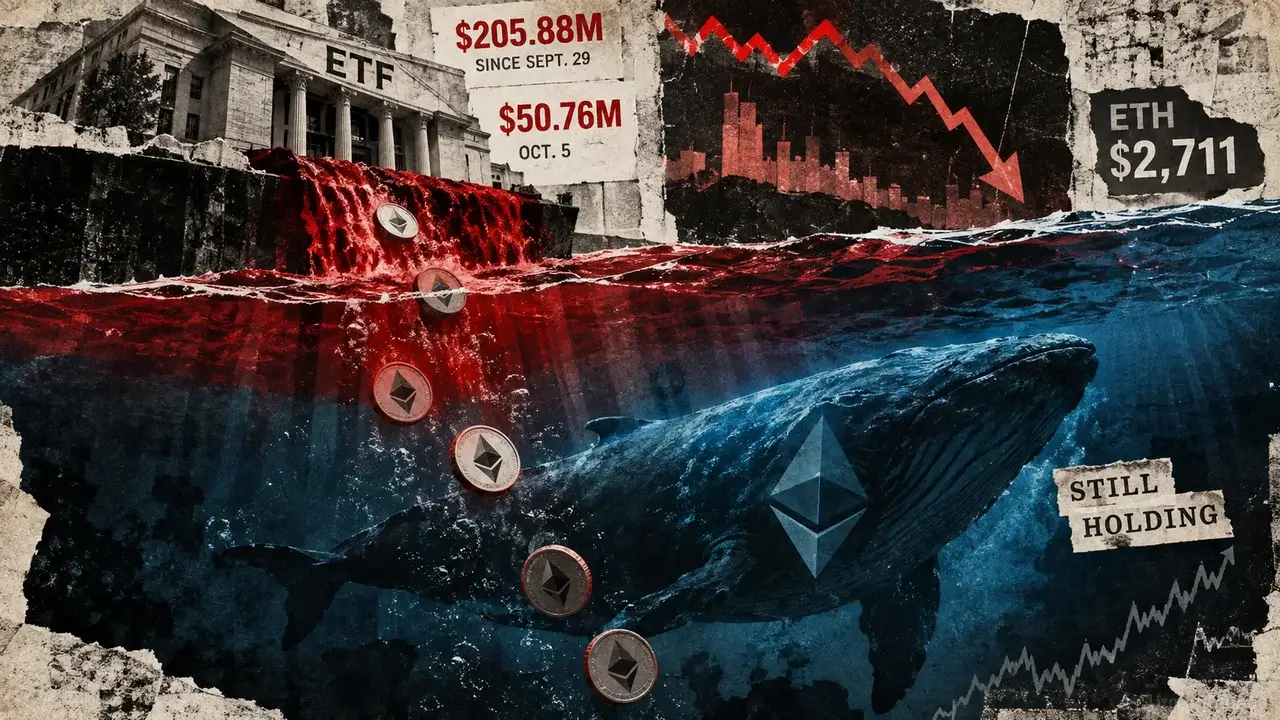
Ethereum bears keep selling but ETH price stays near $2,700 as US spot ETFs record $206M in outflows
Ethereum’s institutional demand is weakening around the same time derivatives positioning shows traders are selling aggressively w...

Grayscale Ethereum Staking Mini ETF marks one year of staking payouts
Grayscale's staking ETF success may inspire broader adoption of yield-generating crypto products, attracting diverse investor inte...

Crypto Card Payments Hit Record $12.5 Billion as Stablecoin Adoption Surges
Bitcoin Magazine Crypto Card Payments Hit Record $12.5 Billion as Stablecoin Adoption Surges Payment volume processed on crypto ca...