Crypto Privacy Legalized? Tornado Cash and Samourai Cases Suggest Uncertainty Remains
Bitcoin Magazine Crypto Privacy Legalized? Tornado Cash and Samourai Cases Suggest Uncertainty Remains Last week, Deputy Attorney General (DAG) Todd Blanche sent a memo to employees of the Department of Justice, directin...
Archive context
Older archive item. Useful for background and entity history, but not a fresh market-moving signal.
Bitcoin Magazine
Crypto Privacy Legalized? Tornado Cash and Samourai Cases Suggest Uncertainty Remains
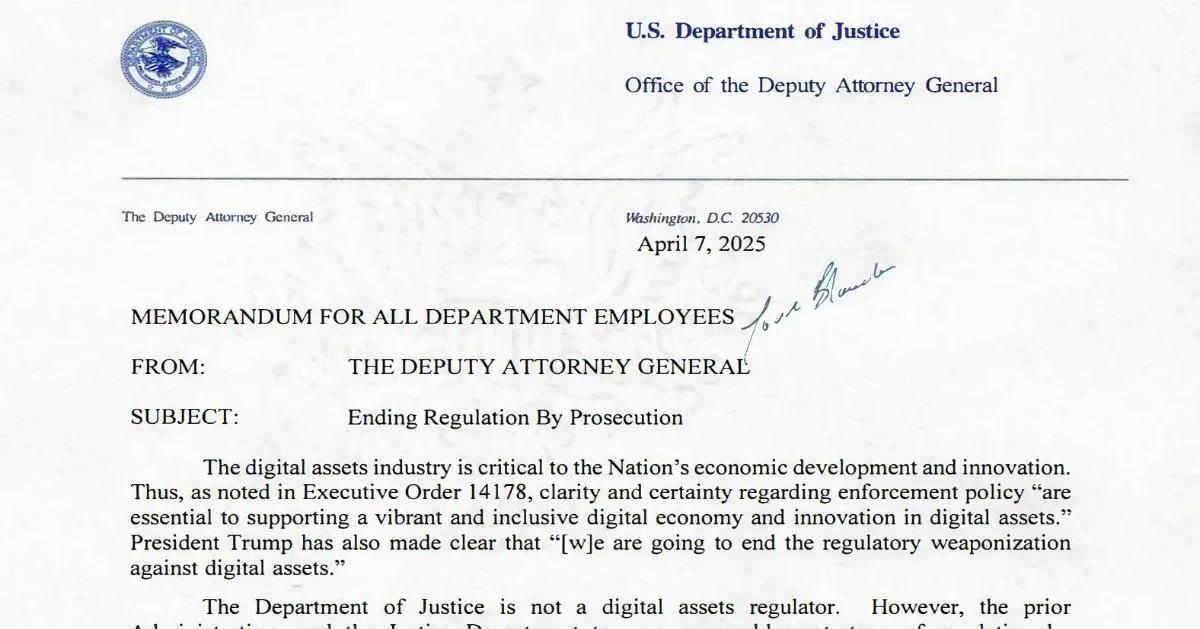
Last week, Deputy Attorney General (DAG) Todd Blanche sent a memo to employees of the Department of Justice, directing the agency to stop prosecuting mixers, exchanges, and “offline wallets” for the criminal conduct of their users.
Understandably, the community broke out in celebration. Privacy is now legal again! Some proclaimed. #FreeSamourai! Others demanded. DOJ ends “regulation by prosecution”, media outlets headlined, referring to the memo’s title, as companies who had previously left the US due to regulatory uncertainty announced plans to return. This will change everything, appeared to be the general tenor.
But does the DAG’s memo actually change anything? Scholars are not so sure.
“Did DOJ Bless A Crypto Free-For-All? Think Again,” writes the industry publication Law360, read by over 2 million legal professionals around the world. “The platforms could still face enforcement actions if investigators uncover evidence that they knew customers were using digital assets to further transnational crime.”
Namely, the memo instructs the DOJ to focus less on regulatory violations, and more on “those who use digital assets in furtherance of criminal offenses”, such as terrorism, organized crime, and hacking, as well as narcotics- and human trafficking.
While the memo reads that “the Department will no longer target virtual currency exchanges, mixing and tumbling services, and offline wallets for the acts of their end users or unwitting violations of regulations,” there appears to be very little clarity as to whom the DOJ considers to “use digital assets in furtherance of criminal offenses” – individuals thereby excluded by the DAG’s statements.
“A handful of pending, high-profile prosecutions could soon offer clues on the DOJ’s approach. They include a money laundering case against Roman Storm,” Law360 writes.
Both in the prosecution of Storm, as well as in the prosecution of Samourai Wallet developers Keonne Rodriguez and William Hill, the agency is currently claiming that the entire point of developing their respected privacy services was to enrich themselves on criminal activity, placing them well within frame of the memo’s exceptions.
Notably, the DAG’s memo specifically excludes a subsection of USC 18 §1960, which is “at the heart of the Storm and Samourai Wallet cases,” posted CEO of the DeFi Education Fund Amanda Tuminelli on X.
Due to this exclusion, the prosecution of both Tornado Cash and Samourai Wallet developers will continue to set precedent over whether developers of non-custodial services can be held liable for the actions of their users, and must further deploy comprehensive anti-money laundering frameworks as required of any money service business, including know-your customer checks.
“We will wait to see what happens with the Tornado Cash and Samourai Wallet prosecutions,” writes CoinCenter’s Peter van Valkenburgh on X. The memo is “great news, but important not to over read this,” writes Bitcoin Policy Institute fellow Zack Shapiro similarly.
Both prosecutions effectively focus on the obligations software developers face when having no control over the funds their software transmits, into which the DAG’s memo appears to give no insight. In fact, the DAG appears to have intentionally avoided the terms “non-custodial” or “unhosted,” as non-custodial wallets are commonly referred to in Government circles, instead referring to “offline wallets” in its statements.
Many in return are now wondering how software developers may implement KYC checks when dealing with non-custodial wallets if the prosecution of either developers is successful, and non-custodial services like Samourai and Tornado Cash are deemed to fall under money service business licensing requirements.
Former CFTC chair Timothy Massad gave some insight into how the KYC of the future may look when applied to Bitcoin in an interview with Bitcoin Magazine last week, stating that he believes ensuring that Bitcoin is not used for illicit purposes will probably involved some form of “digital identity,” as well as “smart contracts” which “wouldn’t process a transaction unless you could provide that [digital identity].”
What may sound like a distant dystopian future is currently being mandated in the US, which will require US Americans to present a Real ID compatible drivers license for domestic air travel starting May 7th, which is intended to be expanded into a fully fledged digital identity once the document is widely enough adopted.
This is a guest post by L0la L33tz. Opinions expressed are entirely their own and do not necessarily reflect those of BTC Inc or Bitcoin Magazine.
This post Crypto Privacy Legalized? Tornado Cash and Samourai Cases Suggest Uncertainty Remains first appeared on Bitcoin Magazine and is written by L0La L33Tz.
Why this matters
This bitcoin story adds another data point to the current market tape and is useful when read alongside nearby source coverage.
Original source
Read on Bitcoin MagazineRelated market context

Bitcoin could soon get Zcash-style 'shielded' privacy without changing its rules
Researchers have mapped out private bitcoin-denominated transfers that run alongside Bitcoin, but the system still lacks a finishe...

Who Bought Bitcoin’s Breakout? The Answer Will Decide Whether The Price Holds
In August, bitcoin’s rally was driven by spot bitcoin ETFs, which bought for nine straight trading days, and by short sellers who...
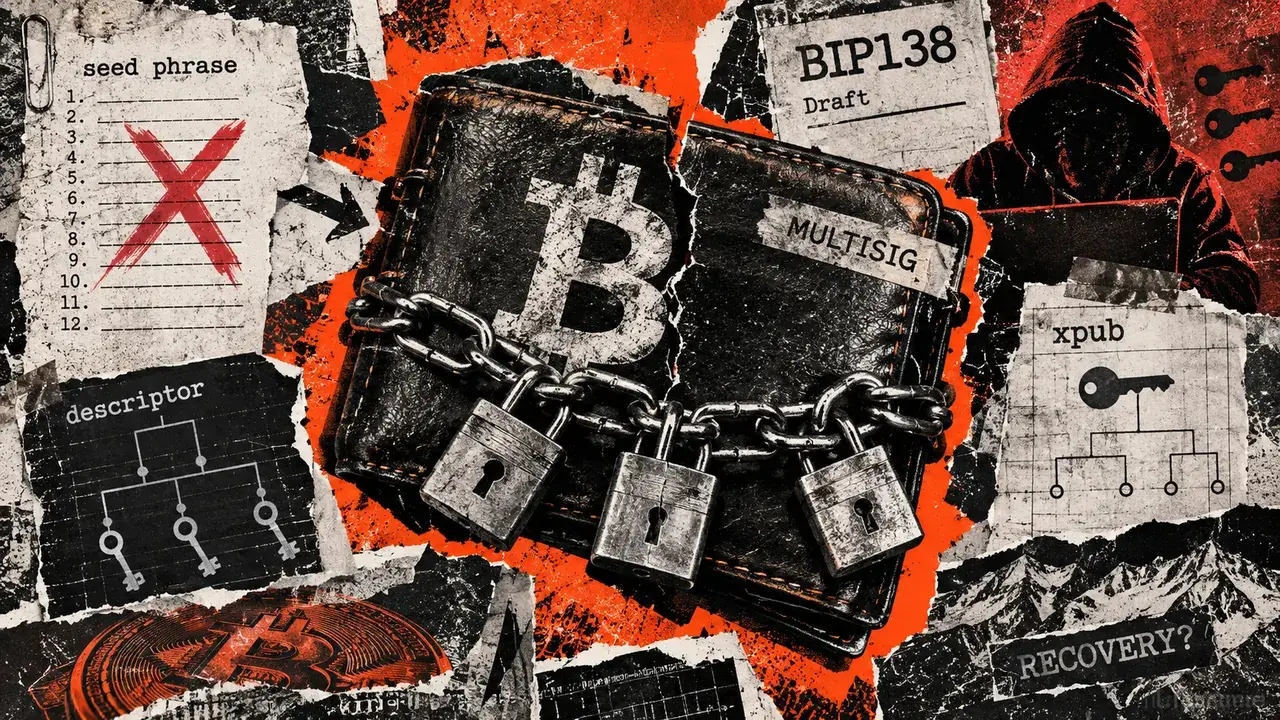
New Bitcoin proposal rescues locked multisig wallets – At a hidden cost
Bitcoin's BIP138 wallet-backup proposal was merged into the Bitcoin Improvement Proposals repository on Sept. 21, but the specific...

US Charges Man After Crypto Scam Wallets Received More Than $53M
TL;DR U.S. prosecutors have charged a Vietnamese national with money laundering tied to alleged cryptocurrency “pig butchering” sc...
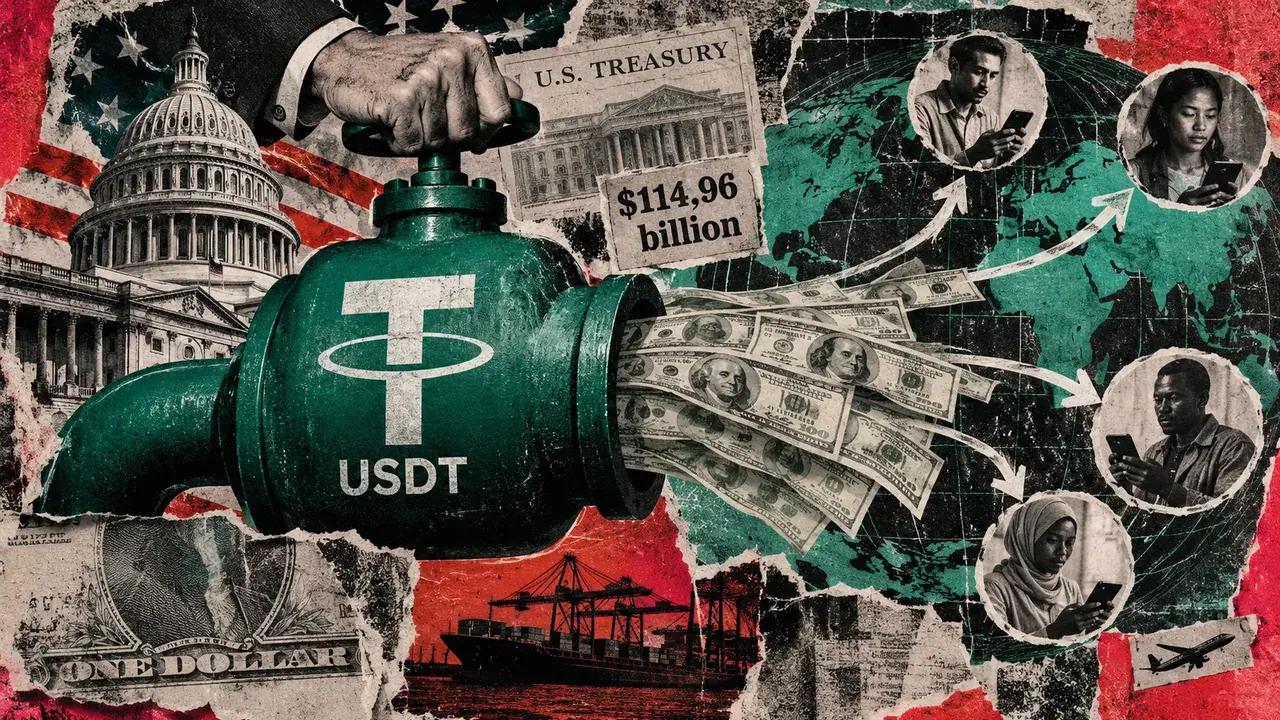
Washington has $114 billion reasons to want Tether around
Not that long ago, Washington fined Tether for misleading people about the dollars behind its tokens. Today, the company's insatia...

Bitget raises breach losses to $387.5 million after on-chain tracing uncovers Zcash and TRON transfers
Bitget raises breach losses to $387.5 million after tracing reveals Zcash and TRON transfers. Cold wallets secure, protection fund...