Edward Snowden: Bitcoin Up 10x Despite Coordinated Global Campaign By Governments
On Sunday evening famous whistleblower Edward Snowden commented on Bitcoin’s resilient price rise over the last year and a half despite global campaigns by governments to undermine the network.On Sunday evening famous wh...
Archive context
Older archive item. Useful for background and entity history, but not a fresh market-moving signal.

On Sunday evening famous whistleblower Edward Snowden commented on Bitcoin’s resilient price rise over the last year and a half despite global campaigns by governments to undermine the network.
On Sunday evening famous whistleblower Edward Snowden commented on Bitcoin’s resilient price rise over the last year and a half despite global campaigns by governments to undermine the network.
“Sometimes I think back to this and wonder how many people bought Bitcoin then,” Snowden wrote on Sunday, quoting his March 2020 tweet. At that time the Bitcoin price was hovering between $5-6K.
“This is the first time in a while I've felt like buying bitcoin. That drop was too much panic and too little reason,” Snowden wrote in March of 2020.
While Snowden has issued concerns over Bitcoin’s pseudonymity in the past, it is remarkable that he continues to track its price in US Dollars and write about it for an audience of nearly 5 million Twitter users.
“It's up ~10x since, despite a coordinated global campaign by governments to undermine public understanding of—and support for—cryptocurrency,” Snowden tweeted Sunday.
He continued, “China even banned it, but it just made Bitcoin stronger.” Snowden here refers to the global redistribution of Bitcoin hash power that followed China’s mining ban and subsequent user ban. Notably all such government bans on Bitcoin do little to stop the network, but rather decentralize it further.
Snowden’s recent Bitcoin tweets have followed events in El Salvador. Yesterday just before he tweeted, the president of El Salvador Nayib Bukele noted that the country had onboarded over 3 million Bitcoin users in just 26 days.
Notably, on 7 September Snowden tweeted: "Today Bitcoin was formally recognized as legal tender in its first country."
"Beyond the headlines, there is now pressure on competing nations to acquire Bitcoin—even if only as a reserve asset—as its design massively incentivizes early adoption."
Snowden’s recent tweets have shown his interest in the geopolitical and game theoretical implications of Bitcoin adoption. After El Salvador made Bitcoin legal tender, the Snowden highlighted that Bitcoin favors early adopters, thereby putting pressure on other nations, which will be penalized for being laggards.
Why this matters
This bitcoin story adds another data point to the current market tape and is useful when read alongside nearby source coverage.
Original source
Read on Bitcoin MagazineRelated market context

Block Releases THE Bitcoin National Ad Campaign
▶Bitcoin Magazine Block Releases THE Bitcoin National Ad Campaign Block just launched “Bitcoin Does,” its first-ever mass-consumer...
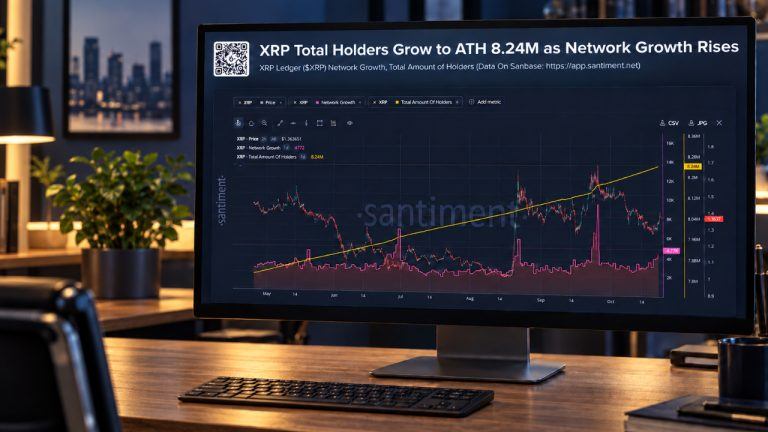
XRP Wallets Hit Record 8.24 Million as Network Growth Accelerates
XRP Ledger’s wallet count has reached 8.24 million, extending its climb through months of price volatility. Santiment paired the m...
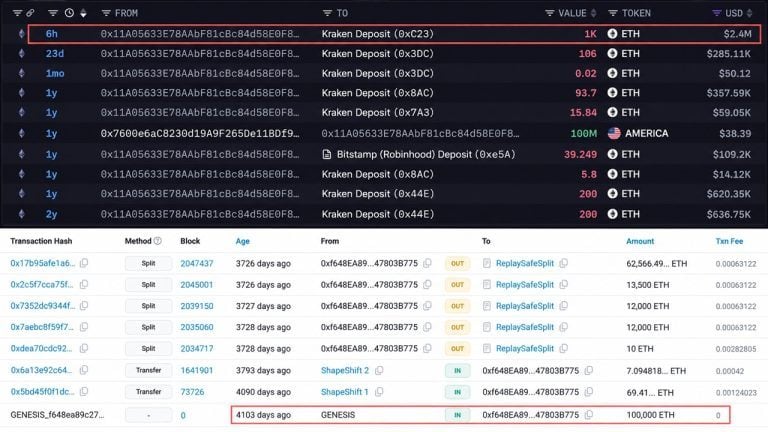
Whale That Bought 100,000 ETH for $0.31 Each Just Sent $2.4M to Kraken
An Ethereum initial coin offering (ICO) buyer who bought 100,000 ETH at $0.31 each just moved another 1,000 ETH, worth about $2.4...

Chinese national extradited to US over alleged Cambodian crypto scam network
The extradition highlights the global crackdown on crypto scams, emphasizing the need for international cooperation to combat fina...
China Targets 2030 to Complete National Blockchain Network
As part of a 15-year plan outlined by the Central Cyberspace Affairs Commission, China’s national blockchain network is expected t...
Solayer Pay Adds Five Blockchain Networks For Direct Stablecoin Card Deposits
TL;DR: Solayer Pay says its card app now accepts supported stablecoin deposits from Solana, Ethereum, Arbitrum, BNB Chain and Base...