Forget Inflation: Bitcoin Rallies When The Dollar Falls, Study Finds
According to NYDIG research, Bitcoin’s price moves are driven more by the strength of the US dollar and broad liquidity conditions than by direct ties to inflation. Greg Cipolaro, NYDIG’s global head of research, said th...
Archive context
Older archive item. Useful for background and entity history, but not a fresh market-moving signal.

According to NYDIG research, Bitcoin’s price moves are driven more by the strength of the US dollar and broad liquidity conditions than by direct ties to inflation.
Greg Cipolaro, NYDIG’s global head of research, said the data show weak and inconsistent links between inflation measures and Bitcoin. That view shifts attention away from the old narrative that Bitcoin is mainly an inflation hedge.
Inflation Link WeakCipolaro argued that expectations for inflation are a slightly better signal than headline inflation readings, but still not a tight predictor of Bitcoin’s price.
Instead, Bitcoin and gold both tend to gain when the US dollar weakens. While gold’s inverse relation with the dollar is long established, Bitcoin’s opposite movement to the dollar is newer but visible.
Gold And Bitcoin React To Dollar MovesBased on reports, gold has historically climbed as the dollar falls. Bitcoin is following that pattern, though its correlation is less steady than gold’s.
As Bitcoin becomes more connected with mainstream finance, NYDIG expects that its inverse relationship with the dollar will likely strengthen.
This makes sense to traders who price everything in dollars and seek alternatives when the greenback loses purchasing power.
Interest Rates And Money SupplyCipolaro highlighted interest rates and money supply as the two major macro levers that move both gold and Bitcoin.
Lower interest rates and looser monetary policy have tended to support higher prices for these assets.
In simple terms: when borrowing costs drop and liquidity rises, Bitcoin often benefits. The note framed gold as more of a real-rate hedge, while Bitcoin is described as acting like a gauge of market liquidity — a subtle but important distinction for investors.
Illiquid Supply Drops, Selling Pressure ReturnsOn-chain data show signs of renewed selling. Reports say illiquid Bitcoin — coins held in long-dormant wallets — fell from 14.38 million earlier in October to 14.300 million on the 23rd of October.
That change means roughly 62,000 BTC, worth about $6.8 billion at recent prices, moved back into circulation. In the past, large inflows did exert price pressure. In January 2024, a substantial sum of coins came available that caused the price momentum to soften.
According to Glassnode data, there has been a consistent selloff from wallets holding from 0.1 to 100 BTC, and first-time buyer supply has contracted down to ~213,000 BTC.
The overall assessment from a macro perspective and on-chain metrics is not favorable. Demand from new buyers appears to be lighter, momentum traders appear to have stepped aside, and more coins are now available to trade. This combination can blunt rallies or deepen pullbacks until liquidity conditions improve or the dollar weakens.
Featured image from Gemini, chart from TradingView
Why this matters
This bitcoin story adds another data point to the current market tape and is useful when read alongside nearby source coverage.
Original source
Read on NewsBTCRelated market context

Solana Price Prediction: Golden Cross and $2.97B Open Interest Put $400 Target in Focus
Solana price is trading near $117.38 after recovering strongly from its recent lows. With SOL now testing the crucial $118–$120 re...

Bitcoin’s Bull Run Is Back — and the Data Agrees
Bitcoin Magazine Bitcoin’s Bull Run Is Back — and the Data Agrees Bitcoin’s run this weekend would have observers believing that t...

$1 billion in trading volume masks hidden liquidity risks for Coinbase stock token holders
More than $1 billion in reported trading makes Coinbase's stock tokens look active. For a holder looking to sell, the question is...
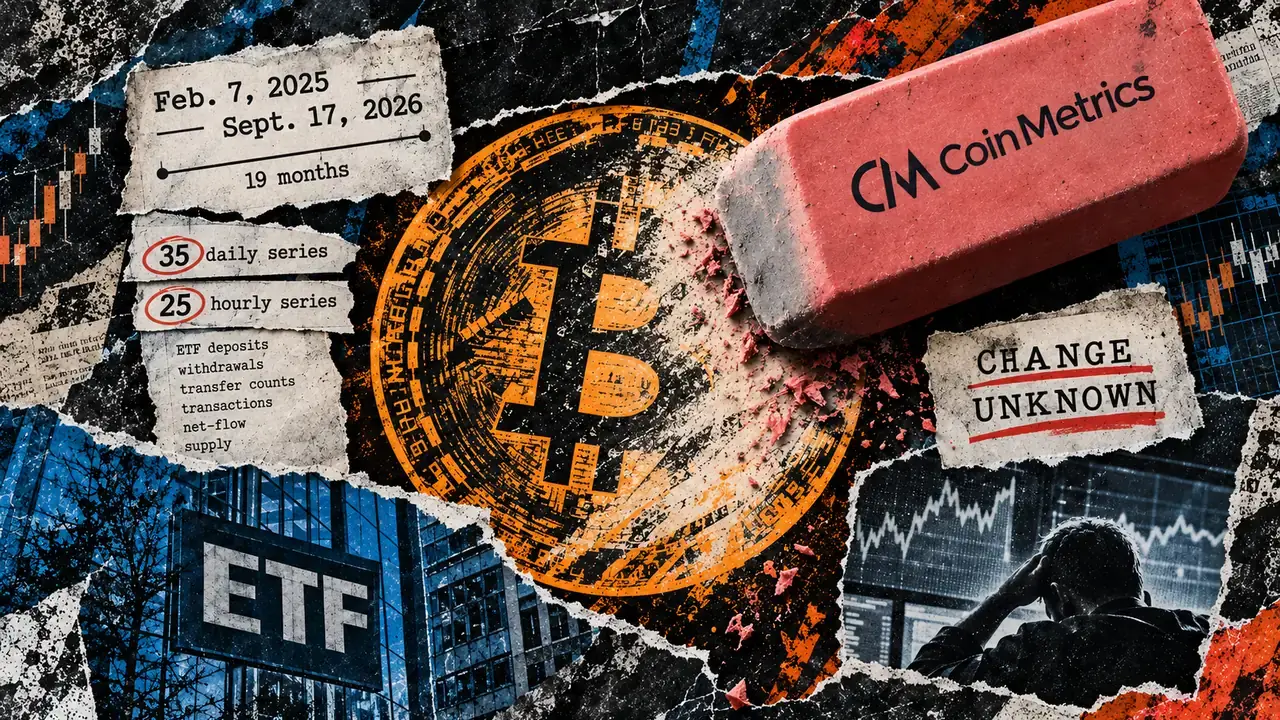
Coin Metrics revises 19 months of ETF wallet data but by how much?
Coin Metrics corrected more than 19 months of Bitcoin ETF-related on-chain data, leaving users of its identified-wallet series to...

Altcoin demand meets $18B threat as flows move into RWA perps as just 19% of traders keep alts
In the markets Talos tracked, daily volume in RWA perpetual futures tied to equities, commodities and indices rose from less than...

B. Riley Securities reiterates buy rating on Strategy, raises price target to $195
The SEC's tokenization exemption could boost digital asset-linked equities, enhancing liquidity and institutional interest in the...